

Electroplating
Galvanic coatings are used for decorative reasons, but also to protect against corrosion or wear. Zinc flake technologies are coming to the fore, especially for corrosion protection of high-strength steels. In the decorative field, the importance of plastic electroplating continues to grow.
![[Translate to English:]](/fileadmin/_processed_/a/9/csm_echa_web_b6adab3685.jpg)
Chromium(VI) regulation: Questionable methods, new “standards”
Chromtrioxid als Testfall: Ein Gespräch über fragwürdige Berechnungsgrundlagen, regulatorische Kurzsichtigkeit und die Risiken ideologiegetriebener Regulierung. Im Interview warnt Dr. Malte Zimmer vor einem Präzedenzfall, der es künftig zur Normalität machen könnte, dass regulatorische Maßnahmen keine nachvollziehbare Kausalität, sondern nur noch frei interpretierbare Korrelationen erfordern.
![[Translate to English:]](/fileadmin/_processed_/b/0/csm_AURUNA_313_Gold-Eisen-Hartvergoldung_3_web_c3f1da5491.jpg)
A symbiosis of elegance and robustness
A new cobalt- and nickel-free hard gold plating combines functionality, aesthetics and sustainability. The use of iron instead of cobalt and nickel also contributes to an ethically correct and transparent supply chain.

Securing the path to the future
When the prospects for Community applications regarding the authorization of chromium(VI) became increasingly difficult, one hard chrome job coater decided to shape its own future - by means of individual authorization. The process was long, arduous and cost-intensive. The reward is now the legally compliant use of chromium(VI) for the next twelve years. In this interview, Hannah Betz explains how this challenge was overcome and what she thinks about the restriction of chromium(VI).
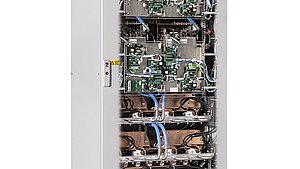
Electroplating benefits from rectifiers with AFE technology
A new water-cooled direct current source delivers up to 10,000 A at a voltage of 20 V and achieves an efficiency of over 90 per cent. With this model, the manufacturer has expanded its range for various applications in electroplating, for example chrome plating, anodising or aluminium colouring processes.
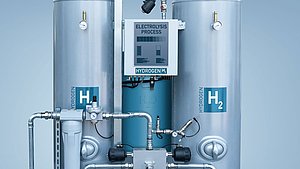
Umicore: Platinum, Jack of all trades
An electrolyte is now available for electroplating with pure platinum that enables the deposition of exceptionally thick, homogeneous and crack-free platinum layers.
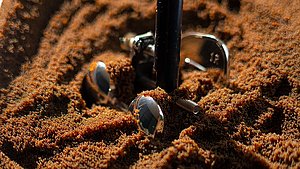
Rösler: Better surfaces with less effort
Increasing demands on surface quality combined with higher requirements for reproducibility, traceability and resource efficiency of the processes require customised processes. A solution is now available for electropolishing demanding metallic components.
EU: New opportunities for Cr(VI)
It sounds promising that the authorization of chromium(VI) substances is to become a restriction. First signs indicate that a constructive dialog with the ECHA can be possible.
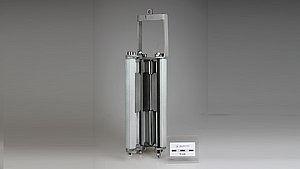
Lead-free anode not only for hard chrome
The new environmentally friendly hybrid anode can do both: it not only benefits the environment, but is also the key to being able to electroplate even complex, 3D-printed components with a high degree of precision.
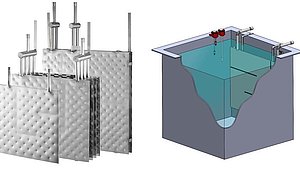
Mazurczak: Cooling the black chrome process more efficiently
Thanks to its more compact size and improved heat transfer, an efficient titanium plate heat exchanger has made it possible to keep the black chrome process stable while reducing the bath volume by 25 percent.
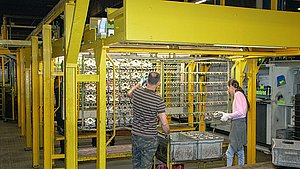
Zeschky: From coffee grinders to contract coating
The Zeschky Group specialises in zinc and zinc alloy coatings, but also in coating systems such as cathodic dip coating and zinc flake and their possible combinations. With four locations and over 400 employees as well as a highly automated plant park, the company is one of the leading contract coaters. It all started in 1921, much smaller - and with coffee grinders.

BIA: New splendour follows old
A well-known Solingen-based manufacturer of high-quality, metallised plastic components for vehicles has been offering a take-back guarantee on its metallised plastic components since 2022. This is because the company fully recycles galvanised plastic components. The target is a lower limit of one third recyclate content in all products.
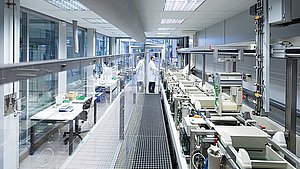
Fraunhofer IPA and University of Stuttgart compare efficiency of electroplating operations
Where are the electroplating companies in Germany? What can companies improve and how sustainable are they? A benchmarking study for electroplating plants by the University of Stuttgart and Fraunhofer IPA provides some answers.
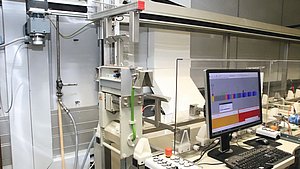
IPA: Reaping digital fruits
Statements about the potential and benefits of digitization are difficult due to the lack of benchmark operations. The SmARtPlaS research project has shown that the effort is worthwhile while whetting the appetite for more.
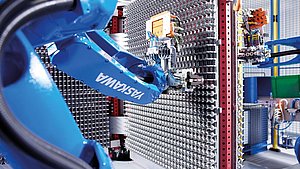
Hernee: aluminum finishing in record time
Regardless of which process is used for the surface finishing of aluminum parts, reliability and speed are always maximized. A Hessian company has invested in an automated placement system that ensures greater efficiency and predictability in series production.
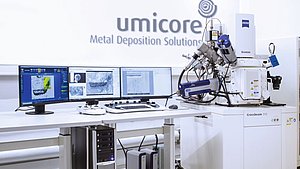
Umicore: Success through sustainability
Umicore Galvanotechnik GmbH in Schwäbisch Gmünd looks back on a 135-year tradition. Sustainability as a basic principle runs through all areas, from energy supply to personnel management.
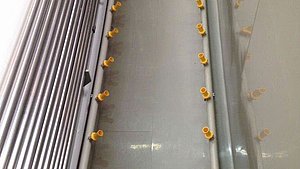
Serfilco: Better heat dissipation
When anodizing aluminum, maintaining the electrolyte temperature on the workpieces is a decisive factor for the quality of the surface treatment. Therefore, effective bath agitation is important. A hdraulic bath agitation system stabilizes the anodizing process while improving quality and efficiency.
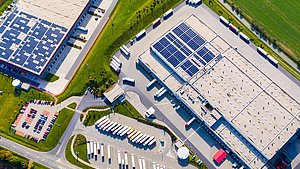
How Moosbach implements the Green Deal
The Green Deal aims to make Europe the first continent to achieve climate neutrality by 2050. Major topics here are CO2 neutrality and the circular economy. Implementation requires extensive data material, which must be compiled with the help of digitization. All in all, the industry will have to make considerable efforts.

Great savings potential with Munk rectifiers
High energy prices make it necessary to prevent unnecessary energy consumption. New, more efficient rectifiers and the use of state subsidies from BAFA offer great potential and short payback periods in this regard.
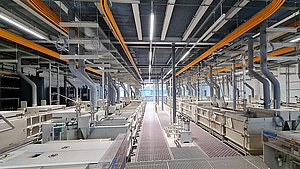
Jentner is about to commission a highly digitalised hand electroplating line
A contract coater is going its own, digitised way and is also demonstrating a coherent concept for the future of sophisticated hand electroplated coatings in times of digitisation at its new location, which will be opening shortly.
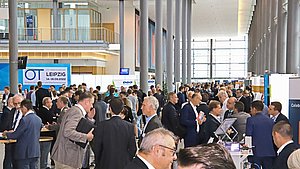
Back to old strength
In addition to the classic and proven topics, this year's event offered more than 80 highly interesting presentations ranging from the Energy Forum to recycling and circularity to the overloading of leaders by the current crisis situations.

Energy crisis: Inadequate framework conditions for the industry
Electroplating and surface technology is a key technology that is suffering particularly in the current energy crisis. The ZVO expressly welcomes the decision to implement the gas and electricity price brake from 1 January 2023. However, it is critical of some of the planned framework conditions.
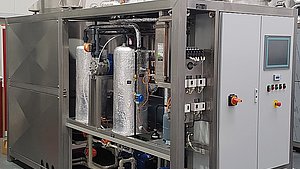
Evaporator under the microscope
Vapor recompressors and vacuum evaporators are used in recycling technology and wastewater treatment; both are based on the evaporation of the medium to be treated or a refrigerant, respectively. They differ in terms of applied pressure, temperature, energy and maintenance requirements.
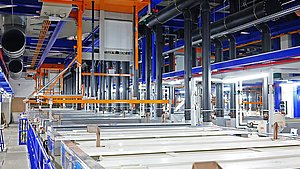
On the way to the new chrome plating
Investigations by the FGK have shown that a sensible substitute for conventional chrome plating for plastics can only be to use other starting chemicals. Painting or PVD technology is out of the question if the noble appearance is to be retained.
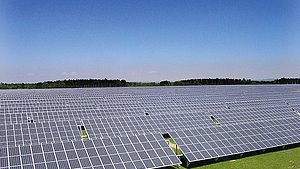
Copper instead of silver
Electricity from solar cells is dissipated from them via metal tracks, which are usually made of a paste containing silver. However, silver is scarce and expensive. In search of alternatives, researchers at the Fraunhofer Institute for Solar Energy Systems ISE have developed an electroplating process that relies on copper.
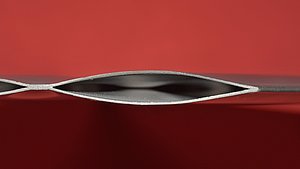
Robust stainless steel for plate heat exchangers
Stainless, super austenitic nickel-chromium-molybdenum-copper steel is suitable for use in electroplating shops because it has a particularly high resistance to acids. Due to special manufacturing processes and the plate-shaped geometry, a space-saving and precisely fitting design is possible.
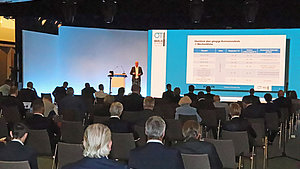
News from application and research
After a break of one and a half years, the ZVO Surface Days took place again for the first time at the Estrel Congress Centre in Berlin. The event was somewhat smaller than usual - but the atmosphere was good and constructive.
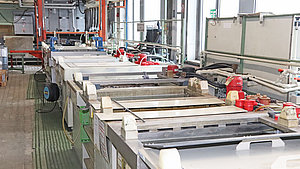
Advances in alternative hard chrome
The pressure from REACH on the electroplating industry is increasing. Betz-Chrom from Gräfelfing is working intensively on the further development of an alternative hard chrome process. The results are promising - but a comprehensive replacement of the classic hard chrome is still not foreseeable.
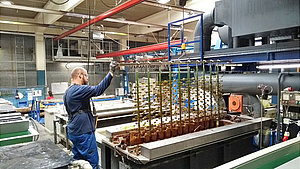
Chromium(VI): authorization instruments
After authorisation is before authorisation: Now that the first authorisation period of chromium(VI) is about to end, companies already have to deal with re-authorisation. In this regard, Vecco e.V. offers an overall concept to facilitate the future with chromium(VI).
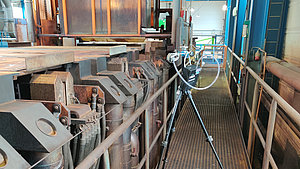
The Future and Chromium(VI)
Now that ECHA has come around to the first major upstream authorisation of chromium(VI) three years after the sunset date, the associated requirements are anything but easy to fulfil. In addition, there is worrying news from Brussels.
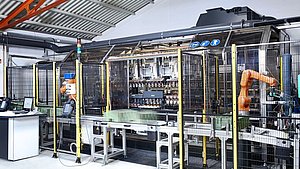
Serial manufacturing
In a metal construction company in Saint Vith in East Belgium, the company's first own large-part coating facility was also inaugurated on a new site. Since then, the company has continued to grow - as a supplier, but also as a contract coater and with its own laser technology.
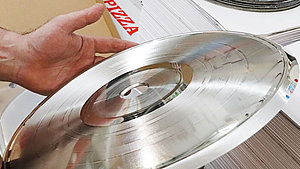
A vinyl renaissance
For a long time, a vinyl record was something for individualists. Now the classic among music media is experiencing a veritable comeback - and for good reason. Because the analogue signal of a high-quality record is superior to digital formats in its nuance and naturalness.
ZVO points out weaknesses of the latest ECHA study
In an open letter to Bjorn Hansen, Executive Director of the European Chemicals Agency ECHA, the Zentralverband Oberflächentechnik e.V. (ZVO) comments on the study "Impacts of REACH restriction and authorisation on substitution in the EU" published by ECHA in July 2020.
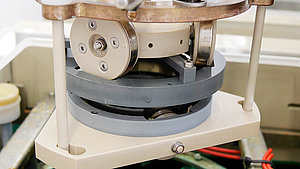
Pioneering coating for more robust rolling bearing rings
With novel galvanic coatings, researchers want to make rolling bearings so robust against corrosion that housings and lubricants become superfluous. This could increase the energy efficiency of wind turbines by up to 30 percent.

Raise the hood
Powder-metallurgically produced components cannot be galvanically coated without further ado. Other processes must be used to protect them from corrosion.