

Wet paint application with electrostatics
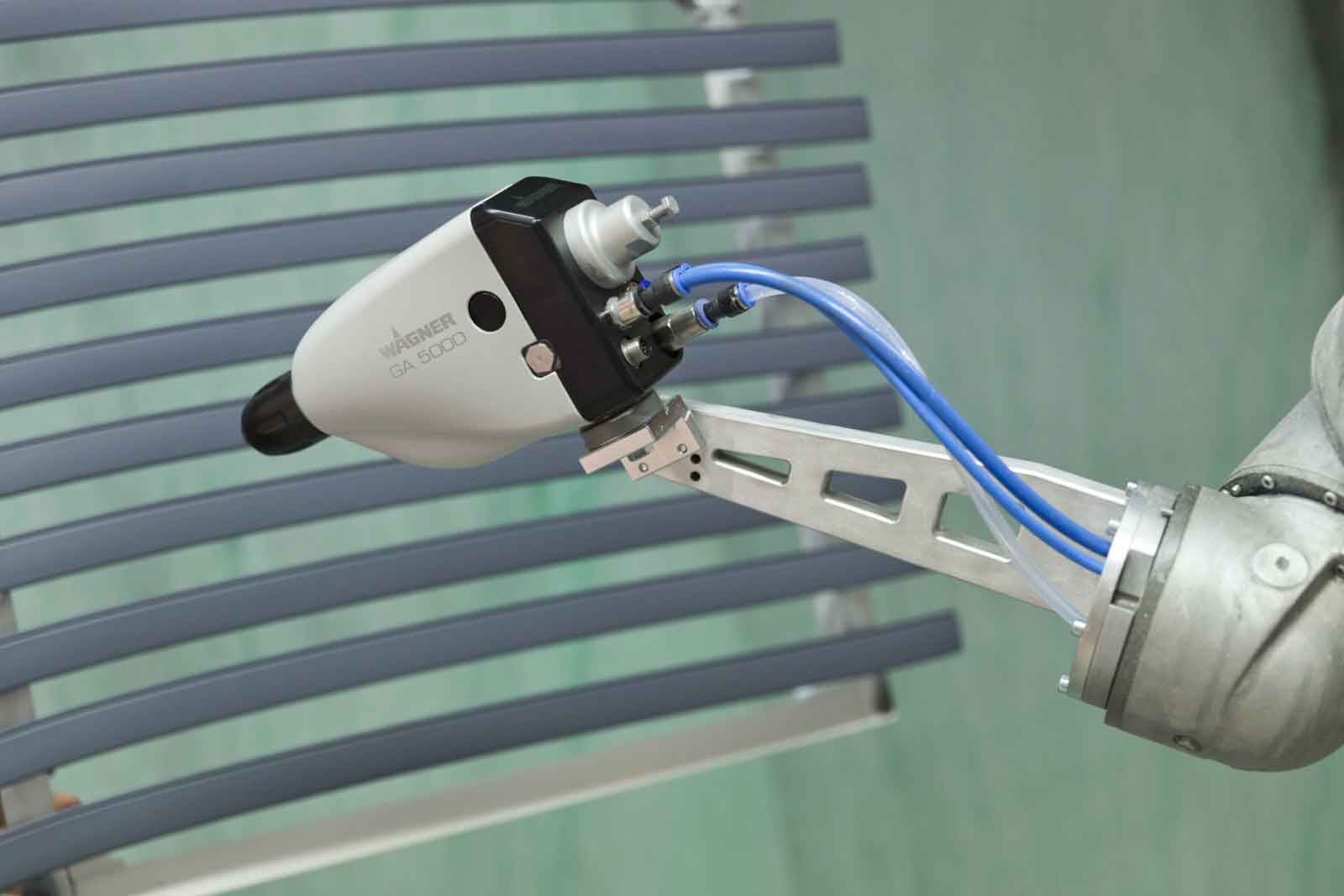
The electrostatic coating of surfaces has been state of the art for years. Highest surface quality and a particularly high application efficiency, which takes into account the increasingly stringent environmental regulations, are the drivers of this technology. However, due to the higher initial costs compared to classic wet paint coating and existing safety concerns, some users shy away from the use of electrostatics.
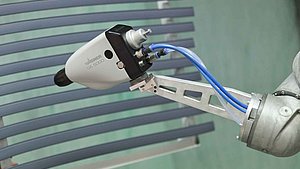
Wet paint application with electrostatics
This article describes the basicknowledge about elektrostatic paint application and it shows the limits and big advantages of this application technology and shapes out, that the higher starting-investment can amotize quite fast. A deep digging analysation of the circumstances will be always the key for a succesful painting process.
Requirements and suitability for successful electrostatic coating
Die Applikation mit Elektrostatik eignet sich vor allem bei elektrisch leitenden Werkstücken, insbesondere aus Metall. Daneben werden häufig auch nichtlei¬tende Werkstücke aus Kunststoff oder Glas mit dieser Technologie beschichtet. Die geladenen Lacktröpfchen wandern auf den Feld¬linien zum Werkstück und treffen dort senkrecht und gleichmäßig verteilt auf.

Solvent or water based systems?
Die Wahl des Lacksystems entscheidet grundlegend über die Art, den Lack aufzuladen und somit auch über den Applikator und das gesamte Beschichtungssystem. Lösemittellacke werden mit einer im Zentrum des Sprühstrahls positionierten Elektrode, die sich direkt in der Pistole befindet, direkt aufgeladen. Wasserlack wird intern aufgeladen, entweder im Applikator oder im Farbbehälter.

Application technologies and limits of electrostatics
Die Elektrostatik-Technologie wird bei Airspray- und AirCoat-Anwendungen sowie bei der Hochrotationszerstäubung eingesetzt. Für Applikationen mit einem Materialdruck von mehr als 250 bar ist das Verfahren nicht geeignet, da die relativ großen Tröpfchen und der sehr hohe Sprühdruck eine hohe kinetische Energie er¬zeugen, die den elektrostatischen Effekt in den Hinter¬grund treten lässt.
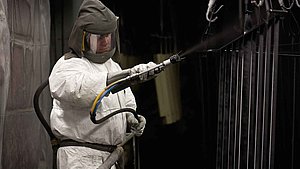
Product and process selection
Je niedriger der Material- und Luftdruck eingestellt ist, umso besser kommt der elektrostatische Effekt zum Tragen. In der Praxis ist der Materialdruck häufig viel höher als nötig eingestellt. Ob Airspray, AirCoat oder Hochrotation am geeignetsten ist, hängt unter anderem von den technischen Anforderungen und Möglichkeite sowie der Wirtschaftlichkeit ab, ebenso die Entscheidung für manuelle und automatisierte Applikation.