

Applying wet paint with electrostatics
Warum sich die Investition in das wirtschaftliche und umweltschonende Verfahren lohnt
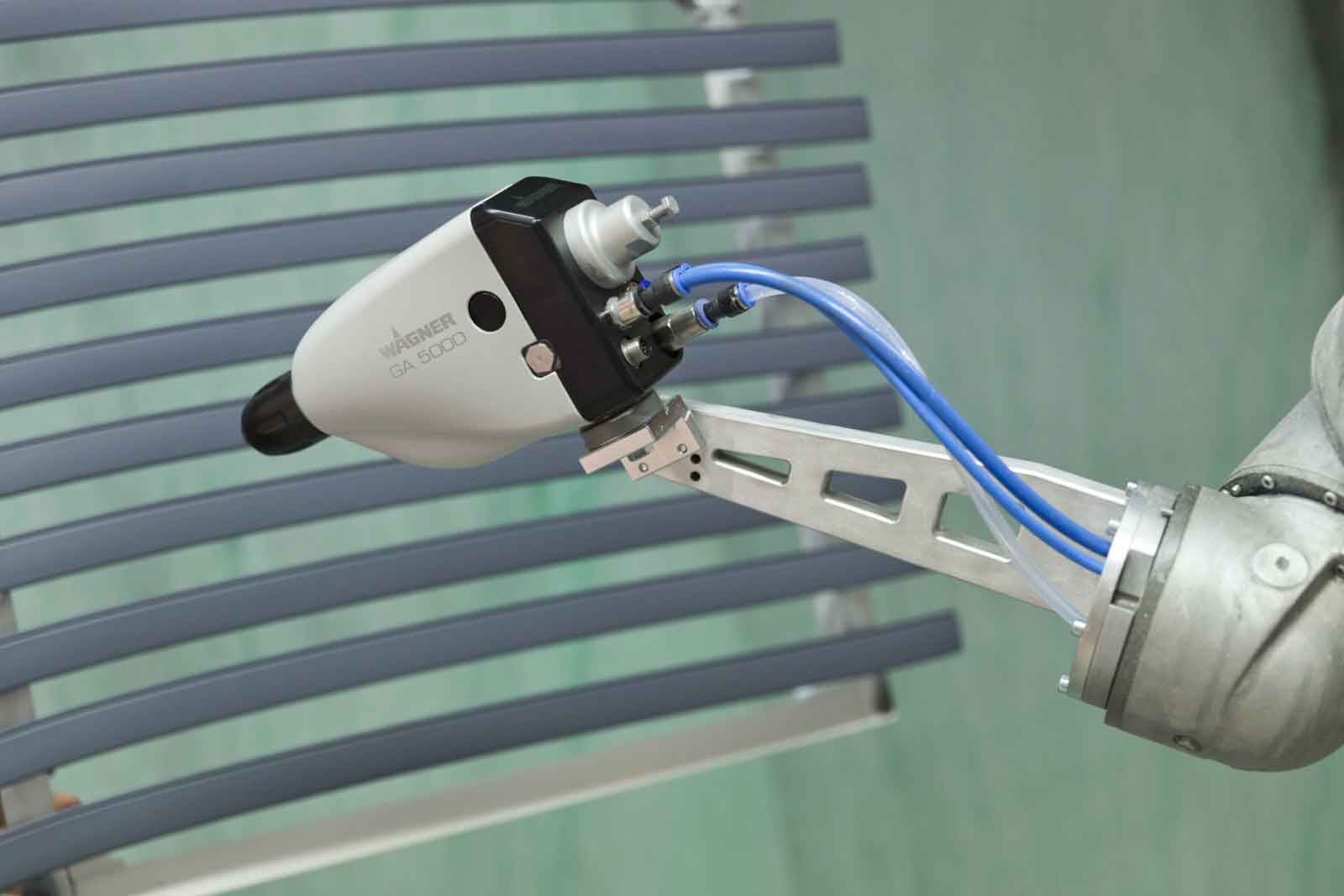
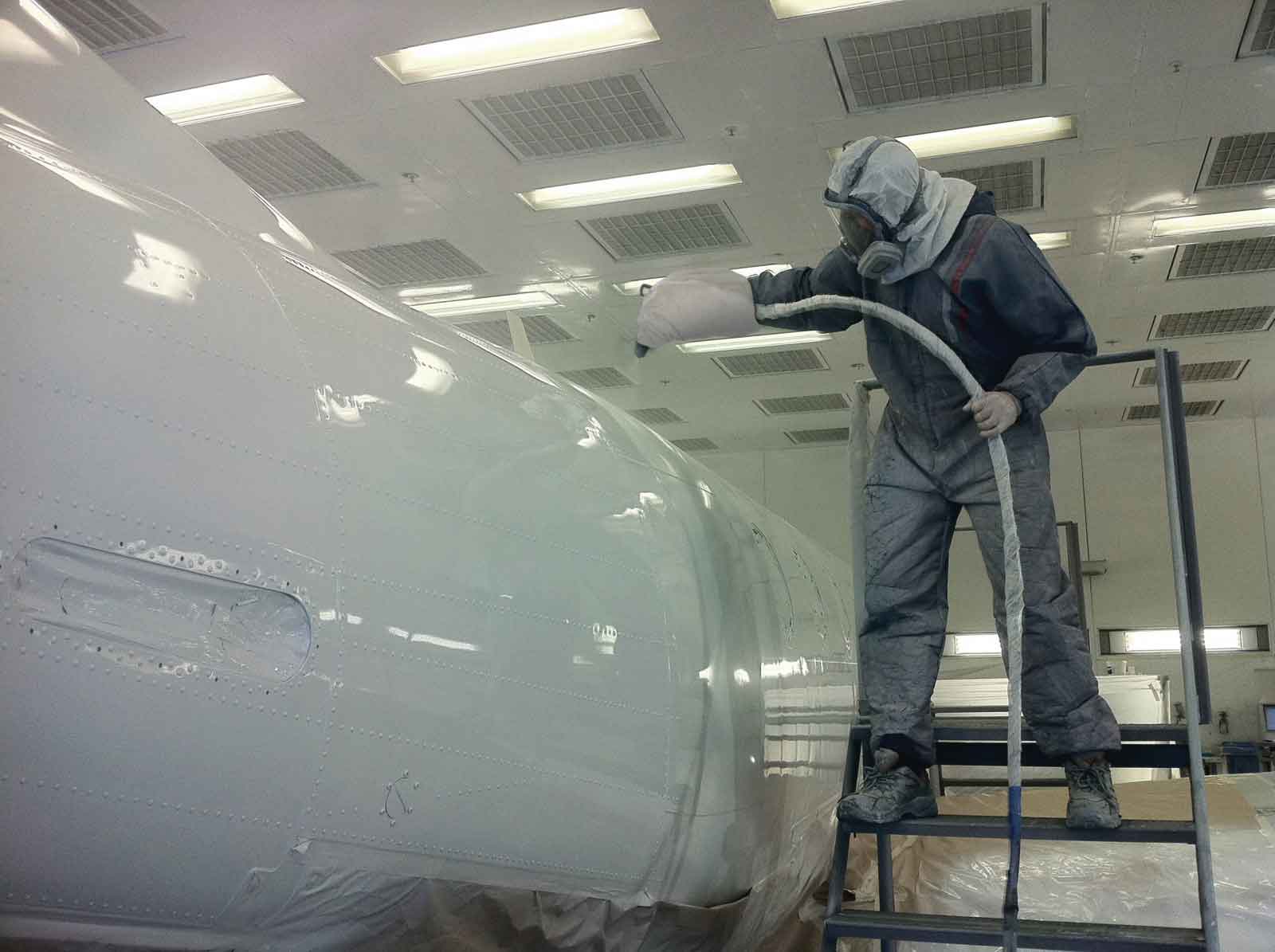
The electrostatic coating of surfaces has been state of the art for years. Highest surface quality and a particularly high application efficiency, which takes into account the increasingly stringent environmental regulations, are the drivers of this technology. However, due to the higher initial costs compared to classic wet paint coating and existing safety concerns, some users shy away from the use of electrostatics.
In this article, in addition to the basics of electrostatics, both the limits and the great opportunities of this technology are shown and it is made clear that the initially higher investment can certainly be amortized quickly. A comprehensive analysis of the general conditions is the key to a successful painting process.
The role of electrostatics in the painting process
When preparing surfaces for painting, we try to avoid or eliminate any charging at all costs to prevent negatively charged dust particles from adhering to the workpiece. When we paint electrostatically, the exact opposite is true. An electric field as strong as possible should help to guide the charged paint droplets along orderly paths to the workpiece without ending up as waste in the separator and damaging the VOC balance.
What is electrostatics?
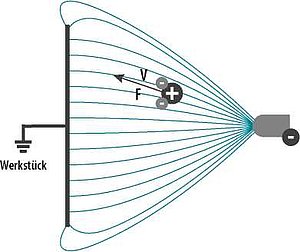
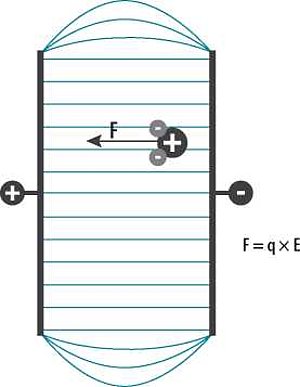
Everyone knows the phenomenon: the sudden arc discharge during a thunderstorm, the short "electric shock" when getting out of the car, or simply the annoying dust deposits on our electrical appliances. Charged particles are responsible for this. Equally charged particles repel each other and differently charged particles attract each other (e.g. the negatively charged dust particle on the grounded screen). The electric field is decisive for the movement of charged particles. In it, the particles experience a force along the field lines depending on charge and field strength.
The aim is therefore to generate as strong an electric field as possible and to negatively charge the atomized paint droplets. The paint spray gun must be able to do both perfectly in addition to the usual atomization performance. The voltage required for this is generated with a high-voltage cascade and can be adjusted up to a maximum of 100,000 volts, depending on the application process.