

Industrial plasma surface technology
Industrial plasma surface technology stands for a wide field of processes in which an excited plasma is used for coating or activation and cleaning processes. The spectrum ranges from wear protection coatings and optical coatings to the activation of plastic parts.

Atmospheric pressure plasma: Interface modification of tool steel
Atmospheric pressure plasma processes enable targeted modification of steel surfaces, whereby high cleaning effects and adhesion properties, for example in relation to adhesives or coatings, can be achieved.
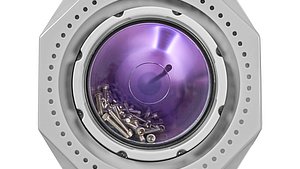
W&L: Bulk sputtering of precious metals
In order to achieve a higher degree of coating efficiency, the bulk material in this sputtering system lies directly on a special tube designed as a target and is continuously circulated by its rotation during the coating process.
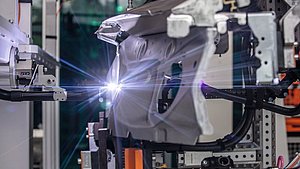
Plasmatreat: Paint and adhesive adhere better
Ensuring the strength of adhesive connections using atmospheric plasma technology
Fronius: Selective, efficient and thorough cleaning
Hot-active plasma provides selective, cost-effective and reliable cleaning
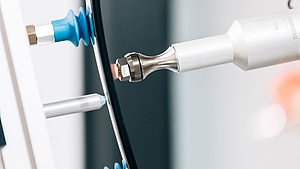
Treating surfaces more efficiently with plasma technology
Plasma surface technology offers numerous advantages from which companies can benefit. For example, they work without solvent-based primers, which makes their application environmentally friendly and energy-efficient.
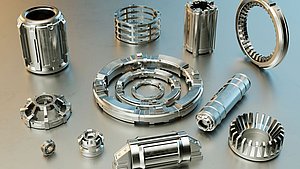
Using carbon and nitrogen to combat the eggshell effect
A supplement or replacement for DLC coatings is offered by a Danish company with its process for surface hardening of stainless steel and titanium. Carbon and nitrogen are incorporated into the component surface for better durability.
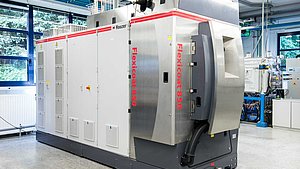
IOT research shows benefits of pulsed evaporation
Arc PVD technology is widely used in the production of tribological and decorative coatings. By using pulsed power supply, the roughness and hardness of the coatings can be improved. Experiments show that the target utilisation, the coating quality, but also the evaporation of target materials with poor electrical conductivity are improved.
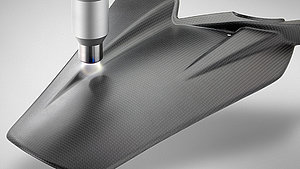
Plasma improves the adhesion of coatings
Painted surfaces pose challenges for the industry. If a coating is given supplementary properties by additives, this can impair its adhesion to the surface to be coated. Further processing also becomes more difficult. Atmospheric plasma technology from Plasmatreat GmbH can be a solution here.
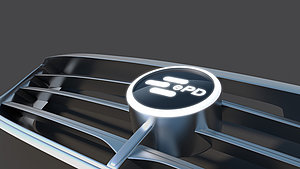
Attractive design option
Metallised plastic surfaces are becoming an increasingly sought-after field of application for PVD coating. Especially in automotive construction, this visually and technically high-quality design solution creates an attractive option. Compared to previous processes such as galvanisation, it also offers new functionalities and greater environmental benefits.
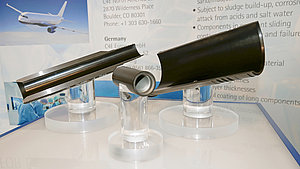
Improved durability
Plasma coatings are successfully used in various industries. However, the use for coating internal geometries is often not possible at all or only with considerable restrictions. One company offers a solution for this - and achieves high coating speeds in the process.

High performance in disguise
When it comes to autonomous driving, data and its quality are becoming increasingly important. A large number of sensors have to be installed on the vehicle's exterior. But how can these be elegantly concealed under the paintwork without impairing their function?