

Copper instead of silver
Power generation from solar energy is booming like never before - but silver for the conductors is becoming scarce.
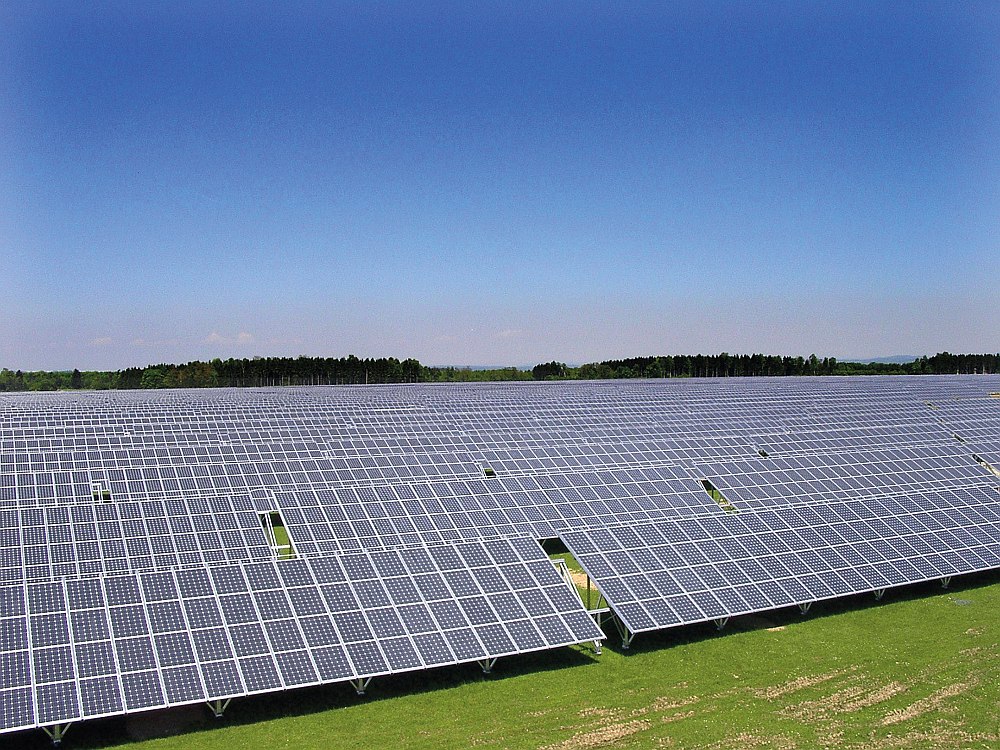
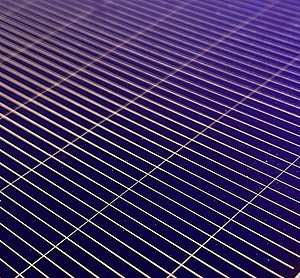
Electricity from solar cells is dissipated from them via metal tracks, which are usually made of a paste containing silver. However, silver is scarce and expensive. In search of alternatives, researchers at the Fraunhofer Institute for Solar Energy Systems ISE have developed an electroplating process that relies on copper.
Not only is copper cheaper and more readily available than silver, it also has a number of other promising advantages. The reddish metal is expected to be used to produce the next generation of silicon solar cells in just a few years. It has now been tested in two promising candidates for the solar cell of the future - TOPCon solar cells and silicon heterojunction solar cells. They are in the starting blocks to displace today's PERC solar cell standard.
A central pillar of the future energy supply will be photovoltaics - now the cheapest technology for generating electricity. In Germany, its share of electricity generation is already around ten percent. A total of around 65 gigawatts of capacity is currently installed. Solar power generation is also booming worldwide. Over the past ten years, annual capacity additions have multiplied from 30 to the current level of around 250 gigawatts. A terawatt of photovoltaic capacity has now been installed. And that's not all: in 2040, annual growth will amount to three terawatts and more, according to experts - an increase of around 1,100 percent.
However, this growth could reach its limits before then. The reason: scarce and expensive silver is used for the conductive tracks and contacts of currently marketable silicon solar cells, which cover around 90 percent of the market. The solar industry already requires around 15 percent of the silver mined worldwide for production. The growth potential is therefore limited, especially since there are other uses for silver. Examples include electromobility and mobile communications. In addition, there is the cost factor: The prices for the precious metal are high, and silver already accounts for around 10 percent of the production price for a photovoltaic module.
Alternative process copper electroplating
In photovoltaics, research and industry are feverishly searching for alternatives to the precious metal for this reason. Researchers at Fraunhofer ISE have now found a promising solution to the problem: Copper. The metal is much more readily available worldwide, by a factor of about 1,000. There is also a lot to be gained in Germany: The recycling rate is high. This shortens the supply chains and the dependence on international raw material markets. In addition, copper is around 100 times cheaper than silver. Moreover, extraction is much more environmentally friendly and less energy-intensive. An important aspect, conductivity, also has a positive impact. The problem up to now has been that copper can damage the silicon material if it penetrates it. This reduces the performance of the cell. Fraunhofer ISE is now avoiding this disadvantage with a new electroplating process. The efficiency and performance of solar cells produced in this way are at least as high as when silver is used, and in some cases even slightly better. The process has no effect on the loss of performance due to aging, the so-called degradation.
The new process is expected to be used in the next generation of solar cells in a few years. Promising candidates are bifacial TOPCon solar cells and silicon heterojunction solar cells. Compared to the current standard technology, the PERC solar cell, the silver consumption per solar cell increases here, so that the use of a silver-saving alternative technology is even more urgently needed.
Use with TOPCon solar cells
Example TOPCon solar cells: As part of two projects funded by the German Federal Ministry for Economic Affairs and Climate (BMWK), a research team at the institute metallized bifacial TOPCon solar cells with galvanic nickel/copper/silver contacts. They achieved a peak efficiency of 24 percent, which was 0.5 percent higher than the comparative cells metallized with silver screen printing by the industrial partner. Thanks to the nickel/copper/silver compound, the cells reduced silver consumption by more than 90 percent compared with cells with printed silver contacts.
Among other things, this is made possible by reducing the laser contact opening to a width of up to 5 micrometers. In industrial production, too, this electroplating metallization enables significant silver savings without having to compromise on efficiency. In the project, the processes for electroplating metallization developed at Fraunhofer ISE were tested for their industrial suitability on equipment from Rena Technologies GmbH. Both partners are now working in a follow-up project on process optimization for further increases in efficiency as well as further development of the plant technology.
Copper for Silicon Heterojunction Solar Cells
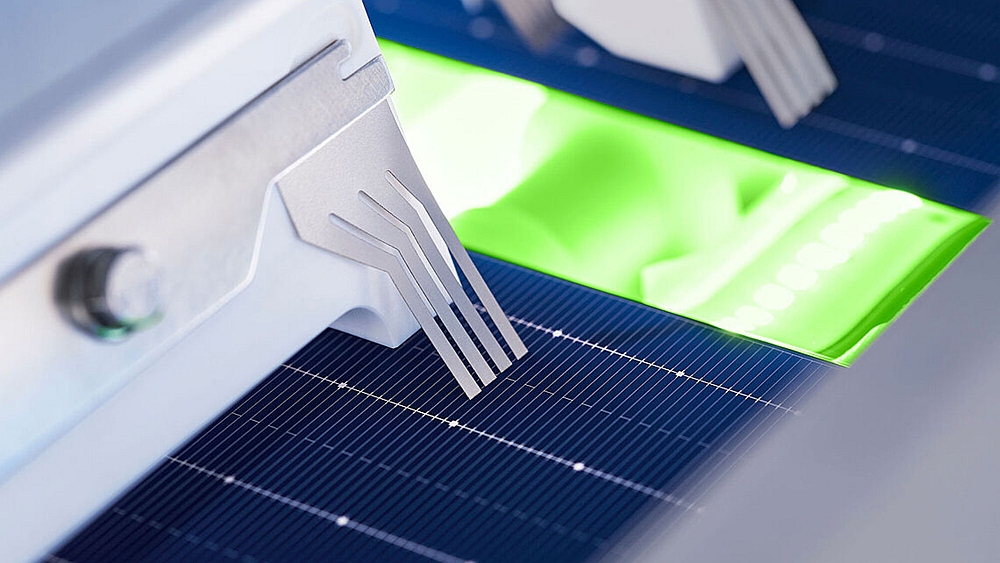
In addition to TOPCon solar cells, Fraunhofer ISE also developed a process for galvanic copper metallization for the equally promising silicon heterojunction solar cell technology, which reduces silver consumption. In order to bring the technology to market more quickly, the spin-off PV2+ GmbH was founded. It wants to start as early as 2023 to set up pilot production together with industrial partners.
The copper conductors of the silicon heterojunction solar cells are particularly narrow thanks to the laser structuring used. Due to the extremely narrow width of only 19 micrometers, the shadowing of the light-receiving silicon layer is less than with silver tracks. This improves the performance and ultimately the current yield. To mask the silicon wafer in the electrolyte bath, the industry has so far used expensive polymer-based coatings or films. The researchers were able to replace the polymers that are usually produced during electroplating for structuring the deposition. Instead, they use aluminum for masking; like copper, this can be fully recycled. The double switch means that these new solar cells are more sustainable and significantly less expensive.
Electroplating processes can reduce silver consumption in solar cell production. Only in this way can the necessary expansion of solar power generation be managed. The new processes will be used for the next generation of solar cells. This will drive the expansion of photovoltaics and give the photovoltaics industry a boost.
Dr. Sven Kluska, Dr. Thibaud Hatt
Fraunhofer Institute for Solar Energy Systems ISE
www.ise.fraunhofer.de