


Jentner is about to commission a highly digitalized hand electroplating line
More productivity, less waste and traceable processes

A contract coater goes its own, digitized way and also demonstrates a coherent concept for the future of sophisticated hand electroplated coatings in times of digitization at its soon-to-be-opened new site.
Despite the effects of the Corona crisis and the increase in efficiency achieved through digitization, the JentnerGroup was increasingly experiencing capacity bottlenecks, not least because there were no more space resources left at the company headquarters and the baths were also heavily utilized due to the parallel coating of barrel and rack goods. For this reason, the company management decided to build a new site, despite the fact that the overall economic conditions were not very optimistic in view of the Corona crisis. Plans for an expansion had been in the works for some time and a suitable site was already available. At the new site, Jentner will concentrate fully on the coating of high-quality rack goods, while the previous site will specialize in the processing of barrel goods.
From Medical Technology to Aerospace
The JentnerGroup has a wide range of customers, also from the high-tech sector, such as medical technology, aerospace or defense with corresponding requirements for quality and documentation. In order to be able to meet the constantly increasing requirements in the future, the Pforzheim-based company has developed the so-called Digital Lifecycle Plating, which enables comprehensive digitalization in hand electroplating.
The task of achieving greater process efficiency and fewer rejects was more than fulfilled. At the previous production site, the introduction of Digital Lifecycle Plating has already increased throughput by around 20 percent, partly because bottlenecks in the process sequence can be identified and mitigated by adapted job processing. All system parameters such as current, voltage, circulation, pH and conductivity values as well as bath temperatures are recorded. In addition, environmental conditions such as temperature, humidity or CO2 content are logged.
Furthermore, the Digital Lifecycle Plating concept enables the creation of a digital production file via which the complete lifecycle of the workpieces and all individual parameters can be documented and analyzed if required. This includes the original product properties in the state of delivery, through the individual finishing steps to the delivery and handover conditions. Last but not least, this also makes it possible to evaluate the CO2 footprint - a topic that will become relevant in the future due to EU regulations.
This is made possible by a UWB (ultra-wideband) network, which allows the position of the individual racks on the line to be recorded so precisely that they can be assigned to the baths and thus the dwell times recorded. In addition, step-by-step guidance of the employees through the coating process is possible, so that it can be ensured that even semiskilled workers can achieve an optimum coating result by means of comprehensive digital assistance systems.

Preventive maintenance and electrolyte monitoring
This digitization concept will also be implemented at the new site, which is scheduled to go into operation at the end of spring. This creates the prerequisite for the creation of a digital production file across the entire life cycle of the workpieces - even beyond company boundaries, and opens up a wide range of benefits for everyone involved. For example, if quality deficits are detected in the raw articles before coating, the parameters provided by the customer can be used to draw conclusions about possible reasons and take remedial action. For example, by using pretreatment processes adapted before coating to compensate for fluctuations in the preprocesses. In addition, all machining operations can be traced back to the individual workpiece and process at any time. This allows predictive maintenance and health monitoring of the electrolytes - including precise re-dosing during the ongoing process - to be implemented, as well as granular quality assurance for applications in the high-tech sector.
"In this way, we are laying the foundation for pattern recognition, which will enable us to identify the causes of coating defects and quality problems more quickly and more precisely in terms of their causalities in the future," says Marcel Scheidig, Head of Technology at Jentner, enthusiastically. "But as many benefits as such a cross-company digital production file can bring - there is still a lot of reluctance to make such data available."
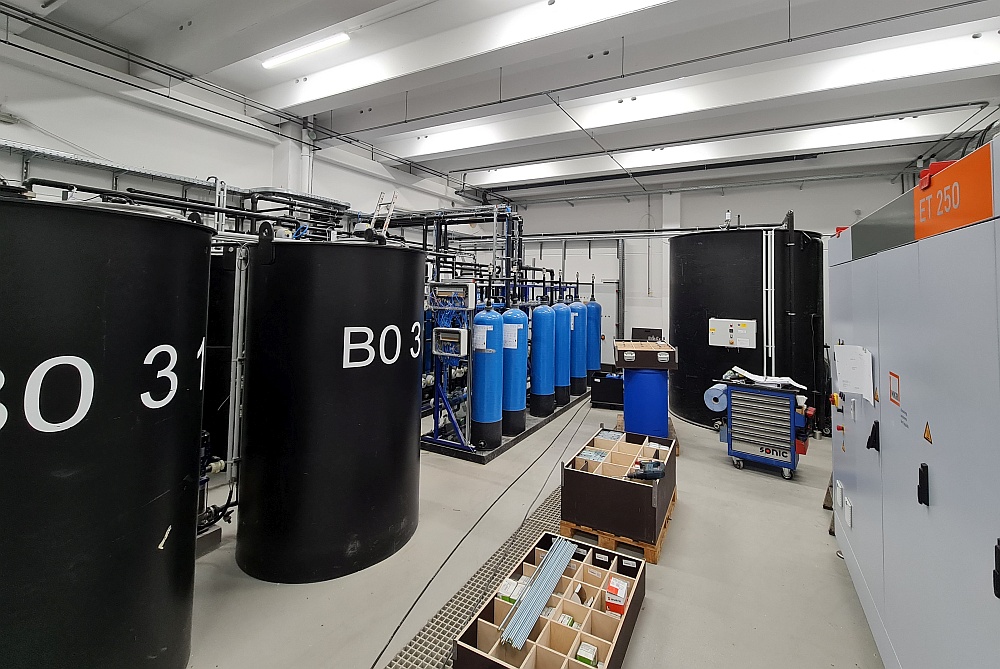
New location about to go into operation
"The electroplating plant at our new location is already up and running, but there are still a few little things to do. But it is already clear that we can coat a much wider range of parts thanks to the much larger and more diverse electrolyte variants," Scheidig explains. "In terms of processes, we have of course already put together a certain basic set, but we invite our customers and interested parties to get involved in our process planning even now, before commissioning, because we can definitely add to and adapt here with the appropriate order volumes - this is something that was no longer possible at all at the old location for reasons of space."
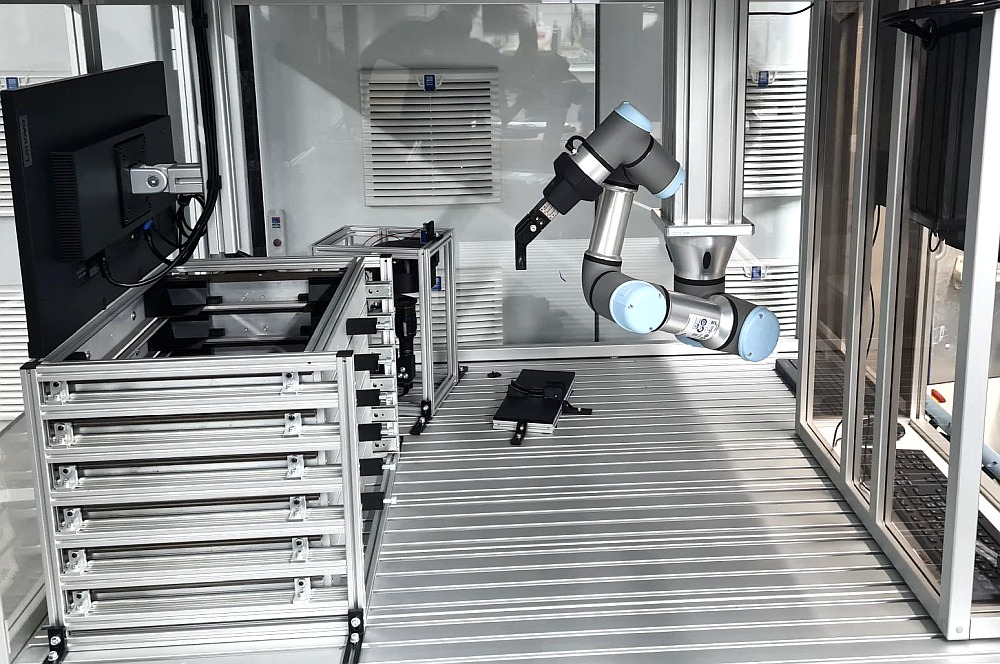
In perspective, an automatic quality analysis cell is planned in which a cobot positions coated products under a camera and intelligent algorithms can both detect coating defects and make a statement as to whether these could possibly be due to defects in the supplied product, such as burrs or discoloration. A similar but very specialized application for surgical cutlery has already proven successful at the previous site.
"In this regard, we are currently facing the challenge of developing a system that can flexibly analyze different components. Our goal is to be able to offer such automated quality analysis in 2024." An extended production optimization based on the generated data is also being developed in order to be able to promise customers a more precise delivery date at any time and, if desired, to keep them continuously informed about the processing status.
All in all, this clearly shows that the new site will be well positioned to meet future challenges when it comes on stream.
JentnerGroup
www.jentner.de