


Back to old strength
ZVO Surface Days 2022: A great success with 515 participants and highly topical issues
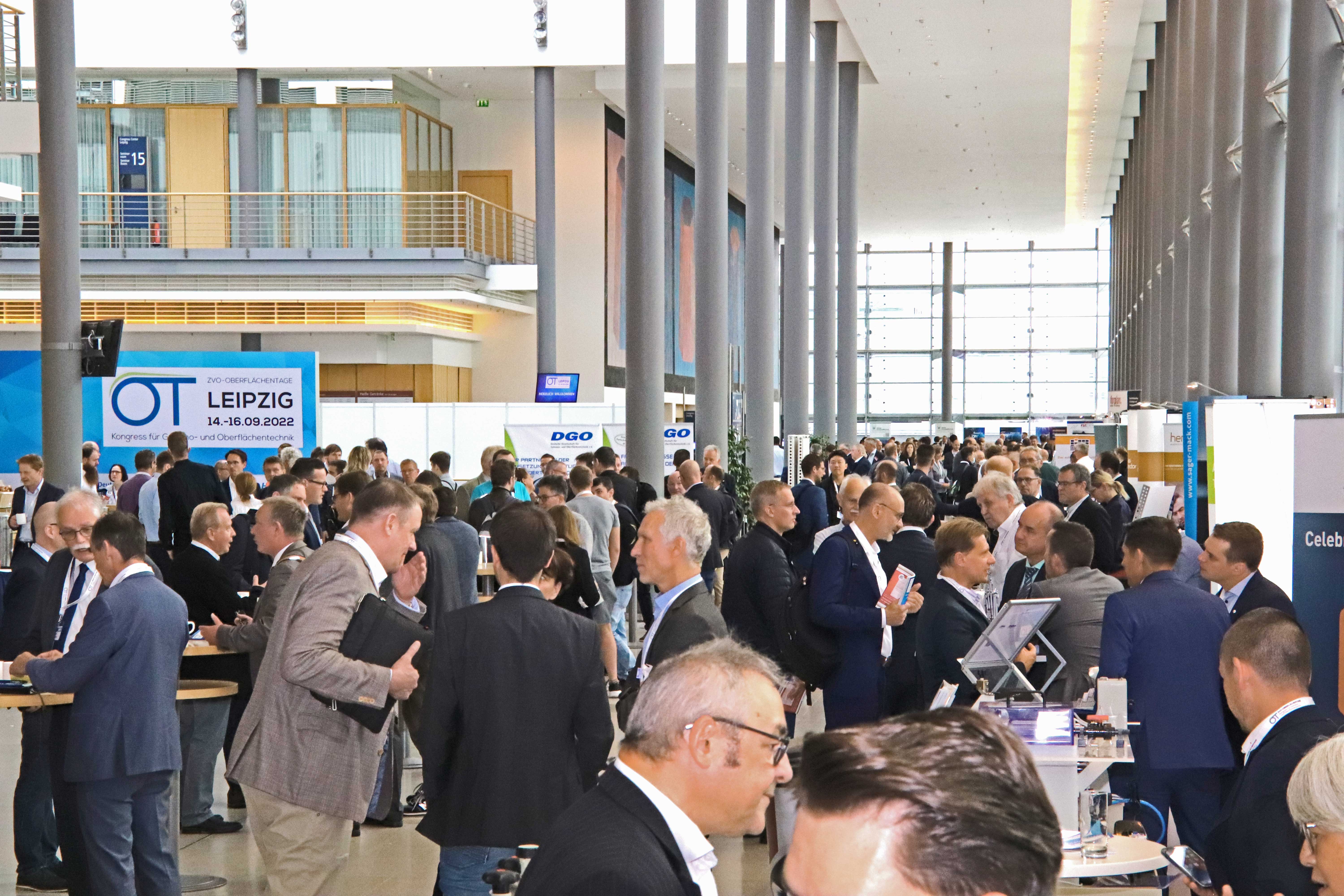
In addition to the classic and proven topics, this year's event offered more than 80 highly interesting presentations, ranging from the energy forum to recycling and circularity to the overloading of managers by the current crisis situations.
After the ZVO Surface Days 2021 took place after the pandemic still with a relatively low number of participants, but with a very good atmosphere, the event found back to its old size this year. Well over 500 participants and four parallel series of lectures on Thursday and five on Friday left nothing to be desired in terms of content with a broad range of topics.
On Thursday, the first session focused on climate neutrality as well as energy and resource efficiency - even more important than before in view of the looming supply situation in the field of electricity and gas. Many interesting specialist topics were on the agenda on the first day of the event - from the recovery of valuable materials in electroplating with trivalent chrome electrolytes to the opportunities and challenges for sustainable energy storage systems and maximizing the performance of vehicles through intelligent material selection. Session 4, the Entrepreneur Forum entitled "Management meets Surface", also met with lively interest, including the Energy Forum.
Strategies in the Energy Forum
After an introductory presentation by Anke Herzfeld and Silvia Bauer from bwh-energy, a company that provides consulting services on energy procurement and purchasing, a lively round of discussions got underway, with participants engaging in lively debate. Starting on page 19 in this issue, you will find three in-depth interviews that highlight possible strategies and perspectives in this context, given the current situation.
Very entertainingly, a presentation by Oliver Breitscheid stimulated reflection on the role behavior and expectations in an audit with which both parties encounter each other. He recommended a constructive and active approach to the situation based on years of experience in completing audits - and not to see the auditor as an enemy of one's own company per se. After all, an auditor is not normally concerned with harassing a company, but rather with finding weak points in the area of organization and processes with regard to process reliability. Breitscheid recommends using this independent view of internal processes constructively for improvements. He also advises not to simply hang up prohibition signs when employees do things that are not intended - but to ask why someone is doing something. It is not uncommon for such behavior to have factually understandable reasons - for example, when doors are opened without permission because it is too warm.
Another tip is to only give specific answers to the questions asked during an audit and not to go into unnecessary detail. Experienced auditors often find exactly what they should not find, because those responsible for the company have dealt with the internal weak points in their preparations and lure the auditor in exactly this direction with their behavior or statements - although they deliberately want to achieve the opposite.
Overload - a taboo subject
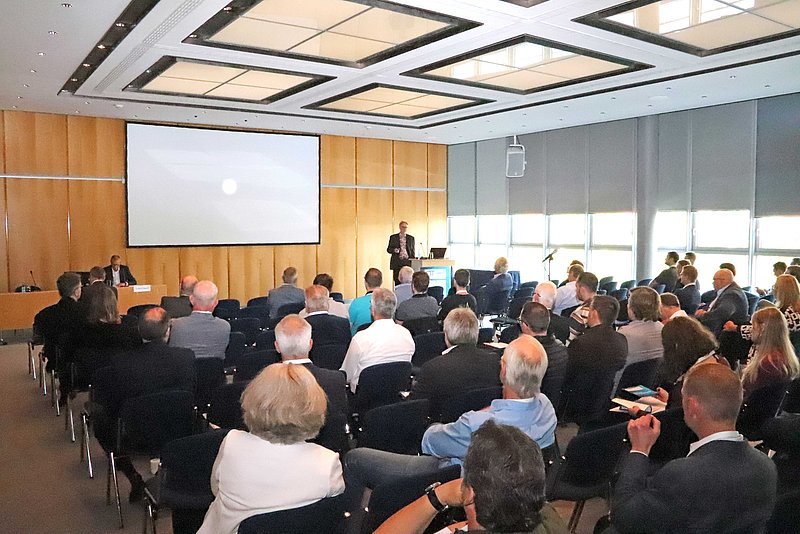
Unusual for a very technical and production-oriented event like the Surface Days, and yet very appropriate due to the tense times, was a presentation by Manuela Schmied-Wolfsbauer on the challenges of managing employees in times of supply bottlenecks. She addressed the problems of the current situation, which is characterized by uncertainties in every entrepreneurial direction, disruptions in supply chains, enormous cost increases and unclear market perspectives. From her coaching practice, she reported that executives in particular find it difficult to deal with excessive demands and thus often drive themselves further and further towards burnout. The more responsibility in a company rests on a person's shoulders, the more difficult, if not impossible, it is to find someone within the company with whom an open exchange is possible. Schmied-Wolfsbauer recommends finding a confidant outside the company with whom an open discussion about problems and needs is possible at least once a week. She also recommends using the calendar to free up concentrated time for urgent tasks - and not juggling them wildly between all the other important things of the day. She also used numerical examples to make clear how expensive staff turnover is and that for this reason alone it is worthwhile to take the satisfaction and personal constitution of employees seriously. Last but not least, the labor market has changed. Nowadays, it is increasingly the case that it is not the company that chooses the employee, but the employee that chooses the company. And last but not least, thanks to online portals, the bushtrolling between employees is excellent as to which company is more and which is less to be recommended.
Sustainability: risks and need for action
Manfred Hofschneider from Tribicon addressed the opportunities and risks of the energy transition in Germany and clearly put his finger on the wounds of an unstructured and haphazard energy policy. In particular, he pointed out the significant risk that other industrialized countries could become much more competitive on the basis of other strategies with regard to energy supply and that German companies will have to make considerable efforts in the medium to long term to avoid becoming the losers of the energy transition. He also discussed what companies can do in concrete terms to improve their own efficiency. For example, a power quality analysis, including derived measures, usually makes a significant contribution to reducing electricity costs, for example through neutral conductor relief, the elimination of phase imbalances and other measures made possible by an integrated energy efficiency system. Based on a 2019 customer analysis, he showed that such improvements in energy harmonization, consumption reduction and energy procurement can deliver savings of 55 percent on average - and up to 78 percent in extreme cases. There is also great potential in optimizing the discontinuous operation of plant technology. In conclusion, he sees the competitiveness of Germany as an industrial location at considerable risk due to the impact of the energy transition and a real danger that a lack of capacity will lead to grid shutdowns. He therefore recommends that measures to achieve energy self-sufficiency be implemented with high priority. Due to the development on the energy markets, he also sees strategic energy purchasing becoming considerably more important.
Lars Baumgürtel from Zinq presented the requirements and solution concepts for circular surface technology. The Circularity Gap Report (2022) shows that a circular economy would be able to reduce global greenhouse gas emissions by 39 percent and the consumption of raw materials by 28 percent. However, only nine percent of the global economy is actually circular. Therefore, since the beginning of 2022, the Zinq Group has introduced the ReZINQ take-back guarantee to be able to recycle zinc and steel in separate cycles in a circular quality. Furthermore, Baumgürtel presented a very plausible bottom-up approach for the introduction of product passports, which also allow SMEs with a reasonable effort to include the sustainability data of a product or substance in their own sustainability balance sheet and to pass it on in the process chain. Ultimately, these are very relevant steps also with regard to the new Ecodesign Directive, which will make it difficult in the future to bring products to market that do not meet such sustainability requirements. Finally, he pointed out that there is a great need to reuse plastic from coatings, i.e. paints of all kinds, and to prevent it from polluting waterways and soils as microplastics. Around 7.4 million tons have so far escaped recycling, and 60 percent of that ends up in the soil!
Strategic closing of a well-running business
A presentation on the strategically motivated shutdown of what is actually an excellently positioned company, underlying German hazerd regulations - with extended obligations after 70 years of operation - was highly interesting. It became clear what kind of effort and problematic surprises were waiting for those carrying out the closing process. Not least because a lot had happened in every respect during the 70 years of operational activity - from conversions to production changes to fires. In the end, the enormous commitment of all those involved made it possible to achieve the shutdown on schedule, at a cost of more than two million euros - plus the soil remediation that was still necessary.
Decisions for complex systems
Another remarkable series of lectures on Friday dealt with decision-making for complex systems. Here, the characteristics of a complex system were first explained and, building on this, practical examples were also used to show why well-intentioned measures and changes in operational practice sometimes lead to unexpected, possibly even problematic and counterproductive developments. More than 80 presentations on a wide variety of surface technology topics were offered in Leipzig, including the dangers of cyber-crime and ways to mitigate the resulting economic risks. Or the recycling of metallic coatings of plastic components, including recycling and reuse of the substrate. After all, in times of dramatically increasing resource scarcity, both recycling and the avoidance of rejects are among the key factors in cost reduction. Other presentations dealt with the topic of AI technology in electroplating as well as electroplating 4.0 in implementation.
ZVO Managing Director Christoph Matheis considers this year's edition a clear success: "We experienced overwhelming feedback on this year's ZVO Surface Days in Leipzig. Both the venue - the Congress Hall at the Zoo for the opening ceremony and the Congress Center Leipzig for the lecture program and industrial exhibition - and the selection of topics and quality of the lectures were praised. Our 65 exhibitors were also more than satisfied and reported many good discussions at the stands. Although we couldn't quite match pre-Corona times with 515 attendees, #OTLeipzig22 exceeded expectations. Perhaps the most well-rounded event we have had so far!" Indeed, even as an independent observer, there is not much one can add to this - all in all, the ZVO succeeded in including very many and important current topics in the lecture program and in putting on a very successful event despite the still difficult environment. Online at oberflaeche.de, readers of the mo will also find a picture gallery of the event.
CB