


Raise the hood
A filigree latching disc for passive pedestrian protection receives process-safe impregnation and coating
(Oct. 2019/OM) - Powder metallurgically manufactured components cannot be easily electroplated. To protect them from corrosion, other processes must be used.
Safety-relevant components in automobiles often need more comprehensive protection against corrosion than is provided by zinc-nickel coatings. One example is a detent disc manufactured by GKN Sinter Metals using powder metallurgy. In the event of a frontal impact or collision, it sets in motion an unlocking mechanism so that the hood pops open at the rear end and the impact is cushioned.
Conventional impregnation processes unsuitable for sintered metals
Due to the high demands on corrosion protection and the required contour accuracy, a coating in the zinc flake system was ruled out. Only an electroplated coating came into question: The detent washer was to be provided with a zinc-nickel coating to meet all requirements. In general, however, powder-metallurgically produced structural parts tend to absorb the liquids used during finishing in aqueous processes and release them again with a time delay, resulting in a defect pattern known as "bleed out". In electroplated coatings, such as zinc or zinc alloy processes, this phenomenon leads to the deposition of salts on the surface. These attack the coating material and lead to local corrosion of the coating material. It is also possible that only a nickel layer is deposited or that the component is not coated at all.
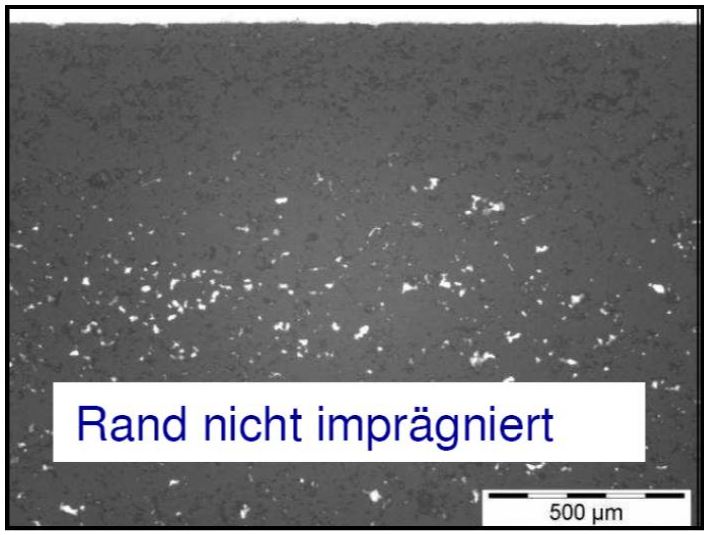
To counteract bleed-out, the pore structure of the sintered metal is sealed with synthetic resin or similar substances before plating. Materials produced by powder metallurgy are also impregnated in this way. However, the success with sintered components that subsequently receive a surface finish is only slight and variable. Studies by the Holzapfel Group show that when conventional processes are used to impregnate powder-metallurgically produced materials, approx. 3 - 5 percent of the pores are not filled, which are concentrated in the edge area of the workpiece. This unfilled rim amounts to approx. 200 - 400 μm and explains the poor results when refining conventionally impregnated sintered materials, especially when using alkaline alloying processes such as zinc-iron and zinc-nickel - GKN has also made this experience.
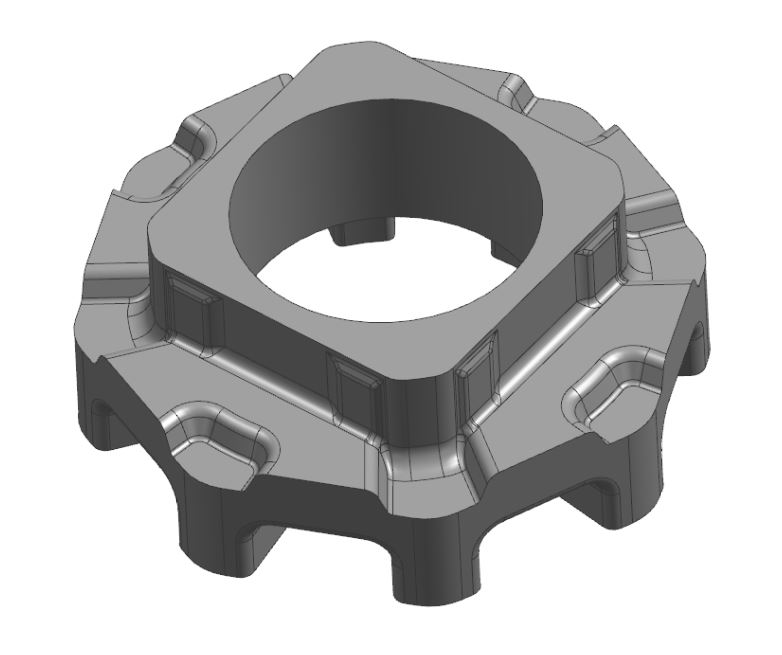
Safe impregnation up to the edge of the component
Instead of the conventional impregnation process with Sinter Surface Solutions, a solution with special impregnation and adapted coating was therefore used for the latching disc. The key innovation of the process is the adaptation of the curing process to ensure reliable impregnation right up to the edge of the component surface. In this way, almost 100 percent pore filling up to the edge can be ensured in a process-reliable and reproducible manner, without any disturbing resin residues on the surface. For this purpose, the resin introduced into the pore is cured from the interface surface starting at the pore entrance and moving inward. The plug formed at the pore exit closes it and prevents resin from escaping. This eliminates all factors that cause the resin to wash out of the pores. The width of the non-impregnated rim was reduced by 70 - 80 percent and now averages about 60 - 80 μm. The total pore-filling volume was increased up to 99.8 percent, so that a 100 percent test is not necessary. At the same time, the coating process was changed to a special zinc-nickel process that is optimally adapted to the needs of the detent disc.
Images: Michael Gaida / Pixabay, GKN
(Kopie 5)
Holzapfel Group
www.holzapfel-group.com