


(Kopie 2)
The great comeback
Venyl records were considered outdated for a long time - now a real trend is developing back to vinyl. For a long time, a vinyl record was something for individualists. Now the classic among music media is experiencing a veritable comeback - and for good reason. The analog signal of a high-quality record is superior to digital formats in its nuance and naturalness.
For decades, the venyl record was considered a relic of the pre-digital age. When the CD began its triumphant advance in the 1990s, record players began to disappear from living rooms. The record, which had accompanied the music world for so many decades, became a discontinued model. At that time, even the biggest vinyl lovers probably would not have expected that 30 years later, not only are new records still being produced and pressed, but that the vinyl record is experiencing a real boom. And this despite the fact that in the meantime the once overpowering CD has long since become an endangered species - displaced by more and more music streaming. While the sales figures of CDs are collapsing, the production figures of vinyl records continue to rise. There are now quite a few active record pressing plants in Germany, one of which produces in Tiefenbach, a small, tranquil town near Landshut in Bavaria.
"We've been based here for a few years now, but to this day there are still many residents who have no idea that we exist here," smiles Helge Sudau, who runs MY45 with his wife. But that's not really surprising, because from the street you can hardly tell that an industrial company is located here. A residential building obscures the view, and anyone who isn't really looking for it will overlook the discreet "MY45" sign that directs visitors to the actual company premises, which are located lower down across the street.
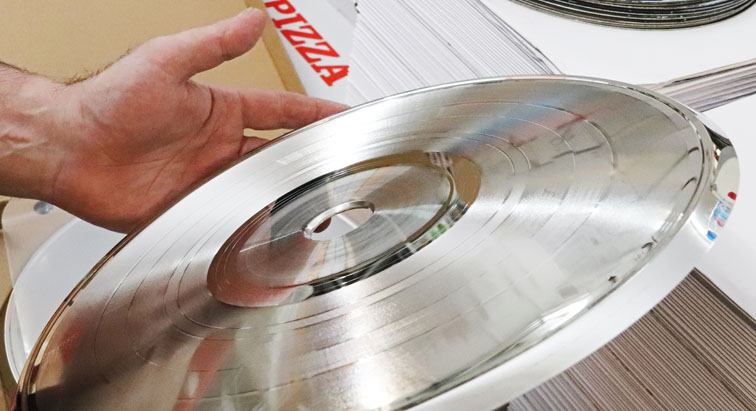
Parking spaces are in short supply. The shortest way into the record production facility is via a small loading ramp, which can be negotiated effortlessly with a bit of verve. In front of the gate, the sleepy, rural idyll abruptly rebounds; behind it, the visitor is immediately immersed in the bustling production of records. Immediately on the left-hand side begins the realm of Dieter Zeh, MY45's electroplater. He is a career changer, used to work in a large chemical company and has now found his calling. "We are all die-hard vinyl lovers here," he tells us. "Accordingly, we have high demands on our product. The all-important criterion is, of course, the sound. Nevertheless, we also attach the greatest importance to the appearance and how the records get into their covers." Incorrectly inserted records or even fingerprints are a no-go at Tiefenbach. That's why everyone who touches a record wears cotton gloves. Dieter is mainly responsible for the production of the so-called stamper, which are the press molds used to make the sound grooves in the plastic. He is visibly proud of the fact that their work in Tiefenbach is even recognized internationally - even renowned reggae labels in Jamaica open their archives and have new editions of classics like Bob Marley produced in Bavaria.
Quality instead of mass
Anyone who thinks that the vinyl record we know today is a relic of the 19th century is mistaken. It's true that the first mass-produced records were actually made as early as 1890. However, they were made of sensitive shellac and had only one sound channel. The groove width was 120 µm. The PVC records, which were much better in every respect, and with them the 45 µm microgroove, did not begin to establish themselves until after the Second World War. And even then, everything was still mono; the first stereo record came onto the market in 1957. In the modern record, the sound is imprinted on the groove flank at a 45-degree angle. This is what makes it possible to play two channels with only one pickup in the first place. Basically, this means that as the recording level increases, the sound groove requires more space and accordingly less playing time fits on one side. Basically, therefore, the sound quality and dynamics of a record depend not only on the absolute physical limits, but to a considerable extent on the priorities in production and manufacturing. It is also obvious that in terms of dynamics and sound quality, the mass-produced records of the 1970s and 1980s, some of which were even produced in quantities of millions, only offered a cost-optimized compromise in terms of listening pleasure. A record produced today is different.
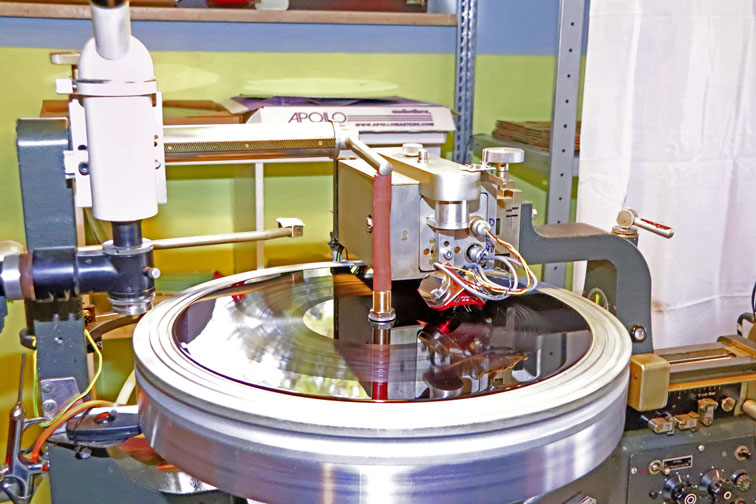
"Today, we produce for a highly audiophile audience," Sudau explains as he advances toward the recording studio through the middle of the production area. He manages the pressing plant in Tiefenbach with his wife Lena-Maria. "It's no longer about producing as many records as possible at the lowest possible cost. Our goal is to achieve the absolute optimum in sound quality."