

Progress in alternative hard chrome
Improvements in crack structure for hard chrome deposited from trivalent electrolytes
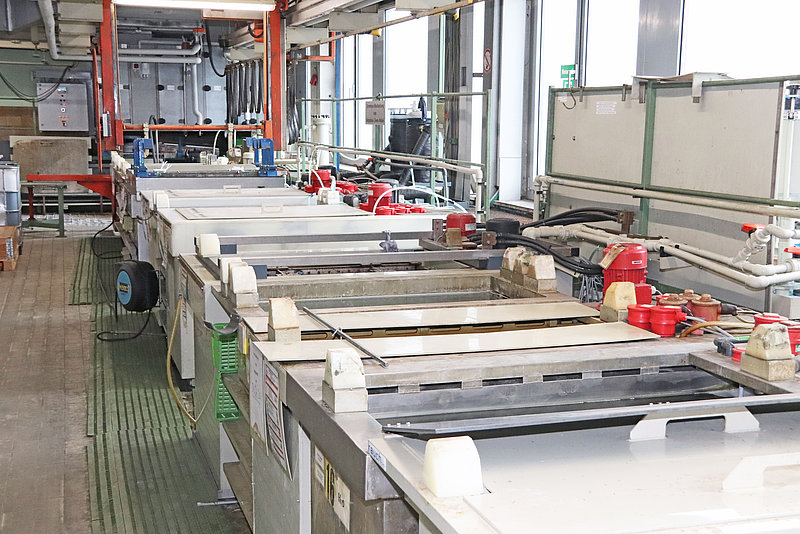
A hard chrome coating made from a chromium (VI) electrolyte has a very balanced profile of properties that makes it an almost ideal surface for many tribological applications. These include its high but not brittle hardness, as well as its microcracks, which are great advantages for dry running situations. In addition, it is anti-adhesive and also very inexpensive to produce. In terms of pretreatment, it is also extremely low-maintenance thanks to chromic acid - in a word, pretreatment is not really necessary. These many positive properties, which are sometimes unique in combination, are offset by a key shortcoming: Chromic acid is subject to authorization as of September 2019. The continued use of electrolytes containing chromic acid will also become more of a challenge with each subsequent authorization period - the next one starts as early as 2024. Contributing to this will be both the requirements regarding use and ECHA's requirement to submit substantiated substitution analyses. This means that every hard chrome electroplating shop will have to take a well-founded and open-minded look at the question of whether it is possible to substitute chromium(VI) for its own applications. In principle, a wide variety of processes can be considered, from thermal spray processes to plasma surface technology. However, it is also clear that these processes are generally much more expensive than hard chrome, particularly in terms of production effort and costs. An interesting and much discussed alternative in this context is, of course, hard chrome deposited from a chromium(III) electrolyte.