


Chromium(VI): Instruments for authorization
Eine konstruktive Herangehensweise für eine Zukunft mit Chromsäure – und der ECHA
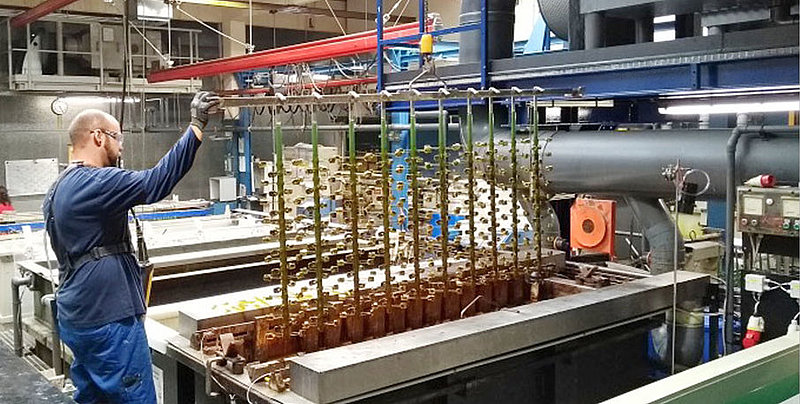
The authorization of chromium(VI) has already been a tour de force for many companies in recent years. Now there is finally a first authorization for the upstream application of a large consortium. This is a reason for joy for all the companies concerned - actually. However, the fact that the approval does not cause a storm of joy is due to two things. On the one hand, the conditions are more than demanding in terms of implementation, and on the other, legal action against the approval is currently being discussed in the environment of the EU Parliament. At the present time, it is not possible to predict what the consequences will be. However, all those who have to work with chromium(VI), and who may have been part of this application group, not only have to deal with the current approval period, but there is another task to be accomplished: Re-authorization must be in place by September 2024, or face a hard production freeze by that date.
The longer lever
Like it or not, the European as well as the national authorities are sitting at a very long lever, especially in chemicals policy. If a company in Europe wants or needs to continue using chromium(VI) in the future, it has no choice but to comply with the conditions imposed by the European Commission. The conditions of the approvals will inevitably have to be integrated into the day-to-day operations and risk management of the companies. A new way of thinking will have to take hold among coating companies in the coming years. After Vecco e.V. had initially still hoped to be able to overturn the necessity of the approval via a court case, the realization grew over the years that a long-term future with chromium(VI) and the blessing of the ECHA or the EU Commission is only possible if it is possible to comply with the goals and specifications of REACH. At the same time, the effort for the companies involved must be minimized. Therefore, Vecco e.V. started to develop and build up a suitable infrastructure for this purpose.
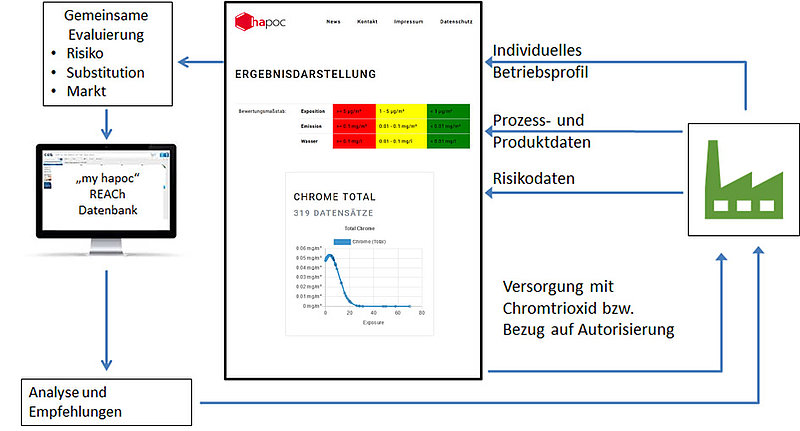
In the constructive debate with ECHA and the REACH regulations, Vecco e.V. recognized early on that exposure measurement values will be of elementary importance for the future of companies and the
chromium(VI) approval, exposure measurement values would be of elementary importance. For this reason, a distinctive measurement culture has been developed among the member companies for years. Currently, a database is being developed from this, which has historical data from almost 400 measurements from various relevant work scenarios that exist in an electroplating company.
This good database and the resulting transparency led to the fact that in an ECHA recommendation on the Hapoc approval application, whose positive decision is expected in the summer of 2021, it is planned to allow representative measurements so that not every company has to carry out all the measurements itself. Should this actually occur, the measurements saved would lead to a significant advantage in terms of cost and effort.
In order to continue to provide member companies with an easy-to-use working tool, the "my Hapoc" database offers more than just measurement values. Through the possibility of new media, a compliance check is performed in a very simple way for the particular authorization to which a company wishes to refer. This point is not insignificant. Just because a company assumes that it is allowed to refer to an authorization, it does not necessarily follow that this is legally compliant. Since a
use of chromium(VI) without authorization is a criminal offense, half-knowledge can lead to a delicate balancing act. Incidentally, the Vecco's database solution has been independently described as exemplary on several occasions.
In addition, companies for which a measured value once does not turn out so well and causes a need for action receive active support from practitioners from the industry. The database platform will also be used in the future to offer other products in addition to chromic acid that are needed to minimize risks in electroplating shops - including protective masks and safety clothing.
Cooperation with measuring institutes
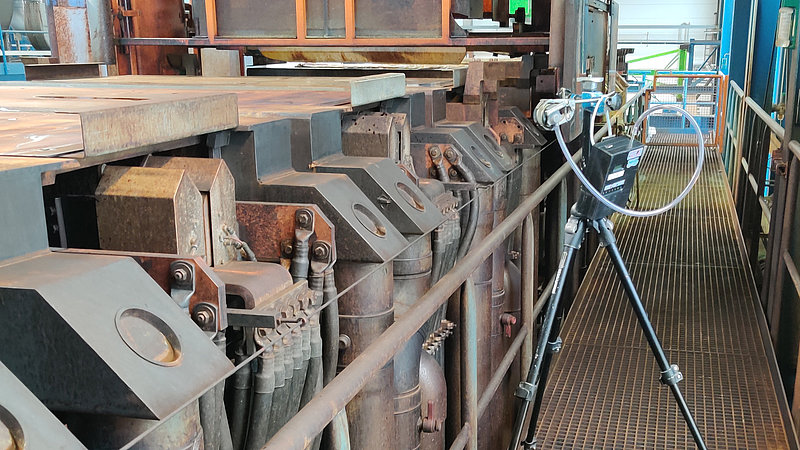
In order to make the challenges posed by the necessary measurements manageable for the member companies, Vecco has already been working for years on concluding framework agreements for the members with accredited measuring institutes, which brings advantages both in terms of price and scheduling. Overall, the measurements carried out also led to important findings, for example, the exposure values when solid chromic acid is added in flake form are obviously nowhere near as negligible as was previously widely assumed. After it became clear that action was needed here, this provided the impetus within the network to develop the so-called formulator. This is a container that contains chromic acid in flakes and can be converted into liquid chromic acid on site. Measurements showed that this can significantly reduce exposure levels during resharpening of the baths.
Apart from the use of chromic acid in the context of authorization, the issue of substitution is gaining strongly in importance, as shown by the substitution plans required by ECHA. Only if it can be objectively and credibly demonstrated that substitution is not possible will an authorization application have a chance of success in the future. Especially for smaller companies, the effort for a substitution analysis satisfying the European Commission, which requires corresponding research and development activities, is usually not financially feasible. For this reason, Vecco:net, a European substitution network, was founded to provide a professional examination of alternative technologies. Among other things, this results in a technically competent assessment of the facts. At the same time, premature decisions by the Commission based on marketing arguments that cannot be verified in the short term can be prevented.
Focus on follow-up authorization
According to its own statement, Vecco's priority is to achieve the longest possible authorization period for its member companies. For this reason, the experts are already looking at the design of the follow-up applications in order to give the applications for the continued use of chromic acid a better basis and to achieve longer periods of use compared with the expected results of the first authorization. Overall, the overall concept and the holistic approach makes a very goal-oriented impression. Nevertheless, it remains to be seen whether this will also be reflected in longer review periods.
In view of the current discussion, the association expressly points out that there are no deadlines on the Vecco side for the next authorization cycle. The statutes of Vecco e.V. explicitly provide for the possibility that further companies can join the authorization. For all companies that feel uncertain about the future use of chromium(VI) in the current situation, the Vecco could thus be an interesting contact.
► Vecco e.V