


On the way to the new chrome plating
Applications with chromium trioxide are tried and tested - and subject to authorisation: New ways are needed
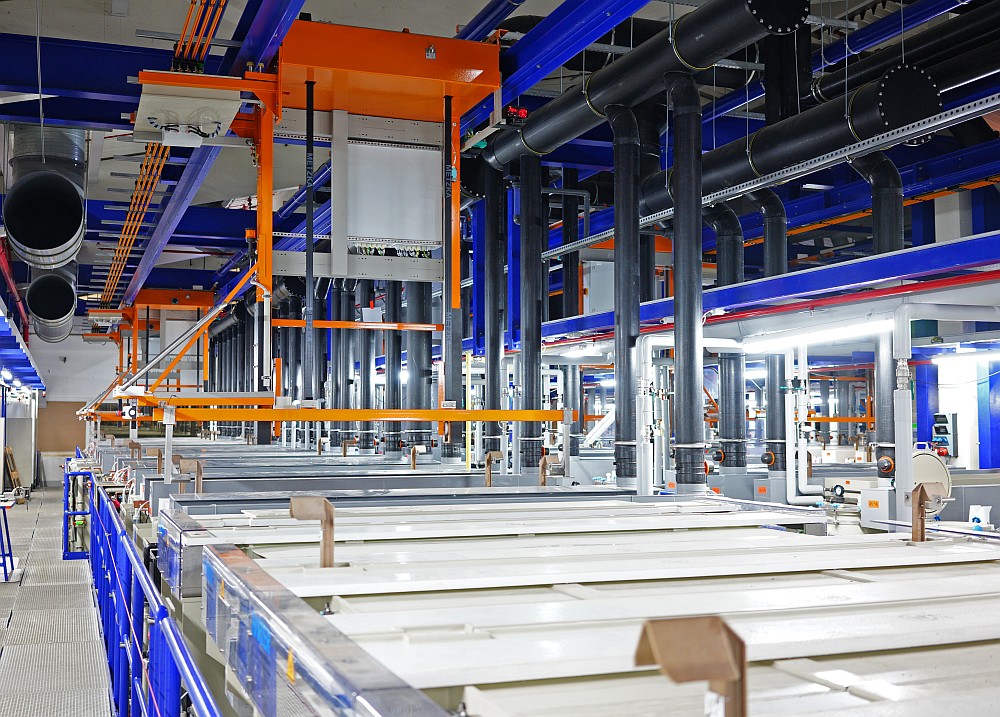
Research by the FGK has shown that a sensible substitute for conventional chrome plating for plastics can only be to use other starting chemicals. Painting or PVD technology is out of the question if the noble appearance is to be retained.
Chrome finishes increase the appearance of value, but also the durability of the vehicles or equipment in which they are used. Their complete recyclability and the high reusability value of the metals also make chrome coatings a sustainable process, apart from being economical [1].
The state of the art in chromium plating of plastic components is the use of chromium sulfuric acid in the conditioning of the plastics and of chromium(VI)- or chromium trioxide-based chromium plating electrolytes for coating. These processes are subject to authorization under the REACh regulation. BIA therefore set itself the goal of replacing chromium trioxide with alternative processes or chemicals where possible, thereby reducing the hazard potential of the manufacturing process [6].
Definition of an alternative process
An alternative to a real metal surface must remain a real metal surface if it is to have at least similar properties. The Galvanized Plastics Association (FGK) has evaluated alternatives to electroplating in various studies. Overall, these studies have come to the conclusion that an alternative to electroplated chromium plating of plastics can only be to produce an electroplated chromium plating using other starting chemicals. Paint coatings, PVD coatings or foil techniques can only partially imitate the properties, but generally produce an inferior appearance, which makes the application in high-quality vehicles questionable, especially in the interior [9].
In addition, there is the aspect of sustainable recycling processes already mentioned. Here, effect coatings or combinations of PVD metallization and painting show clear disadvantages, since it is not possible to process the materials separately. The effect pigments, paint components and metal traces contaminate the plastic so that it cannot be reused in high-quality processes. Therefore, the focus in the development of alternative processes is on the replacement of chromium trioxide in the existing coating processes and not on the replacement of the electroplating process as an overall process. When considering alternatives to the process steps of classic plating on plastic (POP), conditioning must be considered separately from electrolytic chromium plating from a technical point of view, since the same chemical is used here in completely different chemical applications. In the conditioning of plastics, the great oxidizing power of chromium trioxide is used to selectively decompose the plastic surface by oxidation, thus creating a basis for an adhesive metallization. In the process, the oxidation medium is reduced but not deposited in or on the component. On the contrary, the pickling medium is recycled and recovered within the system using electricity and remains in the process.
In electrolytic chromium plating, on the other hand, the chromium trioxide is reduced in an electrolytic process in several steps and deposited on the goods as metallic chromium ("zero-valent"). The metallic chromium has completely different properties from the starting chemical and is not dangerous.
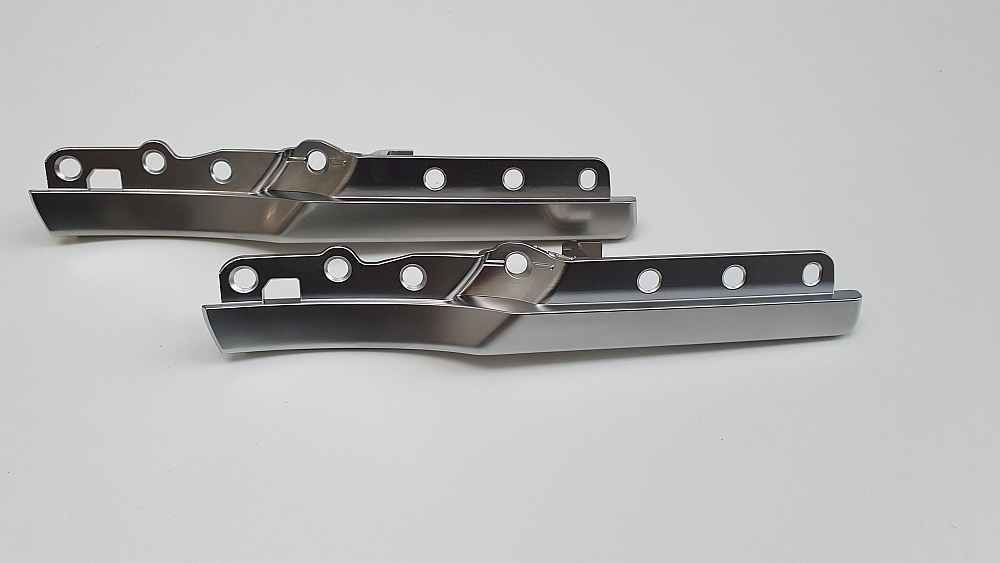
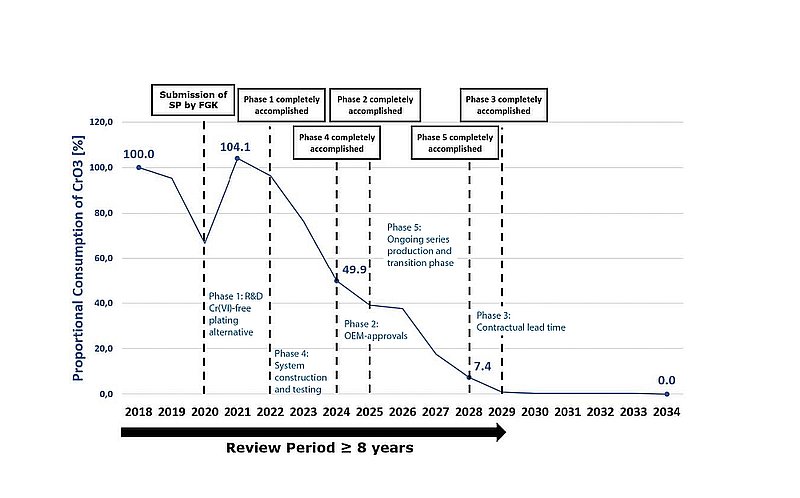
State of the art in electrolytic chromium plating
Chrome electrolytes based on chromium (III) compounds have been used for several years for various applications. The FGK considers the processes available on the market today to be suitable for industrial use. The problem of color deviation from the classic chrome surfaces has also been solved with the latest generations of chrome electrolytes, so that it is possible to change a surface even during series delivery in mixed processing. This is confirmed by the components qualified within the last two years in series production, which are available at all locations of the BIA Group.
However, chromium(III) processes differ fundamentally from the classic chromium(VI) processes. For example, the layers are significantly thinner and, in order to meet the required corrosion properties, must always be deposited on a microporous nickel layer and then passivated. For the plant technology, this means that additional hardware must be installed for these process steps and time must be allowed in the treatment process. The monitoring effort also increases, because both the microporous nickel and the passivation have to be monitored analytically. There is also additional monitoring of corrosion resistance in a salt spray test for at least 480 hours. In practice, it is precisely these long-running tests that make it difficult to convert existing components to the new technologies.
There is potential for development of the technology on the anode side. Titanium anodes, which are produced with a mixed oxide coating based on iridium and tantalum, are used for chromium(III) electrolytes. The main area of application for these anodes has so far been in chlor-alkali electrolysis or water decomposition for the production of hydrogen. Therefore, each type of anode must be tested for suitability before use in a chromium(III) bath, because unsuitable anodes can rapidly convert chromium(III) to chromium(VI) in the electrolyte [11]. Unfortunately, these anode materials have become extremely expensive since the German government's hydrogen strategy was laid down, so alternative electrodes certainly offer potential savings here.
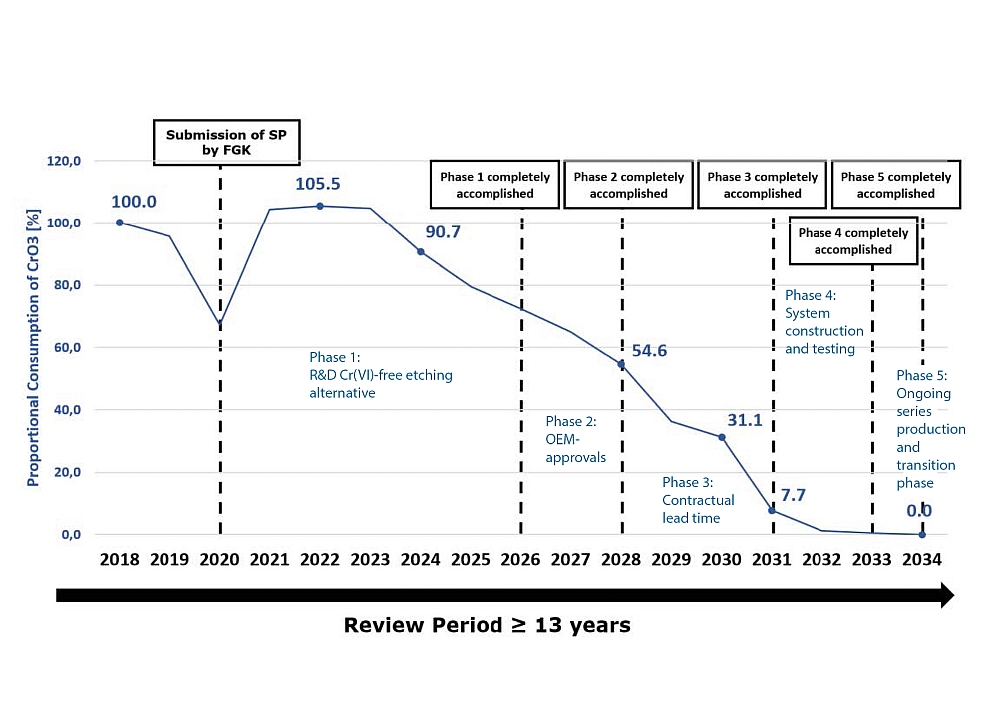
State of the art in pickling
The state of development of conditioning processes for plastics is unfortunately far behind that of electrolytes. Here, too, the FGK reports at regular intervals on the state of the art and development in chromium-free pickling (CFE) [10]. As mentioned above, a strong oxidizing agent is needed in the pickle to oxidize the butadiene components from the surface and roughen the surface. At the same time, the styrene matrix must be polarized and thus made receptive to the palladium activator.
Today, the use of manganese-based pickles is favored, although interesting alternative pickling concepts are also being tested and pursued [8]. Some manganese pickles use pure sulfuric acid based base pickles, others use methanesulfonic acid and/or phosphoric acid for base activation in addition to sulfuric acid. The manganese is reduced in the pickling process and goes through various oxidation stages. It must be avoided that it precipitates as manganese dioxide (MnO2) and remains on the components. This is suppressed by adding "stabilizers", usually redox catalysts. Unfortunately, these stabilizers are very expensive and represent a relevant cost increase. Similar to chromosulfuric acid pickling, the CFE solutions have to be regenerated in a reoxidation cell by means of electrolysis. Lead or niobium anodes coated with platinum are used as anode materials. While the lead anodes require more frequent maintenance and cleaning, with the niobium anodes there is a risk of under-corrosion of the active platinum layer and thus failure of the very expensive anodes. Which system will prevail cannot be said at this point. What does seem clear, however, is that the new pickling systems require more power for regeneration, since the CFE also degrades noticeably during standstill and must first be regenerated before production can begin.
At the present time, the first components from the CFE process have entered series production. Development is further advanced for pure ABS components than for PC/ABS blends or multicomponent components. Temperature cycling tests in particular reveal the weakness of the new types of stain. Here, it is suspected that residues of the queller used, which is necessary for better pickling properties, weaken the stability of the plastic matrix and thus promote failure. Queller also pose a disadvantage in wastewater treatment. They are low-volatile organic solvents that generate a high COD (chemical oxygen demand) load that cannot be treated in the conventional wastewater system of an electroplating shop. It is therefore a development objective to dispense with these substances.
An important point of the test trials will also be the selection of the rack insulations. The coatings on the racks used so far in plastic electroplating tend to metallize in the CFE processes. Several suppliers have therefore developed novel systems to prevent this. For a conversion process, however, this means that all racks have to be renewed. In addition to the financial burden for the coater, this is a logistical challenge, since in extreme cases production would have to be changed over in series production within a very short time.
However, the process development steps are progressing well and it is expected that CFE can be offered in series production by several plastics electroplating plants as early as 2024. In its substitution plan, however, the FGK has planned a period until 2031 for complete substitution.
The reason for this is that a changeover from chromosulfuric acid pickling to CFE requires massive rebuilds in the electroplating shops. Due to the necessary individual adaptation of the pickling conditions to the components to be electroplated, both the chromosulfuric acid pickling and the CFE must first be available in the plant. For this purpose, the BIA Group has built a completely new electroplating facility at its Solingen site, which is capable of developing the conditions in the CFE for the different components in parallel with series production. With the knowledge thus gained on the components produced under series conditions, the designs of the necessary conversions in the other lines can subsequently be determined. The development work is carried out in partnership with leading process developers, who also benefit from the results. To evaluate the alternative processes and improve efficiency in terms of environmental impact, the project is being funded by the German Federal Ministry for the Environment, Nature Conservation and Nuclear Safety (BMU) under the Environmental Innovation Program (KfW file number: NKa3 - 003543) [12].
A final consideration of the costs of CFE pickling is not possible at this stage, since the different manganese pickling processes require different process steps with highly variable costs. Therefore, the goal of the practical testing of CFE pretreatment is to first enable series-safe production in parallel with classical pickling. In a second step, similar to the electrolytic chromium plating process, the process costs are to be reduced by optimizing the process.
Conditioning process for polyamide components
In addition to ABS and PC/ABS blends, polyamide components are also electroplated to a greater extent. These components are very often used in areas where, in addition to the decorative surface, a high degree of mechanical stability of the component is also required, as for example in the case of an interior door actuator in a vehicle door. Since polyamides tend to hydrolyze the amide bond in acidic media, the chromium-free mordants for these materials are based on acid mixtures. In contrast to chromosulfuric acid pickling, there is no oxidation of the material, but only swelling of the surface. It is important to remove excess acid from the surface after swelling so that no weakening of the polyamide can occur in the base material of the component. BIA has started up a corresponding process with a partner in an electroplating shop.
The plastics electroplating plants in Europe especially those of the FGK have taken the challenge of the REACh regulation seriously and are working on the development of the chromium trioxide-free process for the coating of plastics. The first processes for selected components have already been put into practice and the FGK will report regularly on the progress of the processes. In particular, the large-scale evaluation of the processes in the new BIA electroplating facility in Solingen will show the status here with regard to quality criteria as well as optimizations in economical, efficient process sequences.
In the next step, the plastics electroplating plants will push the use of recycled material, thus enabling a closed material cycle even after the components have reached the end of their service life. It is already apparent that the high proportion of recyclable material in the real metal surface makes recycling economically attractive. Chrome-plated plastic components thus demonstrate that cost-effectiveness, value and sustainability are not contradictory but can be in harmony.
Dr. Markus Dahlhaus
Bibliography
[1] Sustainable refined plastic components, Felix Heinzler, ZVO Report1/2022/ P 42 - 46
[2] echa.europa.eu/documents/10162/44c1db01-abe6-3f25-3241-799ad56bf6c0
[3] Chromium III process in practice, Markus Dahlhaus, Chromium 2020 conference, 03.11.2015
[4] echa.europa.eu/applications-for-authorisation-previous-consultations/-/substance-rev/22507/term
[5] Wastewater treatment of trivalent chrome electrolytes, Felix Heinzler, Marc Piepenbrink, Claudia Lazo, Galvanotechnik 6/2021/ P 796 - 799, Leuze Verlag
[6] European Chemicals Agency (ECHA): Regulation (EC) no. 1907/2006, URL echa.europa.eu/de/authorisation-list - review date 2021-01-11
[7] A Batch Reverse Osmosis Process to Recover and Recycle Trivalent Chromium from Electroplating Wastewater, Roxanne Engstler, Jan Reipert et. al. Membranes/August 2022/ 12, 853
[8] Status quo: chromium-free plastic conditioning, Markus Dahlhaus, Felix Heinzler, et. al. Galvanotechnik 9/2020 Eugen G. Leuze Verlag
[9] AoA Non confidential Report - Gerhardi Application for Authorization echa.europa.eu/documents/10162/e2bfe2b0-a807-4290-ade7-8e7ea459081a
[10] Felix Heinzler, Christian Klais, FGK Chrom 2030 March 2022.
[11] Gunther Wiehl; Lothar Schneider, The role of anode technology for the stability of trivalent chrome electrolytes in industrial series production, lecture ZVO Oberflächentage September 15, 2022.
[12] "Efficient, chromium(VI)-free electroplating of plastics for the automotive industry", BMU funded project, KfW file no: NKa3 -003543
BIA Kunststoff- und Galvanotechnik GmbH & Co. KG
www.bia-group.com