
(Kopie 1)
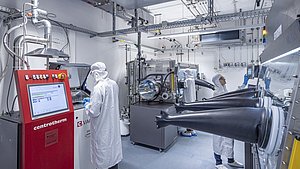
Applying a 500 nm-thin perovskite cell to a conventional silicon solar cell increases the theoretical efficiency limit from 29.4% to 43.3%. To pave the way for the industrial implementation of this tandem technology, the Fraunhofer Institute for Solar Energy Systems (ISE) today opened a new…
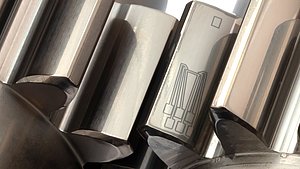
Machine downtime, quality deviations, and wear-related failures rarely occur without warning signs, yet these often go undetected. Fraunhofer Institute for Surface Engineering and Thin Films (IST) is making such hidden conditions visible with integrated thin-film sensor technology that measures…
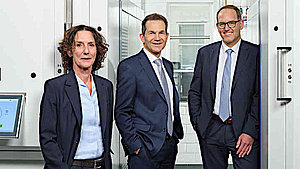
Cemecon AG, based in Würselen, is restructuring responsibilities within its executive board. According to the company, the market-leading tool coating specialist aims to send a signal of continuity with the move.
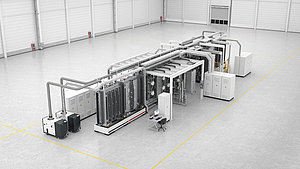
With its new Vica900 system platform, Von Ardenne GmbH, Dresden, has for the first time combined continuous inline coating in a PVD system with HCLA technology.
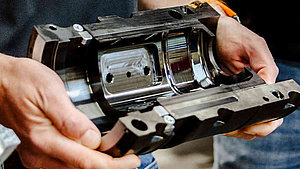
Stretch blow molding machines produce tens of thousands of PET bottles per hour for hot-fill applications. This is only possible with robust blow molds—the core competency of a mold manufacturer from Soltau with more than 50 years of engineering experience. DLC coating plays a key role in this.
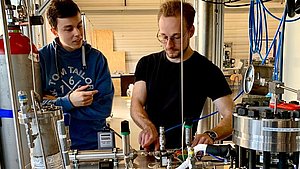
With a new project, Baden-Wuerttemberg Cooperative State University (DHBW) Mannheim is expanding its research focus in the field of hydrogen. The “PECVD_Bipocoat” initiative aims to reduce costs in key components of industrial hydrogen production.
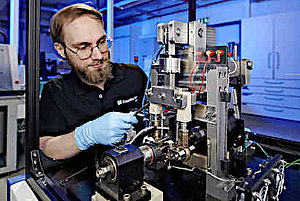
Friction determines energy consumption, wear, and the service life of technical systems. In the Bioslide research project, the Fraunhofer Institute for Material and Beam Technology IWS is investigating how sliding systems can be designed to be more sustainable and energy-efficient.
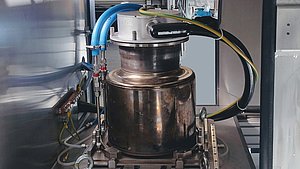
Fraunhofer FEP has commissioned a novel hybrid system that combines a low-energy electron beam source with a bioreactor. The platform opens up new possibilities for biotechnological applications—from resource-efficient metal extraction to sustainable environmental technologies.
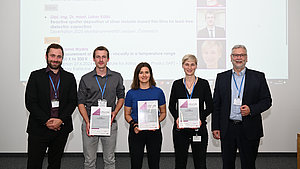
Many advances in sustainability are emerging in vacuum technology, thin-film technology, and surface physics. This is where the Vacom Sustainability Award comes in, which is presented annually by the German Vacuum Society (DVG).
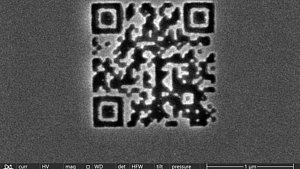
Thin ceramic films can serve as data storage for thousands of years. This has been demonstrated by a research team at TU Wien together with the company Cerabyte. The result is a QR code so small that it can only be detected with an electron microscope.