

(Kopie 1)
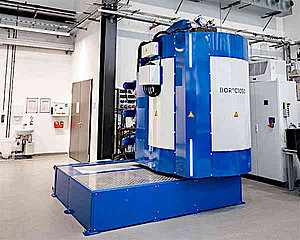
When red-hot steel is forged or components with near-final contours are manufactured from high-temperature materials, tools are subjected to extreme stresses. High temperatures, wear, and aggressive media determine their service life. Surface technology is therefore essential for efficient,…
Singulus Technologies AG is supplying the aerospace company SpaceX with a turnkey production line for manufacturing heterojunction solar cells. The supply contract is part of a strategic partnership with SpaceX, under which Singulus plans to supply additional production lines.

A research team at the University of Vienna led by physicist Jani Kotakoski demonstrates how the shape of nanopores in hexagonal boron nitride—also known as “white graphene”—can be controlled at the atomic level. When electrons are bombarded in an ultra-high vacuum, circular pores form, whereas the…
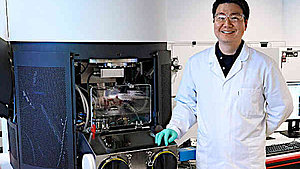
Just a few atomic layers on the surface can significantly influence how effectively a material binds pollutants or how a photocatalyst reacts to light. Researchers at the Fraunhofer Institute for Applied Polymer Research (IAP) use X-ray photoelectron spectroscopy (XPS) to investigate chemical states…
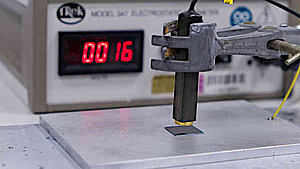
iCVD polarizes polymer coatings
Researchers in Kiel have demonstrated a previously unknown effect in thin polymer films: the coatings become polarized on their own during the manufacturing process. This opens up new possibilities for PFAS-free coatings and electronic applications.
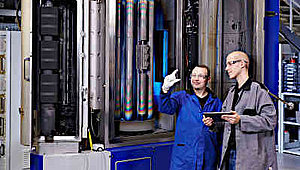
High mechanical and abrasive stresses shorten the service life of tools and components. Coatings made of tetrahedral amorphous carbon (ta-C) reduce friction and protect surfaces. The Fraunhofer Institute for Materials and Beam Technology IWS has now achieved two breakthroughs that could expand the…

Organic solar modules stand out for their flexibility, transparency, and favorable environmental footprint. Researchers at the University of Freiburg and the Fraunhofer Institute for Solar Energy Systems (ISE) have now succeeded in develop 14.5 × 14.5 cm organic PV modules with an average…
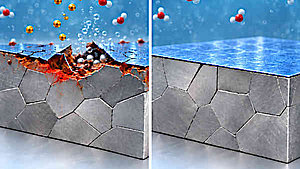
Until now, hydrogen electrolysis has relied heavily on expensive platinum. However, as new findings from the Vienna University of Technology show, significantly less is actually needed. The required layer thickness is in the nanometer range.
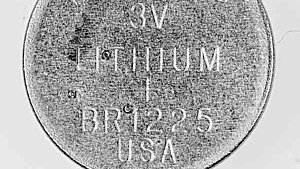
Demand for more powerful and lighter battery systems is growing. The Fraunhofer Institute for Thin Film and Surface Technology (IST) is therefore collaborating with the Fraunhofer USA Center Midwest (CMW) to explore new approaches for improving the performance and lifespan of future battery systems.…
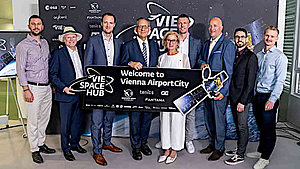
At the newly opened Space Factory at Vienna International Airport, startups and research institutions can develop and test components for space applications. A vacuum system provided by Busch Austria enables the creation of high vacuum and the testing of components under conditions similar to those…