
Advertorial
Efficient cleaning prior to back-spraying or painting
Hohe Ausschussraten bei der Fertigung von Spritzgussteilen lassen sich deutlich reduzieren
In both molding processes and painting, even the smallest particles on the surface cause clearly visible defects. Cleaning with Sword Brushes meets the highest quality requirements and saves costs at the same time.
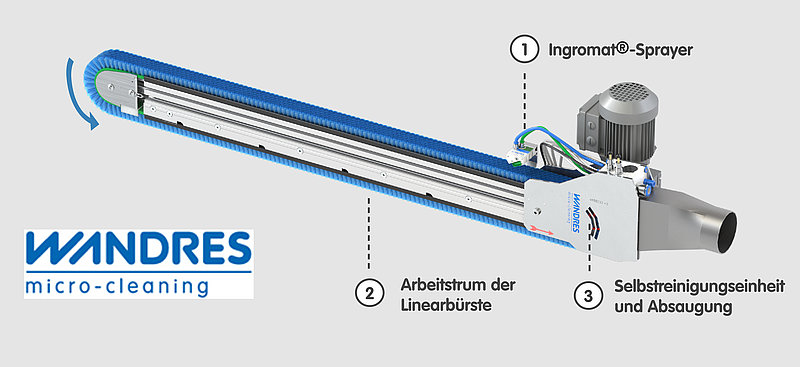
Cleaning using the Ingromat® process
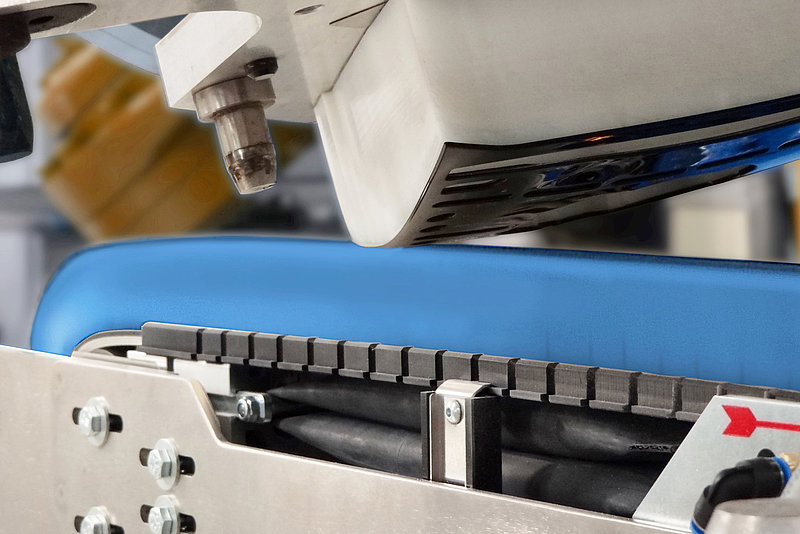
The automated cleaning process has already proven itself in numerous industrial sectors: The fine filaments of the brushes are lightly wetted with the Ingromat® cleaning and antistatic agent so that even the smallest particles can be reliably bound and removed. The cleaned surface remains dry and can be immediately processed further. Continuous self-cleaning with squeegees and compressed air nozzles ensures reproducible results even in continuous operation.
Molding process: IM, IML, IMD
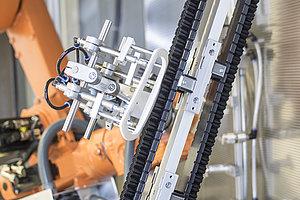
When back molding decorative foils or functional foils (e.g. touch displays), trapped particles can lead to optical or functional disturbances. To prevent this, the foil is first cleaned by a robot on a permanently installed sword brush and then inserted into the injection molding machine. Leading suppliers to the automotive industry and medical technology use this process to achieve perfect surface quality and significantly reduce reject rates.
Surface finishing
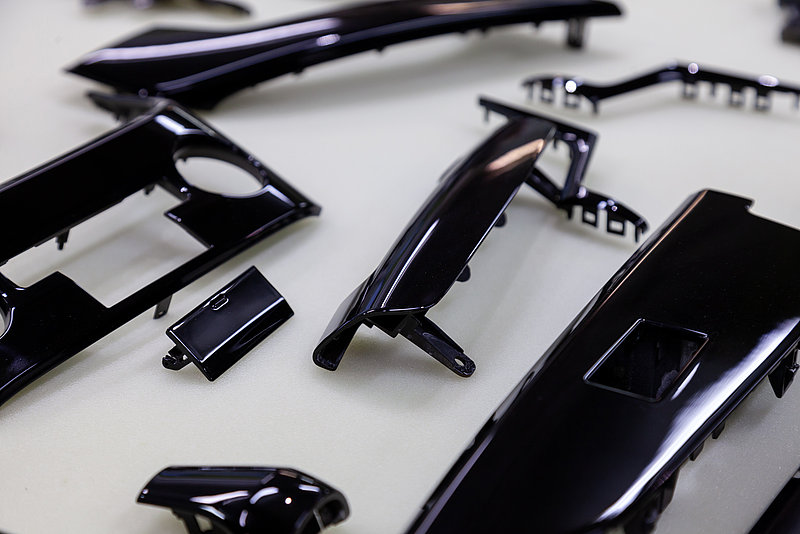
Sword Brushes can also be optimally used before coating, laminating or chrome plating to reduce the defect rate and enable a perfect finish of the plastic parts.
By using conically rounded polyamide filaments with "soft touch", even scratch-sensitive surfaces can be cleaned without any problems.
Wandres GmbH micro-cleaning Im Gewerbepark 8, 79252 Stegen Tel: +49 661 - 93 30 0 www.wandres.com