

Sound judgement is good, control is better
More process control in thermal spraying: Speed and temperature are crucial
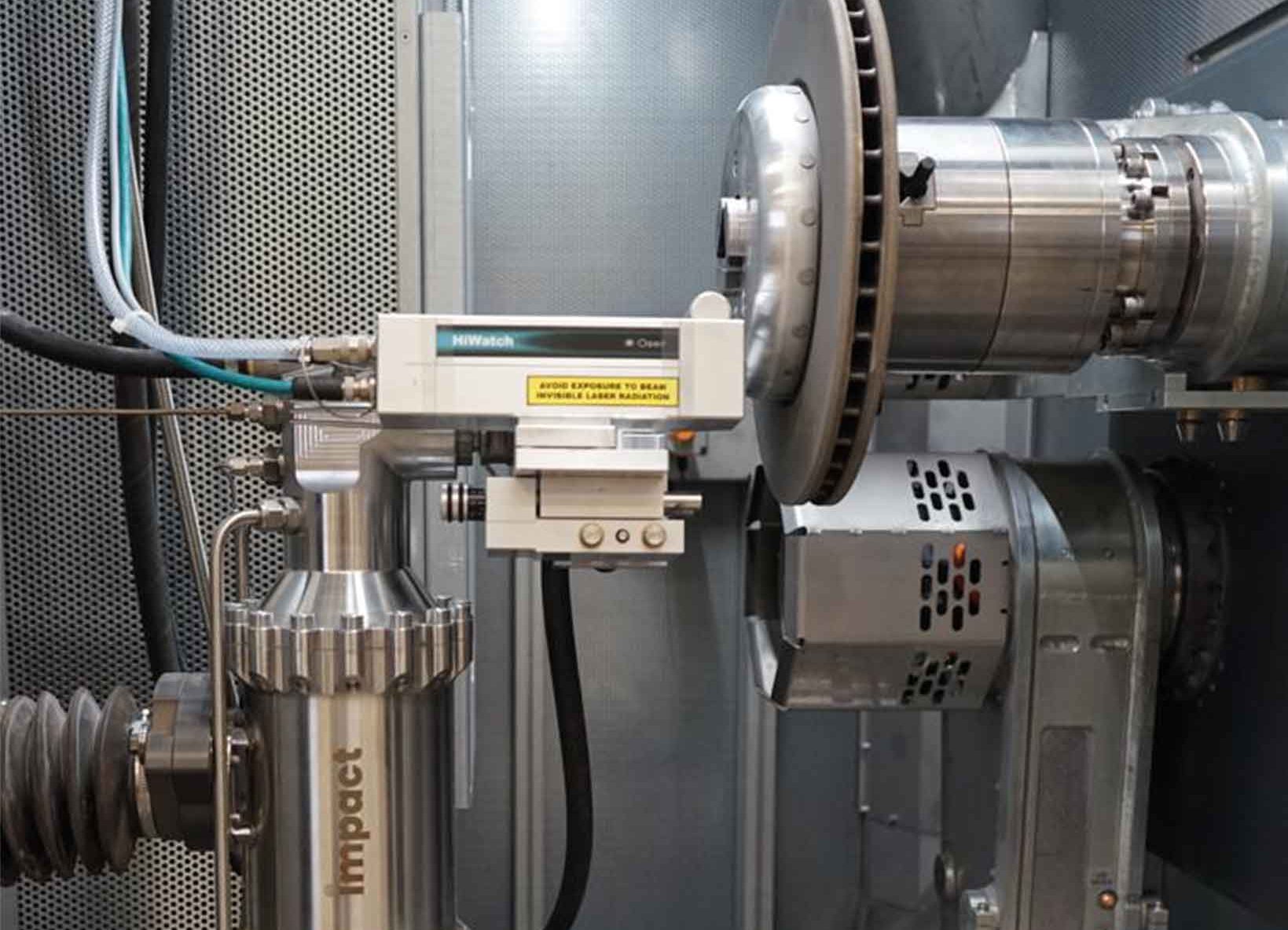
Particle speed and temperature are the key to high-quality coatings in thermal spraying. Incorrect parameters can lead to porous coatings or mechanical stresses. Precise measuring technologies make a decisive contribution to minimizing rejects and improving quality.
Thermal spraying and cold spraying are among the most important technologies for the production of high-quality surface coatings in many industries, including aerospace, automotive and semiconductor manufacturing. These processes make it possible to apply protective or functional coatings to components to improve wear resistance, corrosion resistance or other material properties.
Being able to determine and optimize the particle speed and particle temperature before the start of the spraying process is of great benefit to the success of these processes. This allows the coating processes to be carried out with precisely reproducible parameters. In principle, an experienced employee should be able to achieve sufficient process stability even without additional measuring equipment for common applications.
However, if particularly high demands are placed on the coating properties or the consequences of a failure would be particularly serious, more precise process control and documentation may be worthwhile.
Major influence of speed and temperature
The speed and temperature of the particles that hit the surface as a spray jet have a direct influence on the subsequent properties of the coating. If the particles are too slow, they either bounce off or adhere insufficiently to the surface, resulting in a porous, inhomogeneous layer.
Such coatings are less resilient and tend to detach under mechanical or thermal stress. Particles that are too fast, on the other hand, can lead to high mechanical stresses, as they hit the surface with too much kinetic energy and the plastic deformation process required for proper layer formation does not take place to a sufficient extent.
The particle temperature is also a decisive factor. If the particles are too cold, they lack the necessary thermal energy to deform sufficiently when they hit the substrate. This results in porous layers with low adhesive strength. On the other hand, if the temperature is too high, the particles melt too much or even evaporate, which can lead to an inhomogeneous and internally oxidized layer.
This not only impairs the physical and chemical properties of the coating, but can also shorten the service life of the component. Improved process control is therefore crucial for the production of particularly reliable and durable coating systems. This enables a consistently high quality of the coatings, which is particularly important in safety-critical applications such as aviation.

How the spray jet can be measured
The Finnish company Oseir has developed a pioneering measurement technology. The company was founded by a group of researchers and professors from Tampere University of Technology after receiving positive feedback when they presented a master's thesis on particle analysis. The company specializes in the development and marketing of measurement systems tailored to the needs of industry and research and offers measurement solutions for thermal spraying and cold spraying.
The so-called SprayWatch system enables real-time monitoring of particle velocity and temperature over the entire spraying range. A particularly noteworthy application is cold spraying, where particle velocity control plays a particularly important role.
Here too, Oseir's HiWatch measurement technology enables precise measurement and process optimization. By integrating this measurement technology into industrial SCADA systems, companies can raise the quality assurance of their processes to a new level and even implement closed control loops for automatic process control.


Advantages and fields of application
SprayWatch technology enables more precise control of particle movement and energy and can prevent errors in parameter settings, the spray gun and the powder or gas supply from going undetected. If the spray jet is checked before each coating process, the probability of coating errors is greatly reduced.
The more complex the subsequent decoating or the more expensive the component, the more relevant this aspect is. Creeping changes in the spray process or irregularities and wear on the components of the spray system can also be detected before quality problems occur. This saves time and money and increases the efficiency of the entire manufacturing process.
Hundreds of Oseir measurement systems are now in use at companies such as ES3 PLG, Plasma Technology Inc. and Titomic, who have successfully integrated SprayWatch systems into their production processes and report significant improvements in efficiency and quality assurance.
Inline control for cold spraying
Oseir has developed HiWatch CS-Q, the world's first diagnostic device capable of continuous inline spray analysis during the coating process. This capability will provide both research and industry with multiple opportunities to improve quality and productivity. The first units have already been sold as pre-orders and are expected to be delivered by the end of this year.
Overall, the measurement technology developed by Oseir will make a significant contribution to improving the spraying process, reducing waste and enabling high-quality coatings. The continuous further development of the products and their adaptation to the requirements of various industries make them an indispensable tool in modern production.


the values for the number of particles,
their velocity and temperature.

Oseir Ltd
www.oseir.com