Aktuelles rund um die Automobil-Lackierung
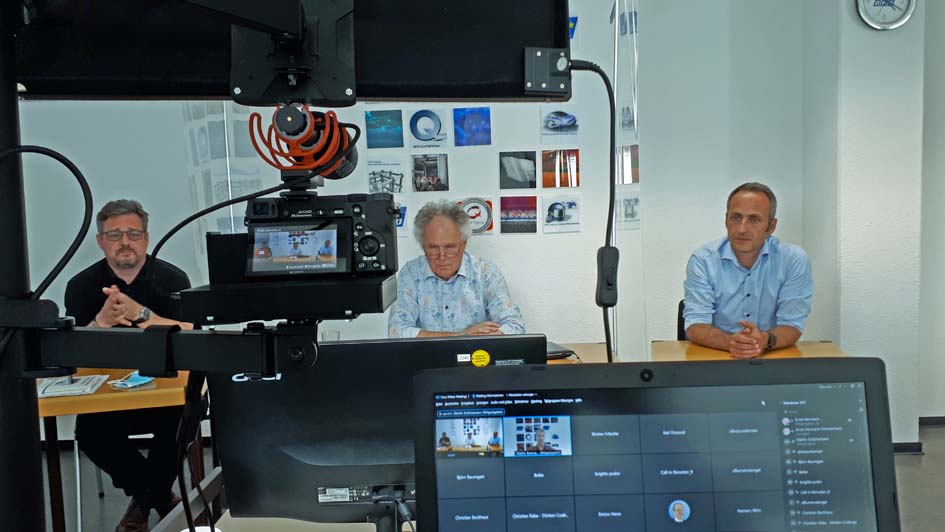
This year, the DFO Automotive Conference was held purely virtually. The program included a diverse selection of topics on the subject of automobiles and surface technology. The introductory lecture was given by Professor Dr. Marco Huber from the FAG Institute for Production Technology and Automation at the IPA - he dealt with cognitive production systems and machine learning in production. A survey among industrial companies on the topic shows that 86 percent have not yet used artificial intelligence in the context of Industry 4.0, but in contrast almost 50 percent consider it likely or even very likely that artificial intelligence will disruptively change existing business models. Machine learning is always particularly useful when cause and effect relationships are difficult to describe analytically or are unknown. As a consequence, surface technology in particular is a promising application area for machine learning. In addition, Prof. Huber provided some practical application examples in which it was possible to solve quality control problems through or by improving artificial intelligence. He also showed potential applications of AI for paint shops, using artificial intelligence to help plant operators find the optimal paint parameters faster and with less trial and error.
Water-based clearcoat
Axel Nagel from PPG brought a very interesting topic to the table: water-based clear coat. Here he addressed both the current state of the art, but also the development prospects in terms of the necessary paint chemistry. Basically, water-based clearcoats are not on the same level as solvent-based clearcoats in terms of hardness, scratch resistance, chemical resistance and processability. However, the materials available have improved over the last few years, so that the chances of success in further developing the properties of water-based clearcoats have improved. In particular, the advantages of a water-based clearcoat could be an important driving force: apart from the VOC savings, the intermediate drying step between basecoat and clearcoat could either be eliminated or at least be much shorter and at a lower temperature. In addition, temperature-sensitive plastic parts could also be painted in the line, which would bring considerable advantages in terms of logistics and minimizing color differences on a car body.
Low-temperature clearcoats
Sven Müller, also from PPG, spoke about low-temperature clearcoats that meet the requirements of automotive manufacturers. Whereas standard clearcoats have to cure at around 140 degrees Celsius for 30 minutes, it is a challenge to develop a 2K clearcoat that already crosslinks at below 120 degrees and still delivers the required properties, especially in terms of scratch resistance, but also in terms of chemical resistance. After all, 30 percent of the energy consumed in a paint line is used by ovens in connection with drying processes, which means that they rank directly after the paint booths. As with waterborne clearcoat, lower curing temperatures would make it possible to coat car bodies and plastic parts in a single pass - with all the resulting benefits.
Dr. Oliver Tiedje from Fraunhofer IPA dealt with the topic of paint drop impact. In particular, the investigations showed that air bubbles trapped in paint drops that do not reach the substrate on impact escape quite quickly and that the probability of paint defects forming later is significantly lower than if they reach the substrate and are held there by surface tension - often such air bubbles only detach from the substrate again in the dryer. You will also find a detailed article on this subject in the September issue of the Surface Technology magazine, or go to online here.
Dr. Tiedje then gave another presentation on the new project, Moela, which aims to better understand the charging behavior of paint films on the bell of a high-rotation atomizer. The aim is to work out both the effects of the operating parameters on the film contact at the bell, the effects of the properties of the paint material, and the ionic current during contact charging as a function of the bell geometry, as well as a prediction of the film charging at the bell and the charge transport from the film to the droplet. Last but not least, the influence of fouling of the atomizer is to be determined. The project will run until November 30, 2023, at the IPA and at Esslingen University of Applied Sciences and is funded by the BMWi.
Alternative to the classic pig
Sebastian Salze from Sames Kremlin presented a new color change technology which, compared to conventional pigging systems, is said to not only reduce color change times but also cut paint loss by more than half. Even more, Sames promises a significant reduction in maintenance and hose lines, since the new cylindrical separator, unlike a conventional pig, does not touch the hose wall and therefore does not wear out. Read more on this topic in the September issue of mo or immediately online here.
The reduction of VOC emissions in the exhaust air purification of vapors from paint booths and dryers in the painting environment was the topic of a presentation by Rico Herm. He showed the high savings potential also in integrated painting processes with water-based basecoat. In particular, concentration and post-combustion in the basecoat, intermediate drying and, of course, clearcoat areas can reduce the VOC content in the exhaust air by up to 95 percent using modern treatment technologies.
Coatings suitable for radar
Dr. Neil Murphy from Axalta Coatings gave a presentation on radar-compatible coatings in the field of vehicle exteriors. First and foremost, safety considerations highlighted the impact coatings can have on the precision of sensors used for driver assistance systems. To this end, it is first necessary to identify how a 77 gigahertz radar beam interacts with coatings and what causes signal losses. The substrate material has a major influence, as do the wall thicknesses and the thickness and type of a coating. In principle, the higher the transmission rate, the more reliably the sensor system works. It should be noted that unfavorable constellations can very quickly limit the precision of such a sensor and thus the traffic safety of assistance systems. In this context, it is necessary to deal with the optimization of the substrate thicknesses, but also the coating thicknesses as well as the coating components. In particular, high conductivity of coatings reduces the transmission rate. Overall, autonomous driving thus creates completely new and very challenging tasks in the field of surface technology.
Dr. Dirk Meyerhoff from BASF presented a deflectometry-based measurement method for the assessment of pre-run/appearance or runners during the drying and baking process. In particular, measurements showed that an intense air flow during drying leads to a more uneven surface similar to a wind in water. Therefore, an indirect inflow of air to components to be dried is always advantageous. In order to better quantify such effects, the OpiMA2 measurement method was developed, which provides Appearance values corresponding to classical criteria such as Longwave and Shortwave. The particular advantage is that the measurements can start as early as two minutes after the application is completed and allow a forecast of how the result will look after drying.
New oven concept at Skoda
Ales Prochazka presented a premiere with Dürr's Ecoincure oven at Skoda. The special feature of this open concert is that the car bodies are heated from the interior by means of appropriate nozzles in order to improve the appearance on the outside. Experience at Skoda shows that the bodies are dried very uniformly and that, above all, there are no particularly large temperature differences between solid and lighter body parts. In addition, the air temperature is close to the surface temperature, so there is no overheating should the conveyor system stop. Particularly in connection with the structural peculiarities in the field of electrically driven vehicles, the EcoInCure oven shows significantly better heating behavior compared to a conventional oven. In the final analysis, Prochazka rates the selection of the EcoInCure kiln as the right choice; above all, the kiln curve and thus the drying results have met the high expectations. However, the new kiln technology will also lead to greater complexity in some areas, for example with regard to conveying technology.
Dr. Pavel Svejda from Dürr reported on the extensive rebuild of the paint shop at Opel in Eisenach to prepare the paint shop for the Grandland and the integrated painting process. At the same time, interior painting was automated. As much as possible of the existing plant technology was reused. You will find a detailed article on this subject in the September issue of Surface Technology magazine, or you can download it now. online here.
Revolutionary KTL concept
Prof. Dr. Alireza Eslamian from ESS presented a completely new concept for a KTL coating line in which the car bodies are coated in closed capsules. According to extensive simulation analyses, the new concept offers impressive potential for improving quality and at the same time saving resources. You can read a detailed article on this in the September issue of Surface Technology magazine or online right here.
At the end of the event, Olaf Scholz from SLCR Lasertechnik presented an alternative to masking, in which geometrically complex components can be prepared cost-efficiently for subsequent processes such as bonding through targeted decoating by laser - an important aspect in the context of lightweight construction. What's more, laser processing can also be used to remove organic residues.
All in all, the conference, which was held completely virtually for the first time, offered, as usual, a diverse view of current developments in the field of automotive painting. Nevertheless, all participants and interested parties will be pleased to know that the next and 28th DFO Automotive Conference will take place from July 05 to 06, 2022 as a hybrid event in Bamberg and not only online.