
Parts2clean: slight increase compared to 2021
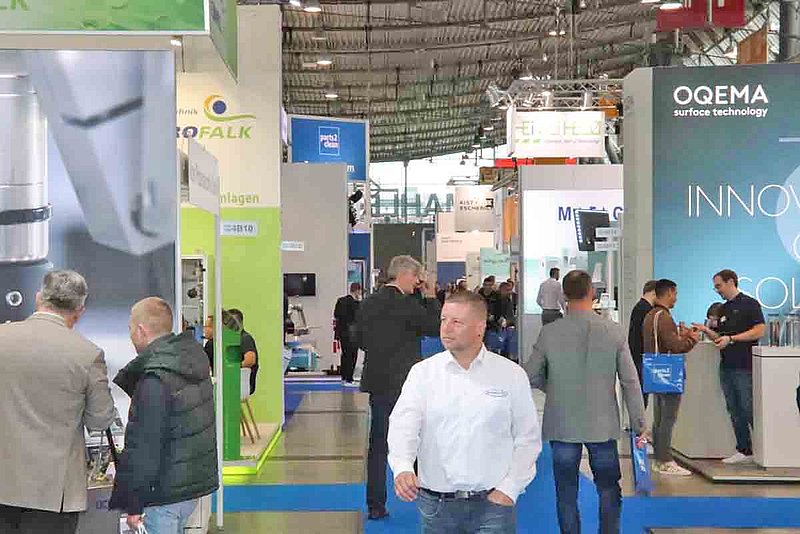
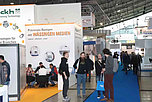
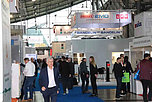
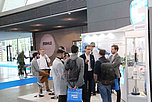
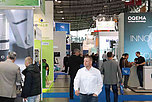
Despite a difficult economic environment, Parts2clean 2022 was able to attract 140 exhibitors and more visitors than last year.
Current developments in the industry indicate that the importance of parts cleaning as a quality and competitive factor will continue to increase in the future due to new and changed tasks. Anyone who had questions on the subject of industrial parts cleaning had the opportunity to get helpful answers at parts2clean from the 140 exhibitors on 4300 m² of exhibition space - from plant engineering and construction to cleaning chemicals, sensor technology and quality control.
In general, experts have identified a trend towards fine and precision cleaning, and the variety of tasks in industrial surface and parts cleaning is continuously increasing - this was also made clear by the speakers at the opening press conference. Michael Flämmich from Vacom, for example, addressed the sometimes massively increasing demands on the cleanliness of components in the filmic area in the fields of medical technology, the semiconductor industry and in the mobility sector. In doing so, he made it clear that the effort and thus the costs increase exponentially with increasing cleanliness. In addition, he addressed the currently extremely difficult conditions for companies due to the ongoing supply chain problems and energy prices - as well as the fact that, realistically speaking, a normalization on a broad front is not to be expected in the short term. Another task currently facing companies is to replace experienced personnel who are retiring in the short and medium term and, above all, to secure their expertise. What is difficult for the cleaning industry is that there is neither training nor study for this purpose, and in practice employees often initially start out of necessity to deal with cleanliness issues, only to become experts in the field over time. In order to sensitize the new generation here earlier at least for cleaning team, it succeeded now the first step to call together with a technical university an electoral lecture to the topic technical cleanliness into being.
Dr. Frank-Holm Rögner from the Fraunhofer Cleaning Business Unit of the FEP posed the question whether the cleaning industry is ready for precision cleaning. Even if this term is not clearly defined, the clearly stands for the highest cleanliness requirements, which are also becoming relevant in more and more application areas, according to Rögner. Here, he sees applied research as a key opportunity to make the necessary progress in the development of sensor technology, process measurement technology, analysis and digitization, and AI. Also thematized the now recently possible specialist qualification as a certified professional specialist for industrial parts cleaning.
Overall, companies from the cleaning sector and many other industrial sectors are facing major challenges in meeting the new and changed requirements for technical cleanliness not only in a process-reliable and reproducible manner, but also in an energy- and cost-efficient manner. Especially due to the tense supply situation and the enormous energy prices, the latter no longer has anything to do with company philosophy alone, but is a very existential component.
Answers for current and future tasks
The focus is not only on current but also on future cleaning requirements. Thus, in addition to fulfillment, the focus is increasingly on very interesting topics relating to particulate cleanliness specifications, filmic contamination or selective component cleaning, for example prior to bonding and sealing processes. The choice of topics obviously struck a chord with visitors, as not only were the seats well occupied at quite a few of the presentations, moreover, crowds of spectators also formed in the aisles.
Fit2Clean Award presented
For the first time, the FiT Association also presented the Fit2Clean Award at parts2clean, which was endowed with € 10,000. The jury of industry experts voted Fraunhofer Ipas' approach to using Bhutan for cleaning and degreasing components into first place because it has very good degreasing properties and, above all, evaporates at room temperature, so that optimal processing is possible without the need for large amounts of energy, as is the case with classic solvents. In addition, the separation of solvent and impurity is free of carryover. Bhutan thus offers enormous energy-saving potential as a solvent - although it is necessary to ensure fire protection through conceptual measures. In any case, initial laboratory-scale tests showed very good results. Ecoclean came in second place with a method of recording the ultrasonic effect in an immersion cleaning system inline via a microphone. Just because the ultrasonic generators send energy to the transducers does not mean that the ultrasonic power is actually effectively available in the bath. Since the special microphone does not come into contact with the cleaning medium, neither recontamination nor interference with the measuring installation is to be expected during operation. Apart from a control of the ultrasonic power in the empty bath, a comparative process control is also possible in the active cleaning process. The new pulsating CO2 snow blasting nozzle from acp made it to the third place. Here, the CO2 specialist succeeded in getting to grips with the problems of icing when pulsing the snow jet, thus opening up new areas of application. Pulsing possible, among other things it is possible by pulsing to control the cold input and also the CO2 jet volume purposefully. With conventional nozzles, the necessary CO2 volume per unit of time is fixed by design.
Added value through special show and technical forum
In addition to the exhibitors' cross-material, cross-technology and cross-industry offerings, the parts2clean supporting program provided effective support for the stable and efficient handling of individual cleaning tasks. This includes, on the one hand, the special show "Process Chain Technical Cleanliness" organized together with the CEC (Cleaning Excellence Center). "This will highlight the path and implementation of innovative technologies for achieving reliable component cleanliness and the accompanying quality assurance," says Hendrik Engelking. With the three-day technical forum, whose technical coordination is handled by the Fraunhofer Cleaning Business Unit and the Industrial Parts Cleaning Association (FiT), parts2clean also includes one of the most internationally sought-after sources of knowledge. "In simultaneously translated (German <> English) presentations and field reports, renowned experts from research, science, associations and industry will provide information on various topics and current trends in industrial surface and parts cleaning," explains Hendrik Engelking. Participation in the technical forum is free of charge for parts2clean visitors. In addition, the technical forum's lecture program will again be broadcast live on the parts2clean event website this year.
Even though this year's parts2clean still suffered from the aftermath of the Corona pandemic, as well as the economic environment influenced by supply chain problems and the energy crisis, both in terms of exhibitor numbers and visitors, a clear majority among exhibitors were satisfied with both the number and quality of contacts. According to organizers, visitor numbers rose to over 2300 compared to just under 2000 at last year's event, with international attendance at 25 percent (update 10/19/2022).
parts2clean cleaning technology news
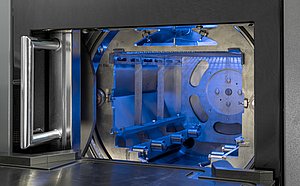
LPW presented the new PowerJet compact CNp for the first time at this year's parts2clean. The two-stage system takes up just under four square meters and, in addition to the ultrasonic and cyclic nucleation (CNp) cleaning processes, also has the necessary drying for higher requirement levels.
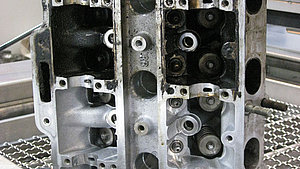
Leraclen OCC from Stockmeier Chemie is suitable for removing the strongest oil carbon contamination on sensitive surfaces. Even strong bearing grease is removed.
Cleaning and pretreatment - current topics
Hinweis: Nur registrierte Nutzer sehen nach dem Login alle verfügbaren Beiträge.
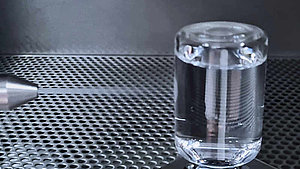
Dry Cleaning of Pharmaceutical Containers
Die Außenreinigung pharmazeutischer Behältnisse mit Reinstwasser verursacht einen hohen Wasser- und Energiebedarf. Als trockene Alternative untersucht Bausch+Ströbel die CO₂-Schnee- strahlreinigung. Werkstoff- und Zytotoxizitätstests prüfen ihre Materialverträglichkeit unter verschärften Bedingungen.
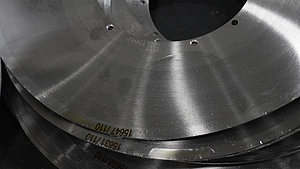
Solvent Cleaning Process for Laser Filter Screens
Extremely fine filter screens place high demands on parts cleaning. For this reason, 3S uses a solvent cleaning system from Ecoclean prior to heat treatment. The automated process combines coarse and fine cleaning, ultrasonic cleaning, solvent vapor treatment, and vacuum drying, with a cycle time of just eleven minutes.