

Solvent process for laser filter screens
Solvent system cleans fine filter screens prior to heat treatment
Since their introduction more than a century ago, plastics have steadily grown in importance and have become an integral part of modern life. Instead of being landfilled or incinerated after disposal, plastics are increasingly being returned to the production cycle through recycling.
In specialized recycling systems, they are shredded, pre-dried, and cleaned. The waste material is then melted, compacted, and finely filtered in extrusion units. The processed material can subsequently be reused in plastics production. Filtration of the plastic melt plays a particularly important role in determining recyclate quality. Accordingly, the filter components used in this process must meet stringent requirements.
Filter screens for clean plastic melts
3S Schnecken + Spindeln + Spiralen Bearbeitungsges.m.b.H. (3S) specializes in the manufacture of extruder screws and filter screens for plastics processing. Founded in 1991, the company is part of the Erema Group, which specializes in plastics recycling machinery and systems, and works with manufacturers of plastics processing machinery and equipment worldwide.
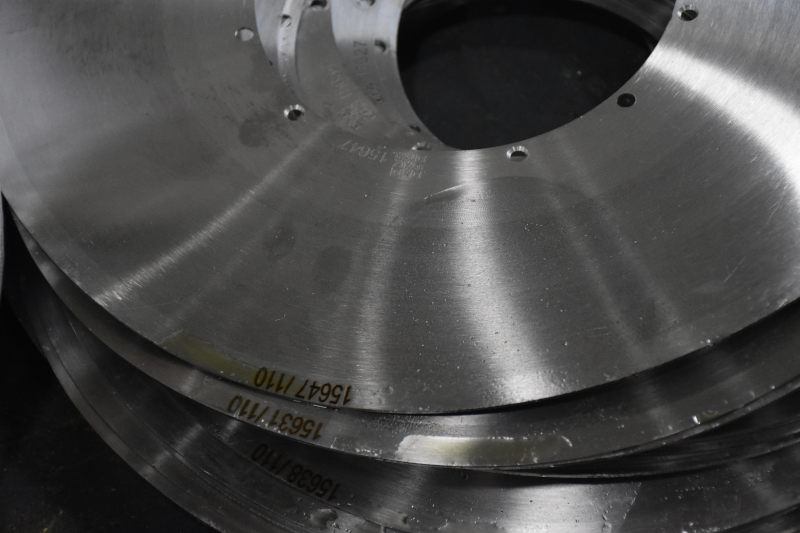
Among the high-precision products manufactured by 3S in Roitham are chromium steel filter screens for so-called laser filters, which remove unwanted contaminants such as paper, wood, aluminum, or foreign polymers from the plastic melt. This is necessary to maintain a consistently high melt throughput. 3S manufactures the filter screens used for this purpose in-house.
Heat treatment is integrated into production
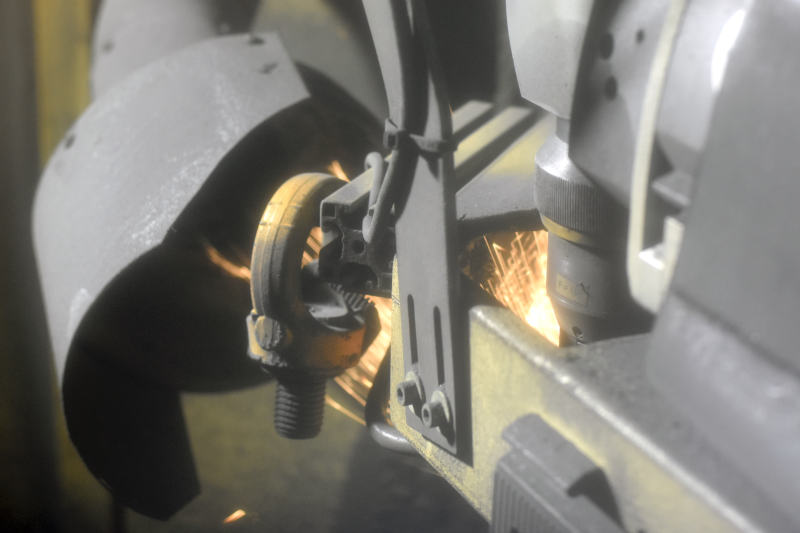
The filter screens used for pretreatment are manufactured at 3S using a patented laser process. Machines are used that the company has designed itself and based on commercially available CNC machining centers. After the laser treatment and the removal of the resulting residues, the filter disks are heat treated.
“Until recently, we had outsourced these process steps to a specialized service company,” reports Michael Danner, production manager Roitham at 3S Schnecken + Spindeln + Spiralen Geräteges.m.b.H. “To increase our added value and process reliability, we are now doing this in-house.” For this purpose, 3S installed a system from the previous service provider, which also acts as a system manufacturer in this area.
This part of the process chain also includes cleaning the parts before heat treatment in order to remove contamination and emulsions. The filter sieves pose special challenges for cleaning technology: The lasered holes in the filter components are so fine that they are not visible to the naked eye. Due to surface tension, even a drop of water cannot flow through. In addition to the high corrosion tendency of the chrome steel alloy, this is another reason why aqueous cleaning processes are only partially suitable here.
However, the same also applies to many other processes that operate with low media pressure. Michael Danner therefore followed the recommendation of the previous heat treater, who had to overcome the same problem, and turned to the manufacturer-independent cleaning technology specialists at MAP Pamminger GmbH.
Solvent instead of aqueous cleaning
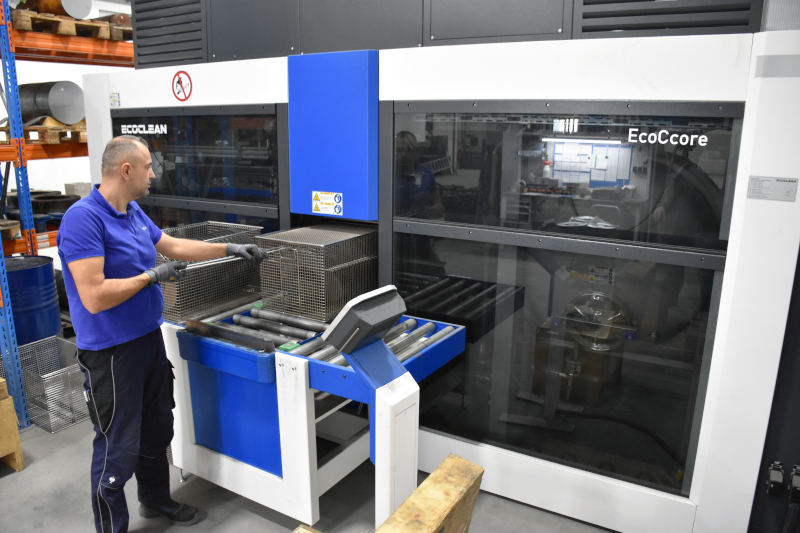
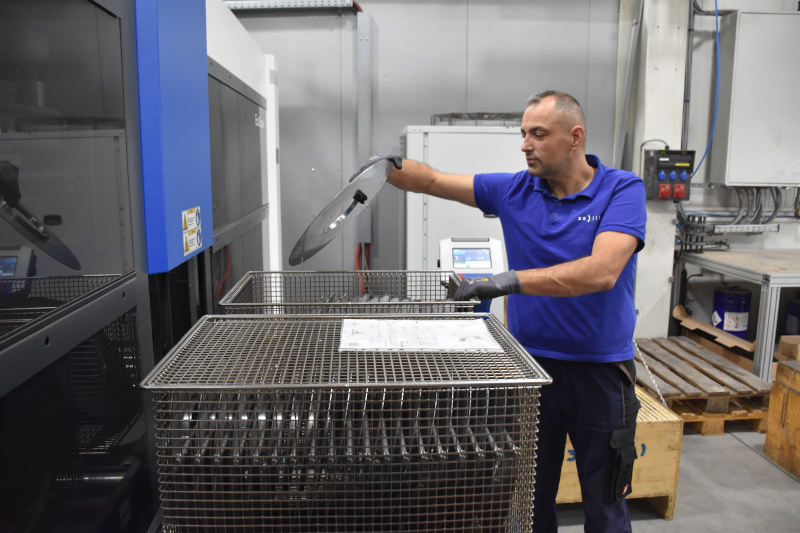
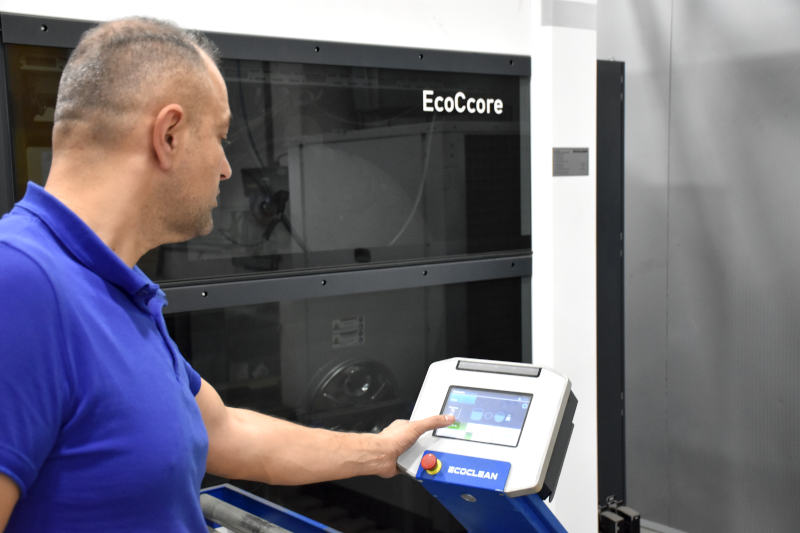
MAP Pamminger recommended a compact EcoCcore cleaning system from Ecoclean. “In order to be able to accommodate the filter sieves optimally, the system is designed with an increased basket size of 670 x 480 x 400 mm,” explains Gerald Leeb, managing partner of MAP Pamminger GmbH. “The Kögel baskets have a lid that can be locked with one hand and spring-loaded compartment bars for separating the parts.”
The modular system is very compact with a footprint of 4,663 x 1,940 mm and allows operators ergonomic handling and short processes. A 7-inch color display with pictograms and part visualization supports the programming and operation of the system. The baskets can be loaded and removed parallel to the cleaning process using an integrated roller conveyor.
Since cleaning with the EcoCcore from Ecoclean takes place in a closed system, no vapor clouds are created, which, together with the low noise level, reduces stress in the workplace.
Eleven minutes for washing and drying
The filter sieves are cleaned in an automated, multi-stage process. This consists of a coarse and a delicate wash cycle with the degreasing agent JAEKOCLEAN™O-H 61 S from CSC JÄKLECHEMIE GmbH & Co. KG in Nuremberg. At the same time, ultrasonic cleaning takes place, then the parts are exposed to cleaning agent vapor and then vacuum dried. Nevertheless, the entire cleaning run only takes eleven minutes per batch.
“The EcoCcore combines the advantages of solvent cleaning with intuitive operation and a small space requirement,” explains Gerald Leeb. “In addition, it is particularly energy efficient thanks to the heating of the flood tanks using heat recovery through distillation.”
(Kopie 10)
Distillation extends media service life
Through continuous distillation, the cleaning medium is continuously processed, which reduces solvent consumption. The automatic discharge of the oil with a reduced solvent content into an external collection container helps to minimize disposal costs.
An interval of three to four years is expected for the replacement of the cleaning agent. In addition, after a short training, 3S's in-house staff is able to carry out routine maintenance activities independently if necessary. For maintenance and service work, the relevant components are quickly accessible via large swing doors.
“With a system capacity of up to 20,000 filter screens per year, longer system downtimes are out of the question, especially unplanned ones,” adds Michael Danner. “The Ecoclean cleaning system meets our high standards of reliability and availability.”
The system was commissioned within just two days in mid-2024. Since then, the EcoCcore has been working smoothly in one to two shifts. “The cleaning result is impeccable, as is the support from MAP Pamminger,” says Michael Danner happily. “In addition to the heat treatment systems themselves, this compact and easy-care system enabled us to integrate a process that was previously unfamiliar to us and thus significantly increase our added value.”
Ecoclean GmbH www.ecoclean-group.net
MAP Pamminger GmbH www.teilereinigung-pamminger.at