

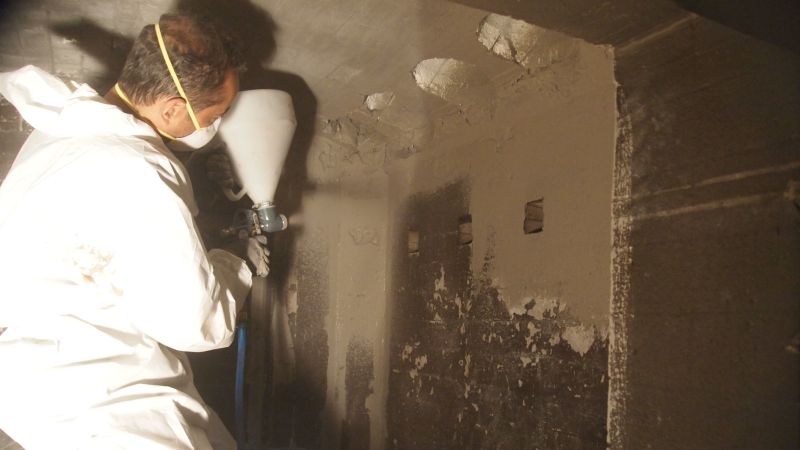
Forges, foundries and hardening shops require particularly extreme heat. Some of the heat used is absorbed by the furnaces themselves, thus increasing energy requirements. The Ceracoat coating increases the reflection of thermal radiation by around 30 percent compared with uncoated surfaces. As a result, the workpieces reach the targeted core temperature much faster and the heating requirement is drastically reduced, as shown by a recent DBU-funded study.
In laboratory tests with two steel blocks in a box kiln, the heating time of the blocks with Ceracoat coating was demonstrably reduced by 25 percent. Temperature-controlled burner operation then enabled significant natural gas savings and CO2 reductions. Ceracoat was originally developed in the USA for the porcelain and earthenware industry and consists, among other things, of mullites, kaolinites and oxides of various transition metals. Its special feature is its strong heat reflection at temperatures from around 660 °C, which can shorten the heating times of workpieces or reduce throughput times.
Be the First to Comment