


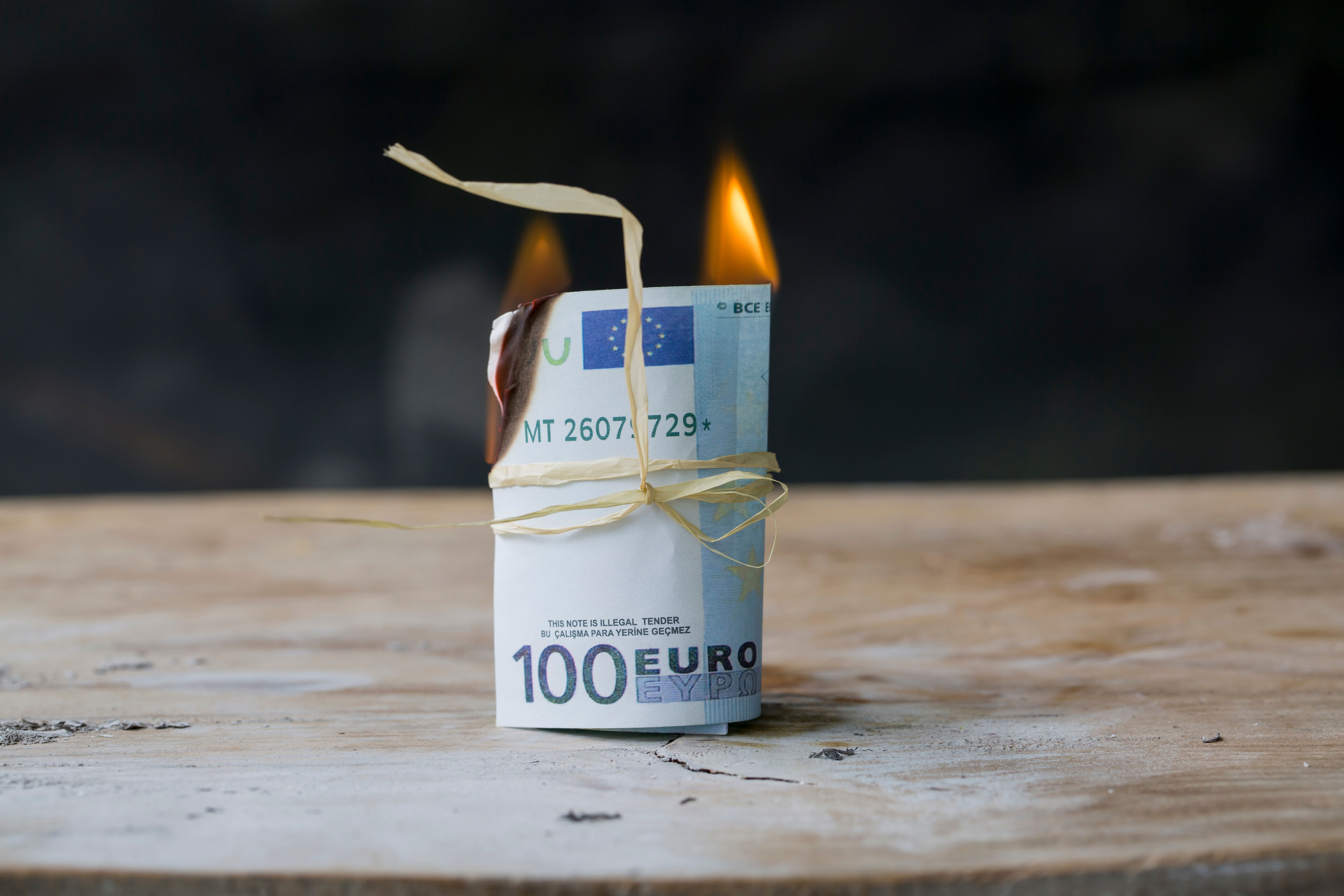
Fortunately, the order books of quite a few companies are still well filled. Nevertheless, stubborn supply chain problems are stalling deliveries - and with them the realization of sales. At the same time, prices for raw materials, semi-finished products and everything needed for production know only one direction - to heights previously thought impossible.
Add to this the hysterical energy debate. Will we have enough gas in a few months when it gets colder? Discussions about who will be cut off from gas and possibly also from electricity should really be considered topics in economically ailing developing countries. But Germany is not the only country facing an energy shortage on a scale that perhaps the post-war generation could still imagine. After all, gas supplies continue, albeit at a low level, and gas storage levels are rising in slow motion. But let's not kid ourselves, there will be other good opportunities to realize how much we are on the energy drip. But countries like France, which rely heavily on nuclear power, also have energy problems and are currently buying large amounts of electricity from Germany.
Numerous reactors that have to be shut down and maintained for safety reasons and low river levels from which cooling water has to be drawn are the causes. Since a not inconsiderable part of our exported electricity comes from gas-fired power plants, we are currently consuming a lot of the gas that we should actually be pumping into gas storage facilities. In light of this, can we afford a protracted debate about whether we should voluntarily shut down gas-fired power plants? A party that already wanted to sell gasoline for five deutschmarks per liter in the 1990s thinks that the remaining gigawatt hours of electricity that our nuclear reactors could supply are now irrelevant, too. Let's hope that our government is able to make the right decisions beyond ideological trench warfare.
The surface industry in particular has been hit hard by horrendous energy prices - and a potential energy emergency - not least because the majority of all ovens used in drying processes are heated by gas. In addition, electricity also becomes a problem in the event of an acute gas shortage. Will the current situation even end up rehabilitating oil as a fuel? In any case,CO2 neutrality has lost priority at the moment; instead, the focus is enormously on costs and availability.
Regardless of how scarce energy will be in the coming months, but also in the medium term in the future, saving energy and resources will have an enormous impact on a company's competitiveness in the near future. Therefore, the urgency of process optimization will develop a whole new dimension especially in the energy-intensive surface industry
Be the First to Comment