
When the Vacuum Physics Laboratory was established at PTB in 1966, the vacuum industry was still an emerging field. Its task was to develop reliable measurement technology for vacuum applications. National metrology institutes (NMIs) were called upon to provide fundamental vacuum standards. PTB was among the first worldwide to do so. Today, many metrology institutes in industrialized countries provide vacuum standards and conduct research to improve and redesign vacuum metrology.
Changes in vacuum measurement methods
Laser-optical methods are in the process of replacing classical approaches for realizing the pascal. The digitalization of measurement systems and services is also making inroads into vacuum metrology.
The workshop aims to discuss current and future perspectives in vacuum measurement technology from a range of viewpoints: past developments, research, metrology, as well as industry and users. Karl Jousten, Head of the Thermal Energy and Vacuum Department at PTB, will open the event with a retrospective on 60 years of vacuum metrology at the institute. Jay Hendricks of the US National Institute of Standards and Technology (NIST) in Gaithersburg will then provide insight into the development of vacuum research and services at his institution. Paolo Chiggiato of CERN will discuss how vacuum technology has evolved—and will continue to evolve—in the world’s largest and most complex research instruments.
From a research perspective, Yuanchao Yang of NIM China will present on the prospects of photonic measurement of pressure, temperature, and gas density. This will be followed by the presentations “At the lower end of the pressure scale: atom traps as primary standards” by Julia Scherschligt (NIST) and “Extending the vacuum scale through photonic measurements: concepts and requirements” by Tom Rubin (PTB).
Presentations from industry and science
Three additional presentations will offer insights from metrology and science. Domenico Mari of the Italian Istituto Nazionale di Ricerca Metrologica (INRIM) will begin with “Classical and optical vacuum metrology: considerations for the future.” Matthias Bernien (PTB) will then explore where digitalization may lead vacuum metrology and related services. Karsten Danzmann of the Max Planck Institute for Gravitational Physics will conclude this session with the topic “Shaking the vacuum: gravitational waves.”
The perspectives of industry and users will also be addressed. Martin Wüest of Inficon AG in Balzers, Liechtenstein, will examine what future vacuum measurement instruments may look like. Mark van de Kerkhof of ASML Holding N.V., headquartered in Veldhoven, the Netherlands, will then outline the past and future role of vacuum technology in the semiconductor industry.
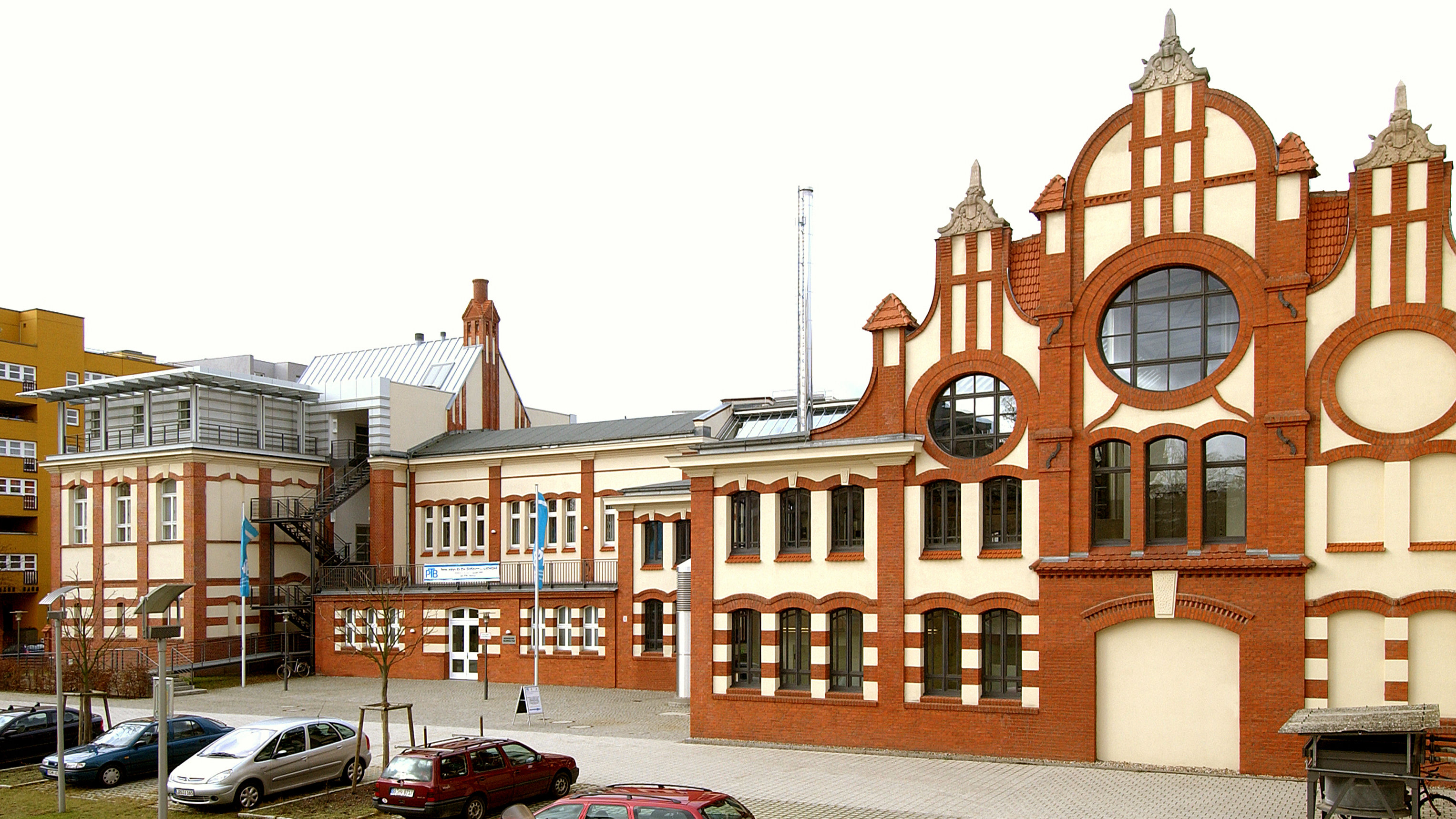
The event will take place at the Hermann von Helmholtz Building on the PTB campus in Berlin, Abbestrasse 2–12. The workshop will be followed by a social gathering marking Karl Jousten’s retirement.