
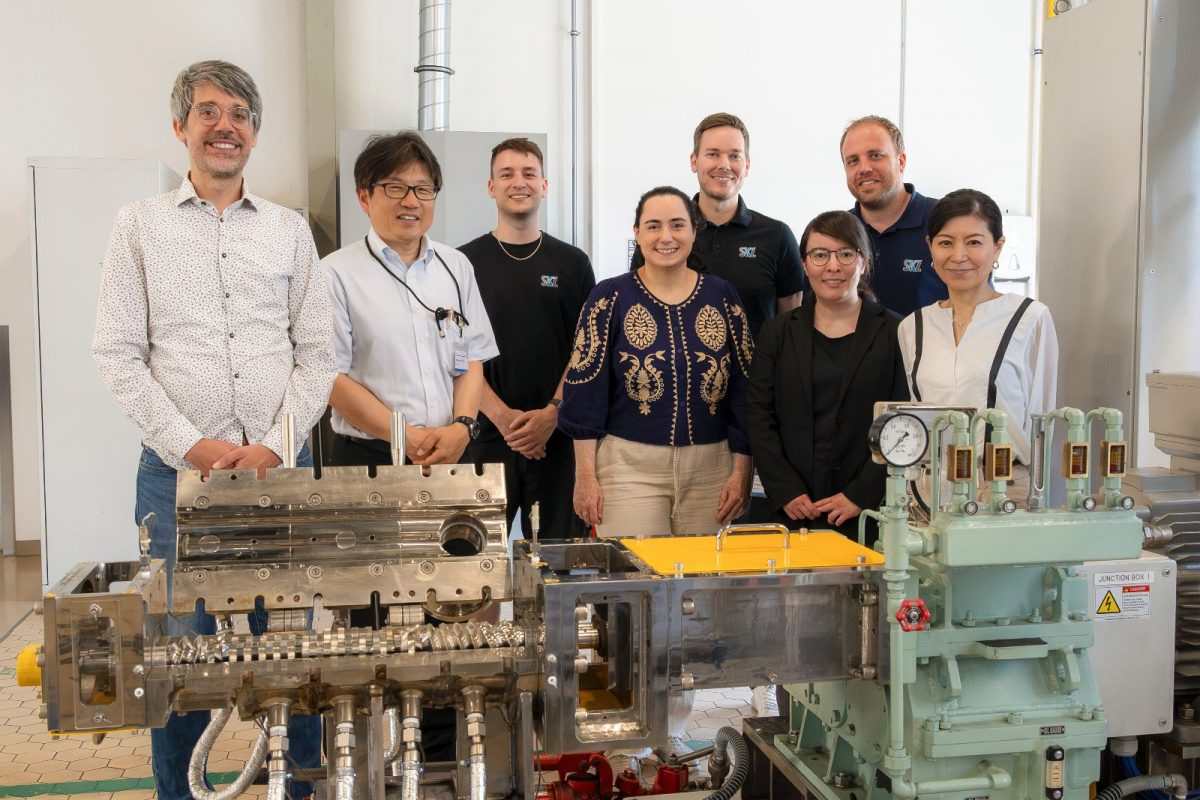
The SKZ plastics centre in Würzburg has received an S2KRC kneader from Kurimoto Ltd. on loan. The institute is thereby expanding its range of plastics processing technology in materials, compounding and extrusion. The system was handed over on 22 June by a team led by Overseas Marketing Strategy Manager Shigeaki Okamura and Chief Representative Rieko Ishii to SKZ division head Dr.-Ing. Johannes Rudloff and his team.
Continuous processing of different material systems
The kneader processes a wide range of material systems in a continuous process step. In addition to compounding thermoplastic, thermoset or elastomeric plastic systems, it is also of interest for paints, adhesives, battery compounds or food. Depending on the material, throughputs of 5 to 50 kg/h are possible.
"The loan of the kneader by Kurimoto is a valuable addition to our technical equipment at SKZ. With this technology, we can expand our research and service portfolio in a targeted manner and support companies even better in developing innovative and sustainable plastic products," says Rudloff.
For research projects and industrial cooperation
Kurimoto sees the cooperation as an opportunity to further tap the potential of its technology in the European market and to intensify the exchange between science and industry. "SKZ's expertise in compounding and plastics technology provides ideal conditions for exploring new applications together with interested parties and demonstrating the benefits of kneading technology for a wide variety of processing operations," says Rieko Ishii of Kurimoto.
The system will be integrated into SKZ's research and development activities and will be available for publicly funded projects as well as for industrial research cooperation.