

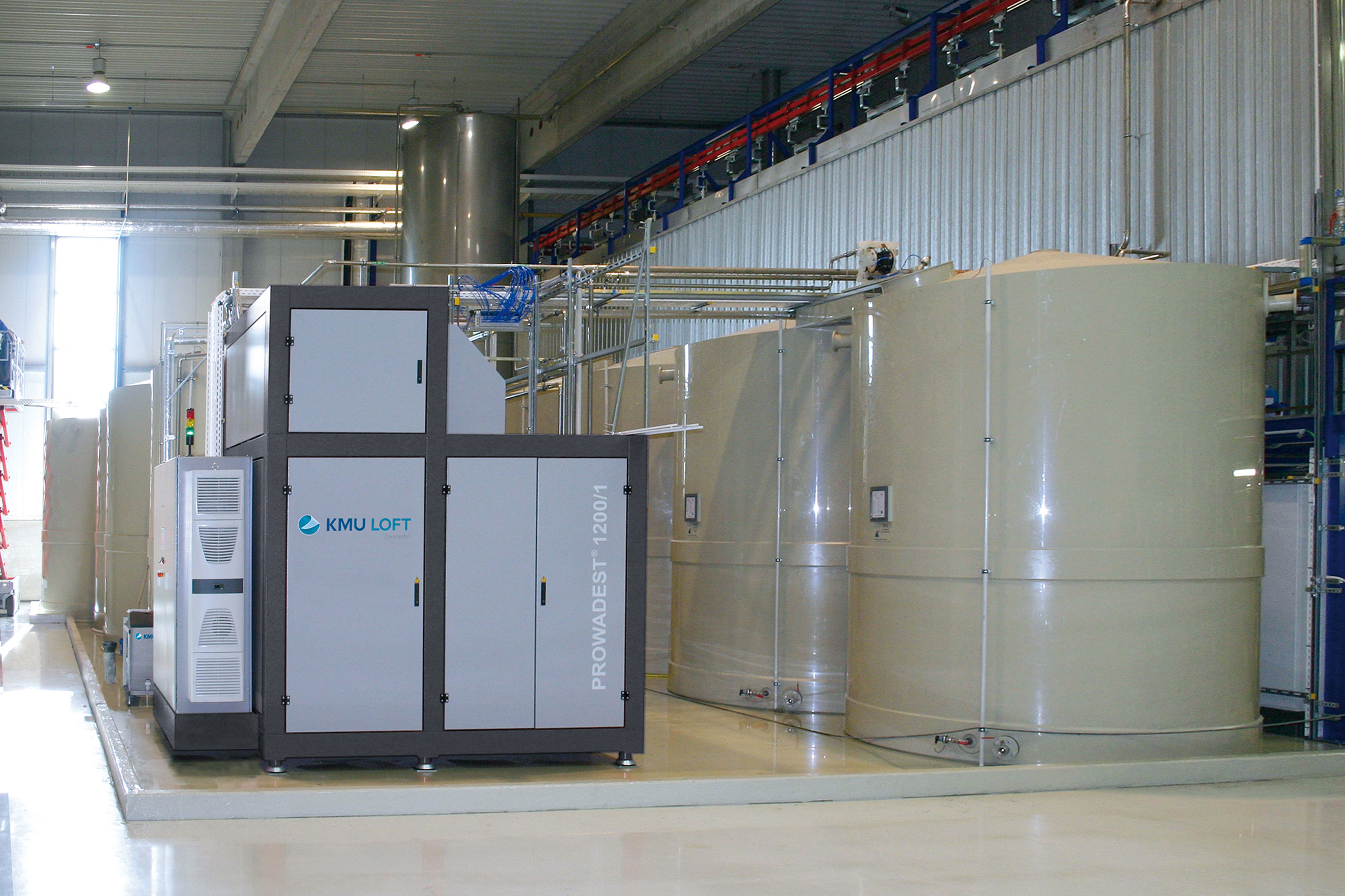
Membrane plants and other processes require very constant wastewater for optimum function. However, this is not the case in automotive production: For example, the oil content in the wastewater regularly increases when the oil separators of the production plants are flushed at the weekend. Vacuum evaporators, on the other hand, adapt their performance quickly and flexibly to the respective quality of the wastewater. Even with strongly fluctuating dirt loads and chemical compositions, a vacuum evaporator consistently delivers a high cleaning quality. However, the most important test criteria for the VW experts, in addition to the system performance, were above all energy consumption and ease of operation.
Energy consumption is a key consideration in investment decisions. Annika Zeitz is head of application engineering at KMU Loft Cleanwater GmbH, which sent a KMU Loft Destimat LE vacuum evaporator to the VW test. In this article, she explains why energy consumption is becoming increasingly important in investment decisions and why it makes sense to consider not only the purchase price but also the total cost of ownership (TCO) when making investment decisions.