

Save costs via distillation
Benchmark study VW: Wastewater treatment for surface cleaning in the automotive industry
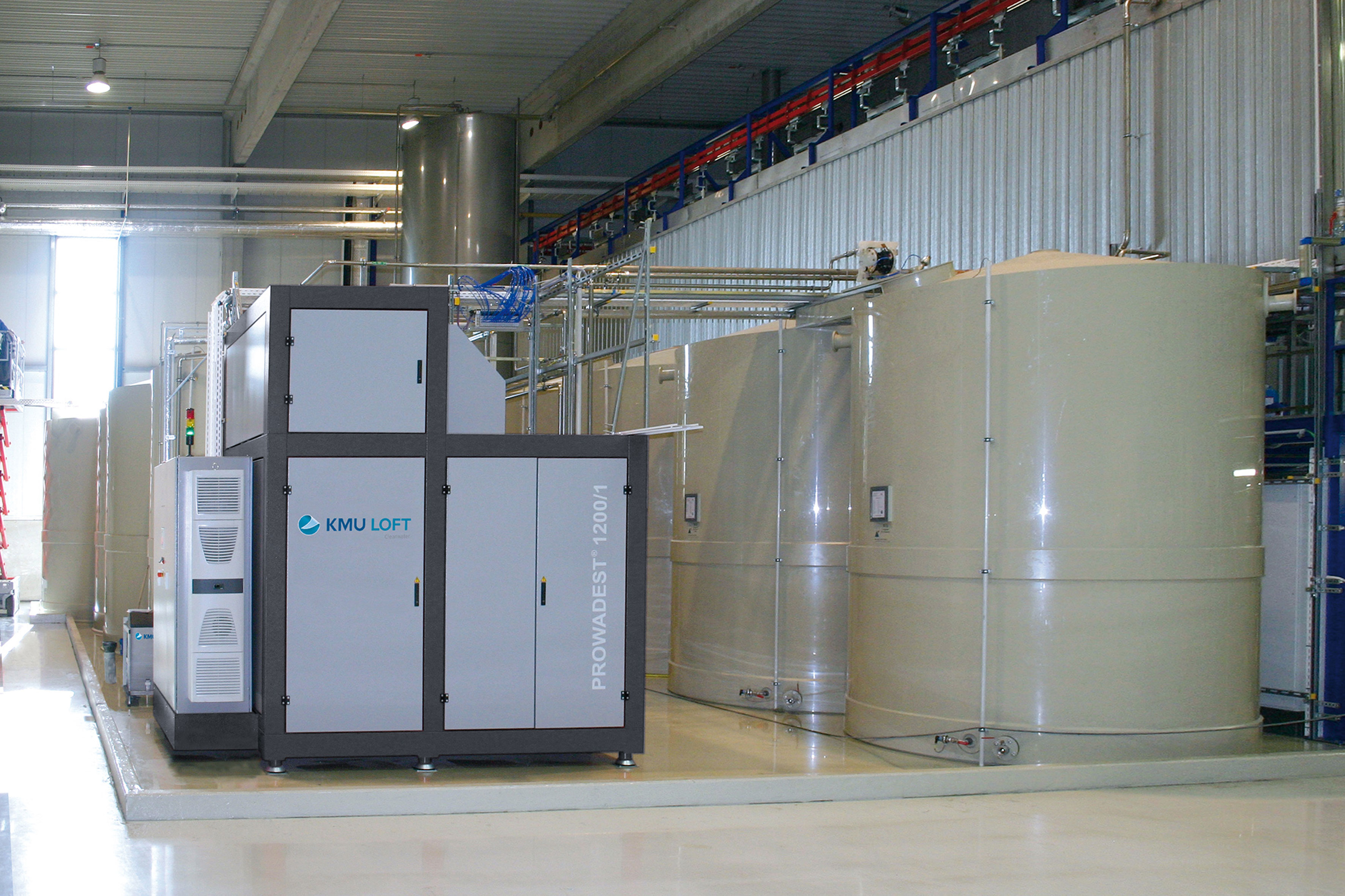
A recent benchmark study on wastewater treatment plants conducted by the Volkswagen Group clearly shows that water consumption is increasingly becoming a key performance indicator in the automotive industry. Large quantities of oily wastewater are generated in mechanical automotive production. Optimum treatment of this wastewater and its return to the water cycle are of great importance to manufacturers, not only ecologically but also economically.
For a fundamental evaluation of various wastewater treatment technologies and plant types from different manufacturers, the Environmental Production department of VW Group Research therefore tested eight wastewater treatment plants from seven manufacturers at the VW plant in Salzgitter. The aim of the study was to provide VW plants worldwide with the test results to support their economic and environmental purchasing decisions. The Group aims to reduce water consumption per vehicle or per component part by 25 percent by 2018.
In their investigations, the VW experts focused specifically on the evaporation principle for wastewater treatment. The reason for this is that membrane systems and other processes require very constant wastewater to function optimally. However, this is not the case in automotive production: For example, the oil content in the wastewater regularly increases when the oil separators of the production plants are flushed at the weekend. Vacuum evaporators, on the other hand, adapt their performance quickly and flexibly to the respective quality of the wastewater. Even with strongly fluctuating dirt loads and chemical compositions, a vacuum evaporator consistently delivers a high cleaning quality. However, the most important test criteria for the VW experts, in addition to the system performance, were above all energy consumption and ease of operation.
Energy consumption essential in the investment decision
Annika Zeitz is head of application engineering at KMU Loft Cleanwater GmbH, which sent a KMU Loft Destimat LE vacuum evaporator to the VW test. She explains why energy consumption is becoming increasingly important in investment decisions: "The share of energy costs in the total life cycle costs of a plant is getting higher and higher. In the case of wastewater treatment, this share is up to 70 percent. It therefore makes a lot of sense to look not only at the purchase price when making an investment decision, but also to consider the total cost of ownership (TCO). Our systems are characterized by particularly high energy cost savings. In this respect, KMU Loft attaches great importance to maximum heat recovery in the system itself, short heat-up times and the absence of separate pumps or electric heaters to ensure consistently low energy consumption during operation."
To provide customers with optimum support in planning and decision-making, the company makes binding commitments on the future energy consumption of the KMU Loft system in use at the customer's premises as early as the project planning stage, and then verifies this information after commissioning. In their benchmark study, the VW testers operated the eight plants over a period of four weeks. Four plants at a time were fed from the same feed tank to ensure direct comparability. In addition to a constant wastewater and distillate analysis, the hydrocarbon and COD content as well as the conductivity of the distillate and the water content of the concentrate were also checked. In addition, there were the aforementioned measurements of the energy consumption as well as evaluations of the user-friendliness and the susceptibility to faults of the respective plant.
The test results
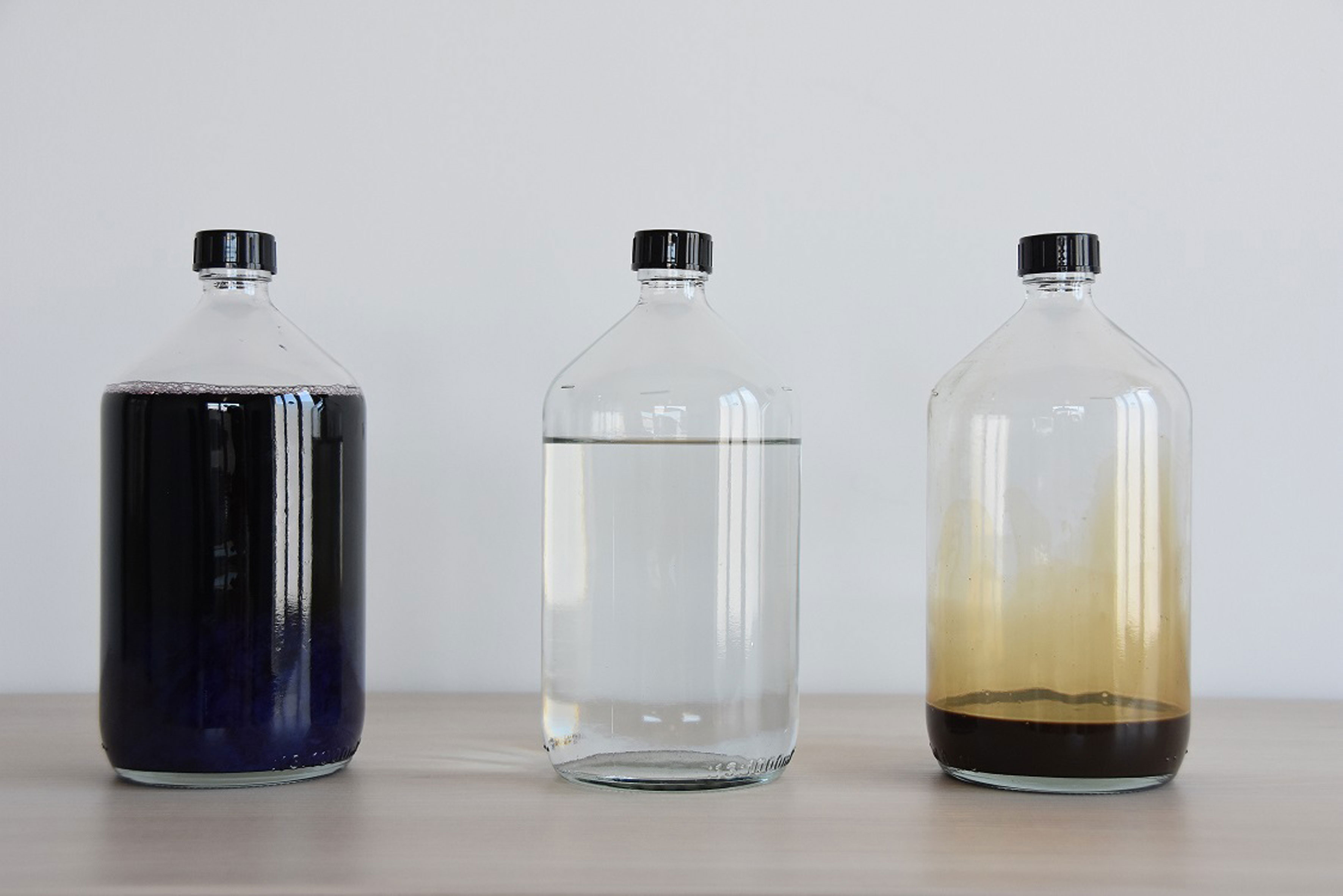
Based on the benchmark results, the VW Group researchers drew up a specific suitability profile for each plant. The experts experienced the biggest surprise right at the start of their tests: Even before the chemical analyses, the distillate samples from the test plants showed considerable differences in terms of color and turbidity despite the similar active principle. Since turbidity is caused by the proportion of long-chain hydrocarbons in the distillate, the cleaning performance of the test candidates due to different techniques and evaporation temperatures was already apparent here. There were also considerable differences in terms of energy consumption and susceptibility to faults.
In the final result, four of the eight plants delivered good to very good results, while four plants failed to convince with less good results and frequent malfunctions. Asked which of the eight systems delivered the best results, Annika Zeitz points to the restriction on the use of data and results for VW's internal purposes. As to how KMU Loft experienced the test, she reports: "For us, taking part in this test was an almost everyday occurrence: we regularly provide potential customers with test plants for two to four-week on-site operational tests at their plants so that they can gain experience and determine warranty values. After all, every wastewater is different, and nothing creates more safety than direct experience. These practical tests are also important for us as a manufacturer, as they enable us to experience our plants again and again in a wide variety of applications and develop them accordingly. But of course we are pleased that the results of the VW benchmark study now demonstrate the performance of our plants so clearly."
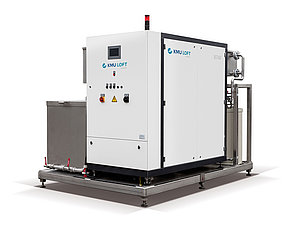
Mode of operation of the KMU-Loft vacuum evaporator
In the wastewater process, the evaporator is installed directly next to the washing system. The distillate continuously evaporated from the first sink is discharged directly into the last sink, thus ensuring continuously excellent water quality and a high degree of cleanliness of the washed parts during ongoing production. Even when the washing system is at a standstill, the evaporator continues to maintain the bath, thus eliminating the need for basic cleaning of the entire process water. The wastewater produced in the cleaning cycles is recycled without the use of chemicals and reintroduced into the cleaning process. Distillation of the process water increases the cleaning effect and enables cleaning agent savings of up to 50 percent. Fresh water consumption is reduced by up to 98 percent.
Since the process water as a whole has to be discarded much less frequently, additional transport and disposal costs are saved. The residual concentrate of around 1 to 2 percent is disposed of externally. In view of rising disposal costs, such a system can usually pay for itself within 1.5 years thanks to low operating costs and significant savings potential. KMU Loft offers vacuum evaporators and wastewater treatment plants for throughputs of 25 to 3,500 l/h of wastewater.
SME LOFT Cleanwater GmbH
www.kmu-loft.de