
Ageeth Bol, professor of chemistry, materials science and engineering at the University of Michigan, and her team used a plasma-enhanced atomic layer deposition (PEALD) process to deposit 2D molybdenum disulfide (MoS2) using an organometallic precursor and di-tert-butyl disulfide (TBDS) in combination with hydrogen plasma. This research introduces a method of using TBDS liquid that is significantly less hazardous than hydrogen sulfide (H2S).
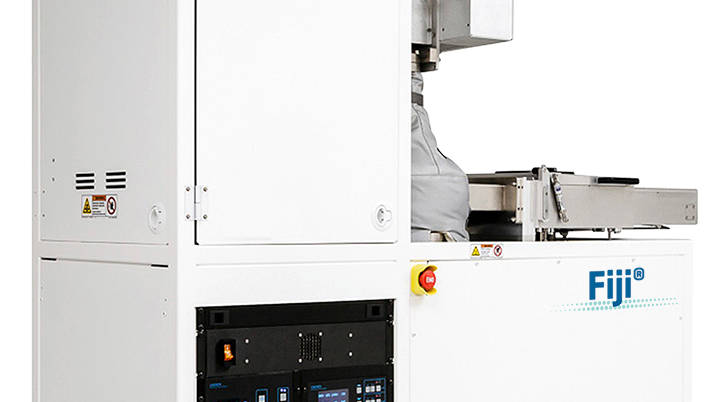
"This development is an important step in the development of large-scale integration of 2D transition metal dichalcogenides into commercial devices," said Ganesh Sundaram, Vice President of Technology for ALD and Molecular Beam Epitaxy (MBE) at Veeco. "We are in the process of commissioning a second Fiji system for our group. This is the third system that the University of Michigan has received to support further research activities," explained Prof. Bol.
Two-dimensional materials are extremely thin and have unique, controllable properties, including exceptional electrical conductivity, durability and optical transparency.