

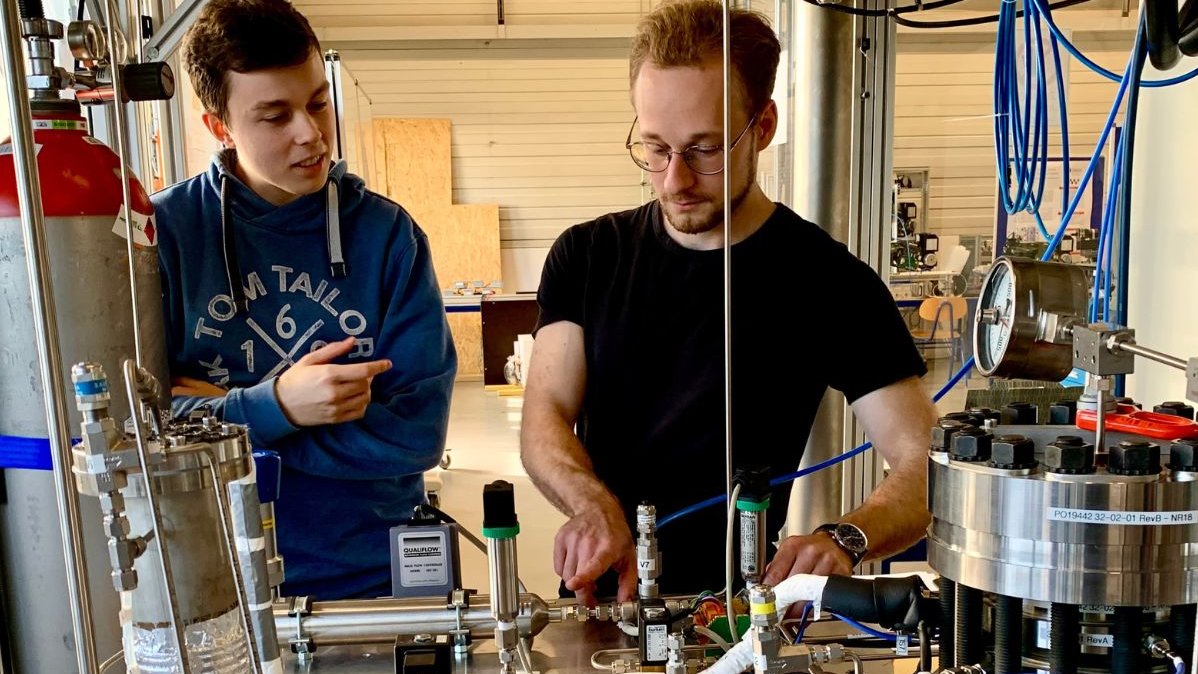
In light of the expected increase in hydrogen generation via electrolysis, efficient and cost-effective systems are essential. The focus is on PEM electrolyzers (proton exchange membrane), which offer significant potential, not least due to their compact design. However, investment costs are currently high, as expensive titanium bipolar plates are typically required. More affordable alternatives tend to wear out too quickly.
The project seeks to develop new coating processes for low-cost bipolar plates in order to improve their service life and performance. DHBW Mannheim’s subproject concentrates on the metrological analysis of these coatings with regard to performance and degradation. The project is funded under the German federal government’s 8th Energy Research Program and is being carried out in collaboration with industry partners Centrotherm International AG and EKPO Fuel Cell Technologies GmbH.
Prof. Dr. Volker Schulz, who leads the research project at DHBW Mannheim, explains the relevance of the findings: “Expanding the hydrogen infrastructure in Germany is a major undertaking. With PECVD_Bipocoat, we are contributing to making hydrogen production more economical for industry and therefore more competitive. Our goal is to accelerate the transfer of knowledge from the university into practical application.”