

With APNR 2.0, Henkel is launching an advanced generation of its rinse-free bonding agent technology for metal pretreatment. The solution is designed to improve efficiency in pretreatment lines, where rising energy and water costs, stricter environmental regulations, and the shift to chromium-free processes are increasing the pressure to act.
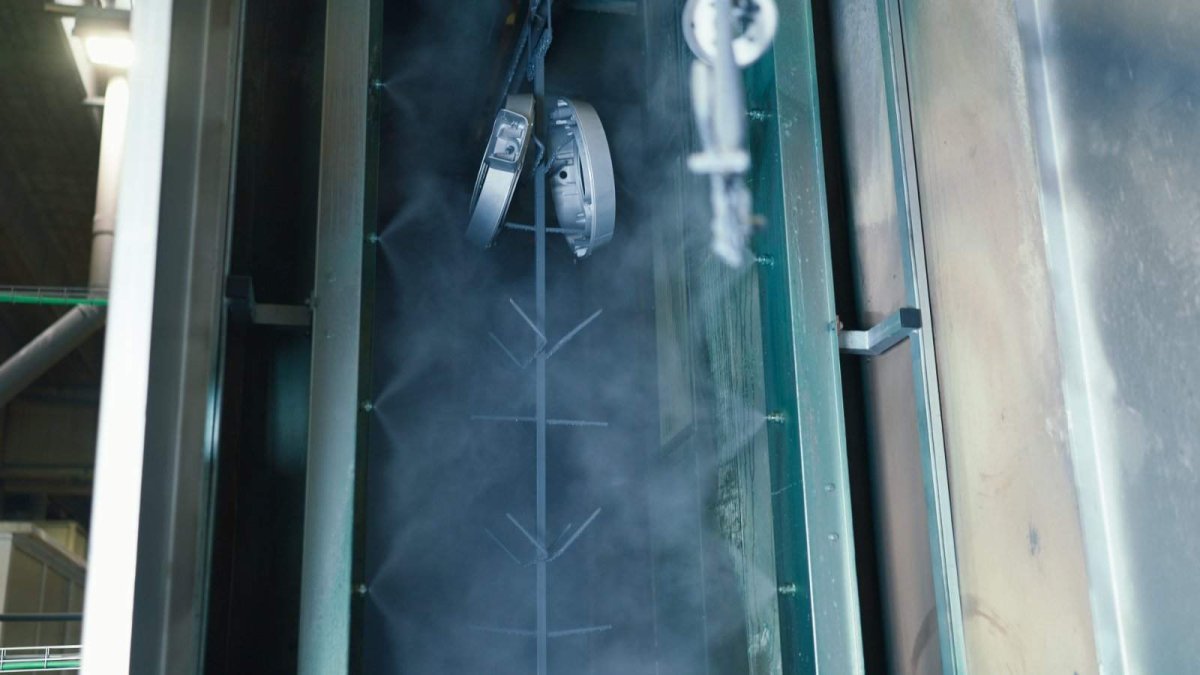
APNR stands for Adhesion Promoter No Rinse. The process replaces the conventional passivation bath with a precisely metered spray application of the adhesion promoter at the end of the line. The chemical solution is freshly prepared inline and applied as a thin film to the still-wet metal surface. A downstream rinsing step is eliminated. This allows for more compact line layouts and reduces water and chemical consumption without compromising corrosion protection or paint adhesion.
Lower Media Consumption in the Final Treatment
Compared to the previous generation of APNR, APNR 2.0 can reduce process water consumption by up to 50 percent and compressed air consumption by up to 20 percent. These figures are based on internal evaluations by Henkel; actual savings depend on the design and operating conditions of the respective line.
For plant operators, the main advantage lies in day-to-day operations. Since the chemicals act directly on the surface at a defined concentration, there is no need for a bath to age, and the associated analytical monitoring is eliminated. Compared to a conventional final-rinse cascade, only the amount of water and product actually required for the desired coating is used. This can increase the throughput of short pretreatment lines—particularly in existing facilities with limited space—without requiring major modifications.
Since its market launch in 2015, more than 100 APNR systems have been installed worldwide. The technology is primarily used in applications with short lines, limited space, or requirements for transitioning to chromium-free processes. In the treatment of architectural aluminum, the technology can also replace the conversion bath and support the transition from systems using hexavalent chromium to chromium-free alternatives.
New Control System with Ecoflex
At the heart of the new generation of systems is the Ecoflex control unit. It combines an updated control architecture with a redesigned pump system and is designed to enable precise, reproducible application. In addition, the system monitors conductivity, pressure, and tank levels and can be integrated into digital systems. Henkel’s goal is to reduce downtime and simplify operation for line personnel.
At the same time, the company is working on formulations that require less water as well as improved nozzles. This is intended to ensure reliable operation even with complex part geometries and spray patterns. Steffen Ruesse, Director of Global Equipment & Machine Learning Applications at Henkel, says: “Many customers have already taken full advantage of the significant improvements in degreasing and phosphating. With APNR 2.0, we are now providing them with a tool that allows them to optimize even the final stage of pretreatment in a cost-effective and sustainable manner.”