


Markings are indispensable in industrial manufacturing and coating processes. They serve the purposes of identification, traceability, and compliance with regulatory requirements. In practice, however, type and identification labels face the challenge of withstanding painting processes without damage while also needing to be produced flexibly and cost-effectively.
CCL Design GmbH Solingen has developed a system of paint-protection labels tailored for applications in surface treatment technology. Depending on the process—such as cathodic electrocoating (KTL), powder coating, wet painting, industrial painting, or dip coating—mechanical, chemical, and thermal factors affect the markings. Typical consequences include printed images being painted over, limited readability, additional manual post-processing effort, and limited flexibility with variable data.
Multi-layer structure for painting processes
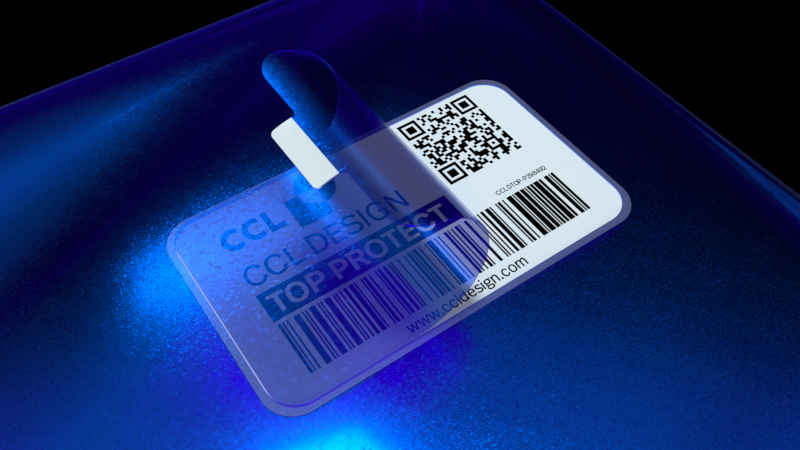
The paint protection labels combine marking and protective functions in a single product. During the painting process, a temporary laminate protects the printed image from being painted over and from damage. After the process, this laminate is removed or remains in place as surface protection, ensuring that the label remains permanently legible.
With Top Protect 2in1, 3in1, and 4in1, the company offers tiered systems for different requirements. Top Protect 2in1 is designed as a weather-resistant alternative to metal tags and features permanent surface protection. The Top Protect 3in1 and 4in1 systems are based on custom thermotransfer-printable type labels with a multilayer structure and a removable laminate. While 3in1 is intended for standardized painting processes, 4in1 is designed for demanding or multi-step processes.
Printing, Software, and Automation
The approach goes beyond the label itself. The concept also includes compatible thermal transfer printing systems, labeling software, and technical support. Variable data such as type labels, serial numbers, or safety-related markings can thus be generated directly in the production environment. This eliminates the need for upstream printing stages or external service providers, which increases flexibility and can shorten turnaround times.
For applications with higher throughput, automation of the lamination process is also planned. A laminator designed for this purpose is intended to ensure consistent quality and reproducible processing of the paint protection labels. This reduces the need for manual steps.
Applications in Regulated Industries
The systems are intended for various industrial applications, including those in the automotive industry in accordance with the KBA technical bulletin, as well as in electrical, electronic, pneumatic, and control engineering, and for UL and cUL/CSA markings. Corresponding solutions were already presented at Paintexpo. There, it became clear that marking in painting and coating processes is increasingly viewed as an integral part of the process chain.