
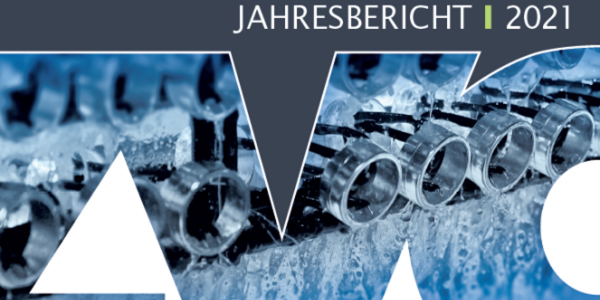
Even before the outbreak of the armed conflict in Ukraine, developments in the energy sector were causing considerable headaches for the electroplating industry, and now the situation is worsening. Price increases in the raw materials sector are also continuing. Nevertheless, in his introduction, Walter Zeschky considers it neither useful nor helpful to make wild speculations and develop worst-case scenarios. He hopes from the experience of past crises that the surface industry can also emerge stronger from this difficult situation. Both positive and negative aspects can be found in the 110-page annual report. For example, Christoph Mattheis reports on successes on the legislative side; it was possible, for example, to prevent deterioration for the companies within the framework of a proposed amendment to the 11th Waste Water Ordinance in Annex 40. Also, for the first time, surface finishing and heat treatment is now listed in the guidelines for state climate, environmental and energy subsidies, paving the way for access to support. Matheis emphasized that economic prosperity is only possible on the basis of peace, freedom and democracy, and that despite the fact that the industry is being hit hard by current developments, the ZVO and its employees and member companies also support the sanctions measures. At the same time, however, he also appealed to those with political responsibility to find ways to make the consequences more bearable for private individuals and companies. After all, rising energy and raw material prices are putting enormous pressure on companies in the German electroplating industry, and small and medium-sized enterprises in particular are increasingly unable to absorb the cost increases. The annual report also provides a very detailed breakdown of the various developments. For example, the more than 600 member companies of the ZVO have a combined turnover of 2,243 billion euros. Even though the industry had to contend with the sluggish economy, the Corona pandemic, supply bottlenecks political decisions in 2021, the industry recovered after two consecutive years of losses in 2021 despite continued adverse circumstances - the ZVO member companies were able to achieve a 10.8% increase in sales compared to 2020. Sales growth of 8% is expected in 2022. Employment levels declined by 4.2% in 2021. 30% of companies still had short-time work in February 2021, down from 10% a year later. During the Corona peak season in mid-2020, more than 60% had registered short-time work.
The ZVO's annual member survey for 2021 found that the biggest challenges in day-to-day business were staff shortages, rising procurement and energy costs, and the procurement problem. However, regulatory requirements are also seen as problematic and almost half of the respondents noted a procurement shift to non-European countries on the part of their customers due to REACH.
In this context, the ZVO also reports on intensive committee work in order to achieve an improvement of the situation or at least to prevent a deterioration. For example, the ZVO advocates the more efficient Occupational Safety and Helath Legislation and Policy (OSH), which is easier to handle, over the authorization model (REACH). The association is also involved in the revision of the REACH regulation and participated, for example, in the public consultation on the impact assessment and the roadmap for the revision.
In a survey that ended shortly before the outbreak of the Russian war of aggression on Ukraine, 55% of member companies rated their current economic situation as good or even very good, 37% as satisfactory and only 8% as poor. Even if this is promising in itself, in view of the dynamic circumstances a reliable outlook for 2022 seems hardly possible at present.