


Diamond seals coatings down to the smallest pore
Protect the porosity of thermally sprayed coatings with the right sealant
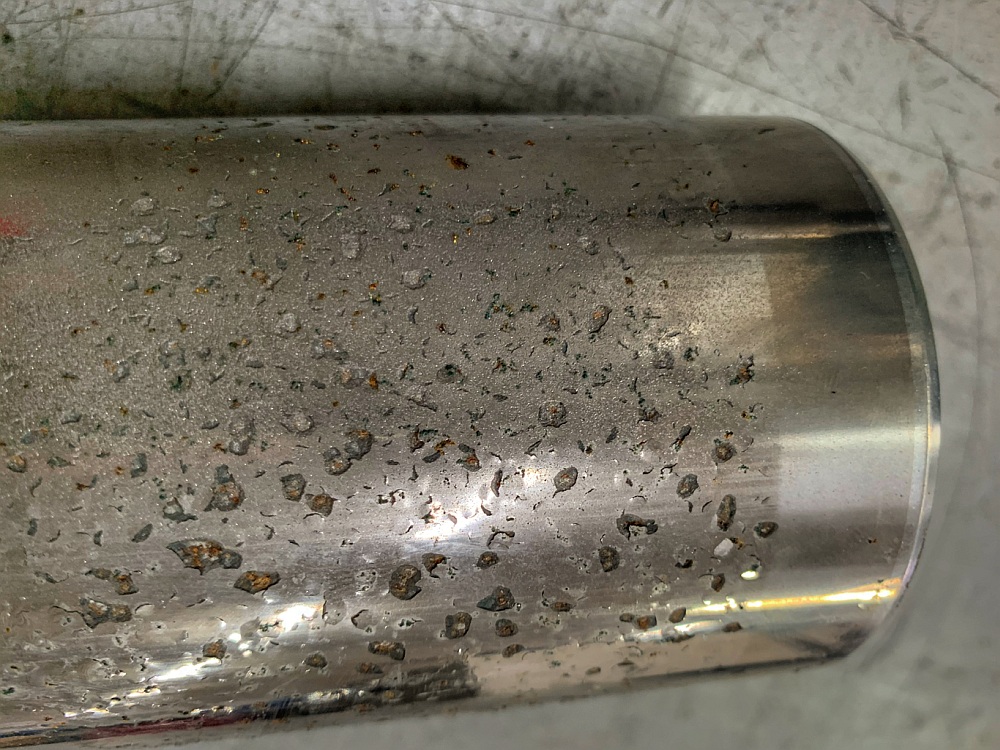
Corrosive media can only be kept out of the coating by correctly sealing thermally sprayed layers. Details on an application- and material-specific sealer selection with proof of function.
Thermal sprayed coatings often have open porosity due to the process, which extends to the base material. Depending on the process and coating material, the porosity can be up to ten percent. Corrosive media can penetrate the open pores and lead to undercorrosion (base metal corrosion) and coating delamination at the interface between substrate and coating. To prevent this, DIN EN ISO 14924 recommends application-specific sealing of open pores after thermal coating. To ensure that the sealing and thermal spray coating form an optimally coordinated unit, a practical test should be carried out in advance. This can take place, for example, in the modern laboratory of Diamant Polymer GmbH. The four-strong development team there has many years of experience in the field of sealant development.
The sealers, which are perfectly matched to the material and application, are applied directly after the spraying process. They penetrate deep into the coating and not only provide reliable, long-lasting corrosion protection, but can also (depending on the composition) impart additional positive properties to the thermal spray coating. For example, a highly capillary-active polymer mixture based on silicone resin can be used to minimize the adhesion of dirt and contaminants to the thermal spray coating. Specific sealants can also be used to improve electrical insulation or optimize certain optical properties. The choice of the best possible spray coating sealant is characterized by deep penetration behavior of the sealant and its chemical and temperature resistance during operation of the thermal spray coating.
If the sealing of the thermal spray coating is to give it additional properties beyond pure corrosion protection - for example, the improvement of electrical insulation - another factor comes into play: the pores must be completely filled for the lowest possible residual air content in the coating.
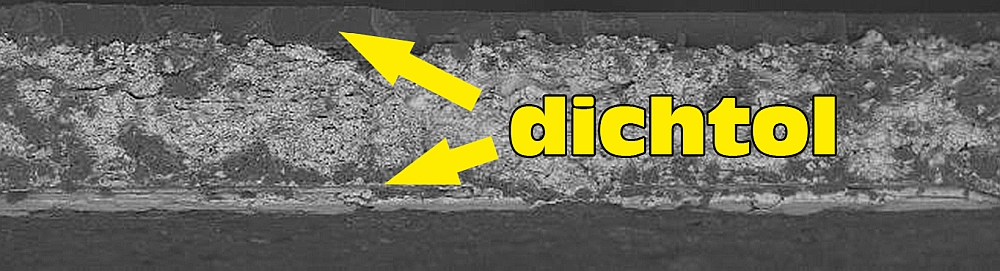
Perfect sealer-layer combination
The process of sealing is already an established standard in the spray industry. The standards DIN EN ISO 2063-1 and DIN EN ISO 14924 and the DVS data sheet 2320 provide guidance and assistance in selecting the right sealer materials and sealing methods. Sealing is a comparatively simple process step, but it can have an enormous impact on the service life of the overall coating system. The smallest pores or cracks in the thermal layers can lead to premature failure even in extremely dense coatings. Therefore, it is an equally important and complex challenge to find the optimum sealer for the respective layer or application and to provide individual proof in advance that exactly this sealer-layer combination delivers the best properties.
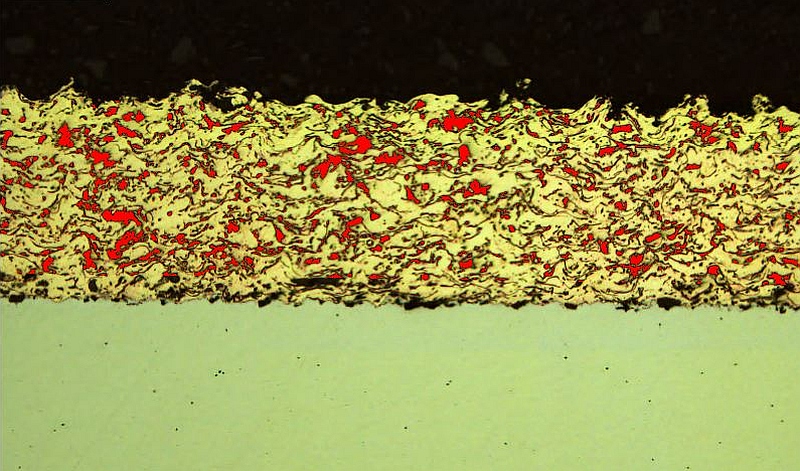
Determining the penetration depth
Diamant Polymer GmbH, in cooperation with the Institute of Surface Technology IOT at RWTH Aachen University, has developed a method for determining the penetration depth of sealers in thermally sprayed coatings. The method allows a qualitative evaluation of the penetration behavior under practical application conditions. This is necessary because even the smallest changes in the coating parameters can have an influence on the layer structure and the penetration behavior of the sealant.

The temperature factor
For example, increasing the surface temperature by ten degrees during sealing led to 30 percent better penetration behavior in a test of a special sealer-coat combination. It is therefore advisable in any case to examine the performance of the sealer-coat system in detail before practical use, in order to be able to efficiently utilize possible optimization potential. The holistic consideration of the sealer used, the sealing method and the thermal spray coating can lead not only to technical improvements but also to cost and time savings. Last but not least, environmental aspects (such as freedom from solvents) as well as occupational safety aspects must also be taken into account when making a decision.
Diamond Polymer GmbH www.diamant-polymer.de