

More fire safety for batteries
Durchgehende Batteriezellen und die Durchzündung von Traktions-Batterien verzögern
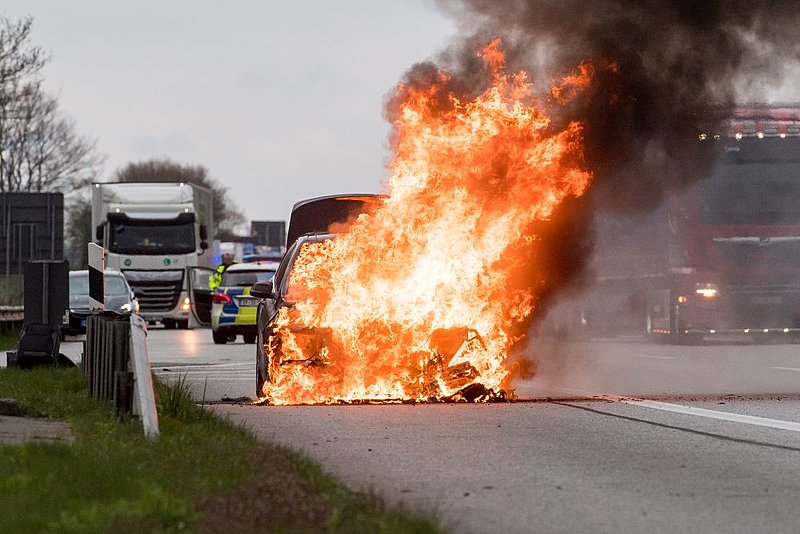
The energy density in the batteries of modern electric vehicles is continuously increasing, so fire protection is becoming more and more important. A new intumescent layer system developed specifically for e-mobility already meets future legal requirements expected in Europe in this regard.
Battery electric vehicles (BEVs) are the new generation of sustainable mobility, and demand is growing rapidly. BEVs are expected to account for 25 percent of vehicles built in Europe by 2025. The biggest challenge for automotive and battery manufacturers is to increase the performance of lithium-ion and other battery technologies by increasing energy density and lowering the cost per kilowatt-hour. At the same time, the goal is to improve safety through research and development in electrical and thermal properties.The focus is on automated applications that enable scalable, cost-effective manufacturing, increase throughput and provide multifunctional solutions to meet the sustainability goals of automotive and battery manufacturers. Optimization and development potential is not only in the area of direct battery performance, however; aspects such as thermal management, i.e. heat dissipation, and the topic of fire protection are also pushing ever higher up the priority scale. Because apart from the sensationalist reporting on burning electric vehicles, the issue of fire protection is a serious one in terms of occupant protection due to the extremely high amount of energy that a traction battery can now store and release in a very short time. The increasing energy density of battery packs inevitably means that fire protection solutions have to withstand extreme fire scenarios. In China, standards GB38031 and GBT31467 already apply that specifically address this issue and are now even applied or offered in Europe by relevant testing organizations. New in the Chinese GB 38031-2020, for example, is a so-called thermal propagation test, which is intended to ensure that after thermal runaway of a cell in the battery pack, at least five minutes remain before an open fire or even an explosion occurs. This is intended to give vehicle occupants sufficient time to exit the vehicle in time in the event of danger. China is the first country in the world to introduce this requirement as mandatory for traction batteries, and it is becoming apparent that these requirements will become mandatory in a similar way for other regions in the future. In Europe, corresponding legislation is currently being prepared. This means that effective fire protection in the battery housing will become mandatory. Fire protection by means of coatings is not in itself a new invention. for. In the oil and gas industry, for example, coatings that foam up when exposed to heat and thus insulate the substrate from the heat of the fire for a certain time are very important for fire protection and structural integrity.
Proven concept optimized for e-mobility
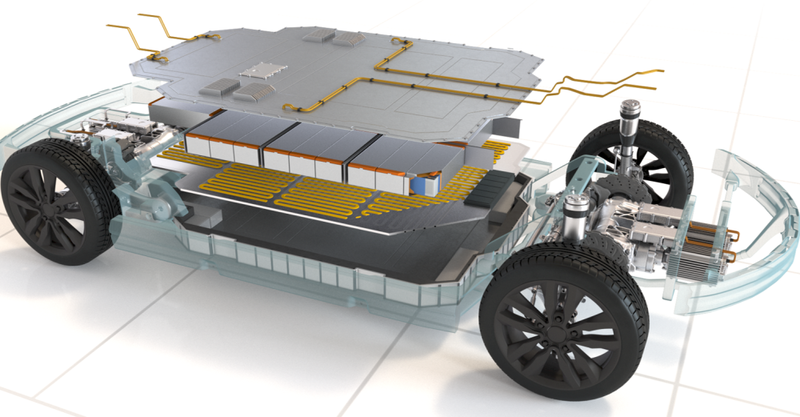
In addition to fire protection performance, however, the focus in the vehicle sector is also on thermal insulation and weather resistance. After all, when a battery is on fire, it should naturally keep the heat away from the surrounding vehicle structure for as long as possible. On the other hand, the battery cells must also be cooled effectively during normal operation, which means that a fire protection layer must not excessively impede heat transfer.
Flexible fire protection through spray application
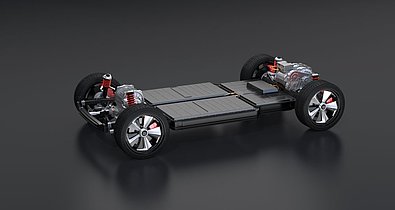
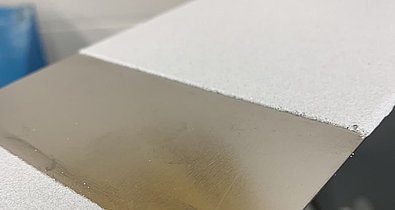
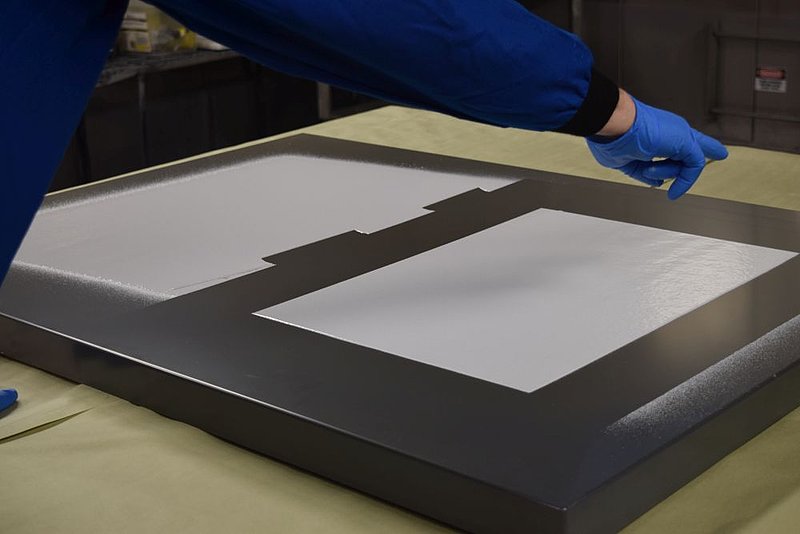
The battery pack coatings team at PPG, a manufacturer known for a wide variety of coating systems for the automotive industry, recently launched its first Battery Fire Protection (BFP) product program to further expand the company's portfolio of high-performance solutions for new vehicles. One new BFP product in this context is CoraChar SE 4000 for EV battery packs. This is an intumescent coating that expands when exposed to high heat or fire. This creates an insulating layer that protects against thermal damage. CoraChar SE 4000 expands to six to 20 times its original thickness when exposed to heat. In practice, this means that a coating only 0.3 mm thick expands to a maximum thickness of about 2 mm, while a 1.5 mm layer expands to up to 30 mm. Tests with an open flame show that temperatures of over 600 °C prevail on the back of an unprotected sheet after less than a minute. With 600 µm CoraChar SE 4000, on the other hand, the temperature only rises to around 300 °C within five minutes and only reaches 400 °C after 30 minutes. Overall, the coating can withstand a 1,200 °C high-pressure fire for more than 30 minutes while the temperature of the substrate remains below 400 °C, and it can also successfully contain the thermal runaway fire in high-energy battery packs for more than five minutes. As such, it is a suitable means of meeting the key requirements set out in GB38031. The coating can be applied by spray and is suitable, for example, for coating the lids of battery packs to provide improved protection in the event of a fire. In contrast to conventional solutions for thermal runaway protection, such as thermal insulation mats, aerogel and mica sheets, CoraChar offers a wider range of properties and is completely flexible with regard to battery size, especially thanks to the spray process. The thin thickness of the coating also favors heat transfer, so less cooling capacity is required inside the battery. Aging tests suggest a coating durability of up to 20 years. It also meets e-mobility requirements for salt and chemical resistance and low pack weight. CoraChar consists of one hundred percent solids, is solvent-free and thus also offers a sustainability advantage. In addition, automated application by robot is planned, so that smooth integration in the mass production of battery packs can be expected. Production of the new layer systems will take place in China at a new production facility in Wuhu, Anhui Province. In the production line, emphasis was placed on a high level of automation; the entire production process, from raw material control and storage to preparation and filling, is based on state-of-the-art automation and monitoring processes that make production management measurable and controllable, and all related parameters traceable. CoraChar SE 4000 fire protection coatings have also already been qualified by several leading OEM customers in the automotive industry for their own series production. Incidentally, PPG has been awarded the prestigious R&D100 Award in 2021 in recognition of the development of the new fire protection coating, which already meets current and future challenges and enables cost-effective fire protection for electric vehicle batteries in high volumes by compartmentalizing fire events - including external fires and, most importantly, internal thermal breakthroughs
Electrical insulation
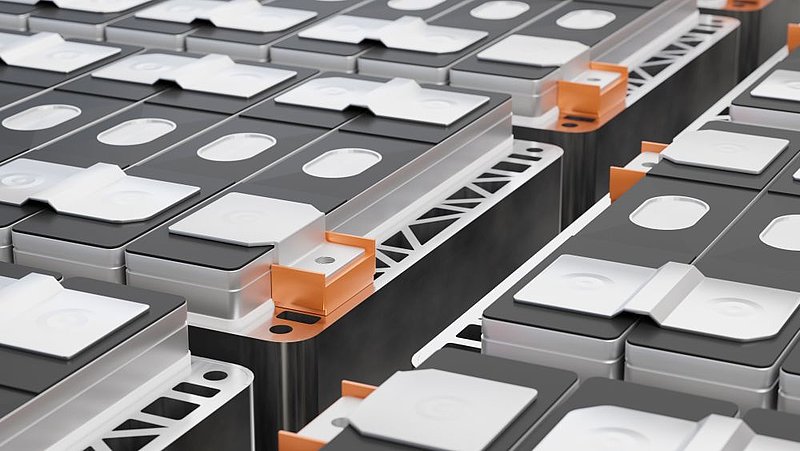
Reliable insulation of the battery housing is also relevant to safety, in order to prevent unwanted contact and thus short circuits of the battery cell terminals - whether during normal operation or also in the event of deformation due to external mechanical impact. PPG offers di-electric powder coatings for this purpose. PPG's di-electric Envirocron Extreme Edge coatings are used in place of film and/or tape solutions to eliminate voids, bubbles, seam failures and edge protection problems. They also facilitate high production throughput and automated application. In the process, the exceptionally high electrical insulation significantly improves safety by eliminating the potential for electrical flashover.
Thermal interfaces
Within its adhesives and sealants portfolio, the coatings manufacturer has also developed sealants for battery packs and special thermal interface materials to connect cells to modules and packs. This is because thermal management has become an important issue in modern high-performance vehicle batteries.The company sees the key in successful product development as working closely with customers to develop application processes that support the transition from coatings to high-volume applications of batteries, modules and cells. Last but not least, the company's global presence facilitates close collaboration with customers in all regions of the world. Products have already been launched or are in an advanced stage of qualification/launch with leading BEV OEM customers around the world. Just as PPG's exterior coating technologies have been the first choice for vehicle protection and high-end design for many decades, PPG sees a very good chance that many BEVs will also feature PPG coating technologies in the future.
PPG Germany www.ppg.com