

Many practical topics at the QIB Industrial Coating Practice Forum
Among Coaters: 230 Participants at QIB's Industrial Coating Practice Forum
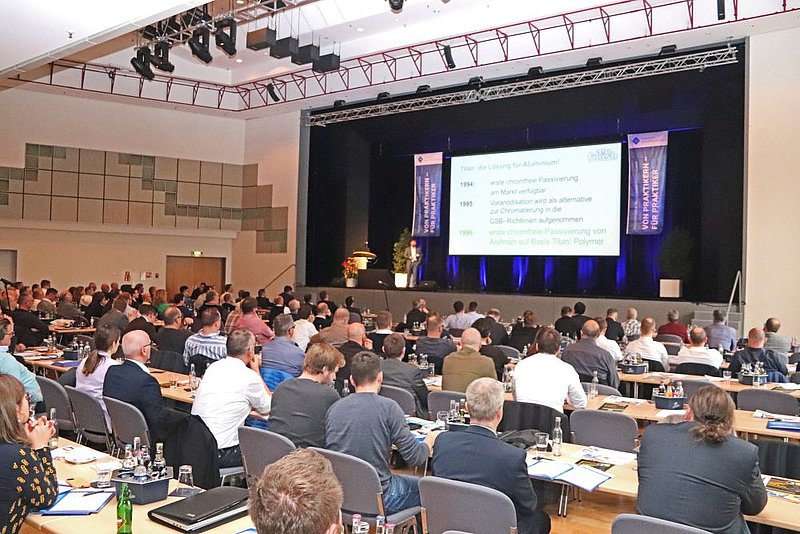
The varied and interesting program of presentations at this year's Practical Forum ranged from retrospectives on inline layer thickness control to practical experience with heat supply using wood chips and superheated steam. At the first face-to-face event since the Corona pandemic, the Stadthalle Wetzlar was well filled with 230 participants. The need to obtain up-to-date information and to exchange views on the current challenges was obviously great.
In his entertaining review of the year, the Chairman of the GUI EB, Markus Kopp, also addressed the past difficult years, but also emphasized what had been achieved during this time. For example, the QIB grew by 23 new members and five supporting members to a total of 155 members since the last event. An audit app has recently been made available for audits at member companies in order to simplify and also standardize the audit process at the company.
Retrospective Powder
Marko Büttgen of Kabe, who entered the powder coating business in 1979, gave a very entertaining and informative talk on the history and milestones of powder coating. At that time, the powder industry was growing at double-digit rates - not least because of the new Federal Immission Control Act (BimschG), which came into force at that time, and the Technical Instructions on Air Quality Control (TA Luft). Incidentally, the origins of powder coating date back to the 1960s, when Bosch in Reutlingen was looking into the possibility of replacing insulating coatings with solvent-free systems.
Bosch later founded its own powder brand under the name Resicoat. In the early days, production was downright adventurous - the coating base materials were melted and dispersed in a large coating preparation container, which was heated and stirred with a dissolver. Everyone can imagine what happened when the powder hardened in an uncontrolled manner. Finally, extruders began to be used. So Büttgen roamed through the decades, going into detail about the development of tribocoating, self-cleaning powder booths and the development of modern corona guns by Gema. Previously, the high-voltage transformer and the DC cascade were independent components and were connected to the gun by a stiff high-voltage cable. All in all, an exciting journey through time for all those who were not there at the time.
26 years of chrome-free passivation
Jürgen Uhrmann gave a refreshingly honest account of 26 years of chrome-free passivation and also of the learning curve that the Alufinish company and he himself had to endure. It took much longer than expected until the properties and necessary framework conditions in the practical use of chrome-free passivation based on titanium/polymer were worked out among the coaters. The introduction of the multimetal-capable chromium-free pretreatments based on a sol-gel process of zirconium and silane compounds then went much more smoothly.
Other presentations dealt with coating thickness measurement, for example the challenges of measuring thin substrates and thin coatings, as well as the sources of error with highly curved components, small surfaces and near edges. Those who do not follow the calibration recommendations of the measuring instrument manufacturers will receive values that are clearly too large or too small. The roughness of a substrate can also have a considerable influence on the measurement; in such cases, it is advisable to determine an average coating thickness.
A practical application at contract coater Metob showed how Optisense's photothermal measurement techniques can be used to achieve more stable processes, a harmonized tolerance band, and less scrap and rework. Specifically, the project involved the powder coating of guide rails for car windows, where a coating thickness that is too thin affects durability, while a coating thickness that is too thick results in functional limitations. As a result, the expected efficiency targets were even exceeded.
Process reliability through inline measurements
Particularly in times of a rethinking of energy supply, the presentation by Schreiner Powder Coating (PBS) fitted perfectly into the program. With considerable development efforts of its own, the company has succeeded in using a wood chip heating system and a cascaded superheated steam supply to reliably supply all heat consumers from the powder dryer via the adhesive water dryer to the pretreatment baths via a 3.5-kilometer-long pipeline network. In doing so, the company broke new ground and had to design and install many components itself. The switch to a central heat supply alone reduced energy consumption at PBS by 20 percent. In addition, even during tense phases on the wood market, the price for the wood chip supply was unrivaled compared to oil or gas. "Until 2021, however, no one was interested in our heat supply concept," states company boss Harald Schreiner.
Alternatives to oil and gas are worthwhile
Other presentations covered improving sustainability through low-temperature powders, bio-based and recyclable raw materials, and weather-resistant formulations. Other topics included strategies for SMEs to reduce greenhouse gas emissions and the impact of the European Accounting Directive and CSR. More and more companies will have to report on these issues over the next few years.
The presentation of a digital graphic design for painted surfaces by sublimation was exciting. Any graphics that can be printed by inkjet can be inserted and fixed in a baked-on powder coating: At three bar pressure and 200 degrees Celsius, the dyes diffuse into the powder coating and are fixed. After two years of development work, Stefanie Sarnoch from Pulverlackierung Sarnoch GmbH has successfully established the process as an addition to the company's portfolio and presented interesting application examples.
Another application example was the coating line at Giga Coating, on which parts almost 16 meters long and nearly three meters wide can be pretreated, blasted, cathodic dip coated and powder coated. But it is not only the dimensions of the plant that are impressive, but also the consistency with which the measures for energy efficiency and resource conservation have been implemented.
Proper testing is not a matter of course
A surprisingly widespread misconception among coaters is that it is sufficient to perform tests irregularly or not at all because nothing ever changes in the process anyway or the processes are already in order anyway. Therefore, Ernst-Hermann Timmermann from DFO delivered a cross-section on the application of the important test methods from coating thickness measurement to cross-cut testing under the motto "Correct testing has to be learned", as well as on common misconceptions in the industry, which he explained using concrete case studies.
The Institute for Surface Technology IFO reported in detail on the coater qualification according to the railroad standard DBS 918340 and which quite extensive tests and documentation are necessary for this. The speaker Phillip Malchow also explained that membership of a recognized quality association makes a separate test superfluous. The possibilities for quality improvements with simultaneous considerable savings in costs and resources through automated dosing solutions were also presented in a practical manner. In addition to other presentations on the subject of quality testing and assurance as well as on the qualification of coaters, a talk on a special software tool by Rainer Gruber of Surface Solutions presented a promising perspective for the fast and precise preparation of quotations for contract coating orders.
The concept of an integrated Industry 4.0 process solution from Gema, which provides a constant overview of the status, performance and maintenance of operational systems, as well as comprehensive analysis and export options for cross-departmental optimization, also met with an interesting and positive response.
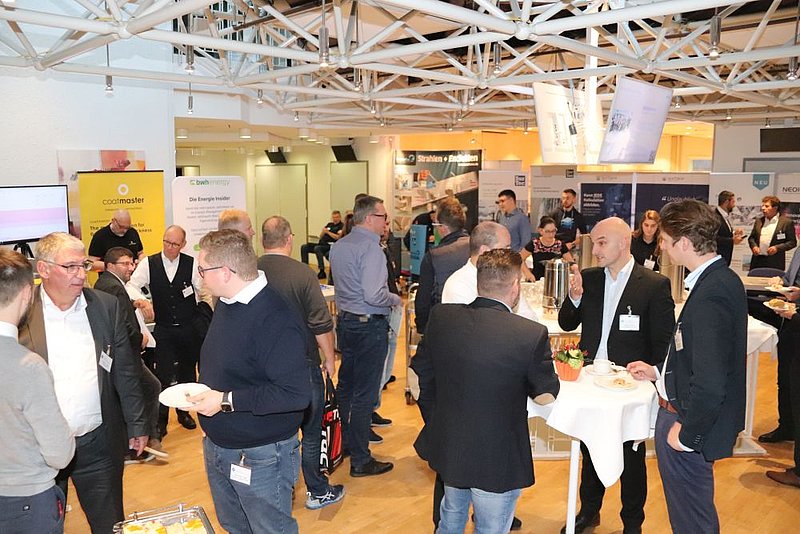
The promotion of young talent was not neglected either, with the "Everyone Needs Powder" award being presented on the Thursday before the evening event to honor trainees for particularly good performance. In addition to the well-chosen presentations, the event offered a very open and constructive atmosphere, which was evident both at the evening event and in the very lively discussions during the breaks in the industrial exhibition. Overall, the lecture program proved to be very diverse and pleasantly presented.