

Kick-off for training on technical cleanliness
First lecture at BHT-Berlin and first certified qualification course for the cleaning industry

There is no training for the field of industrial parts cleaning and technical cleanliness, nor is the subject present in any form in technical courses of study. This must change on a broad front - a start has now been made with an initial lecture and qualification course.
Cleaning processes are becoming increasingly complex and have an ever greater influence on smooth, low-scrap production and the subsequent functionality and reliability of products. For this reason, cleaning and quality assurance processes are constantly being developed further, with a great deal of energy and effort, from semiconductor production to the medical industry to electromobility and other areas. But where do the personnel come from who develop and supervise these processes? How can we ensure that a candidate for jobs in the context of industrial parts cleaning has the necessary knowledge and skills? In Germany, there are countless training occupations for which guidelines clearly stipulate what a graduate must have learned and mastered. In the field of technical cleanliness and industrial parts cleaning, however, there are no such guidelines - a hurdle to attracting young talent. For those interested in this field, the only options are qualification measures and advanced training courses. Attendance at such events does not yet provide objective proof of ability, however; although it is confirmed, this is not a sufficient indicator of how much knowledge has actually been absorbed and understood. Not even in relevant technical courses of study, from mechanical engineering to process engineering, has the subject of cleanliness and industrial parts cleaning played a role in the curriculum to date. Yet numerous problems with critical cleaning processes could be eliminated as early as the design phase or during production planning if everyone working in this field had learned certain basics of parts cleaning during their training or during their studies. Unfortunately, however, this has so far been wishful thinking. In practice, employees often start to deal with the subject of cleanliness by chance - for example, because something is not running smoothly in production. there is neither training nor is the subject present in any form in the technical courses of study. This must change on a broad front - a start has now been made with an initial lecture and a qualification course.
Professionals for cleanliness issues need a lot of initiative
When talking to experienced professionals in the cleaning industry, the reports are similar. Starting with cleanliness-related problems in production, an employee or, in the best case, a small group takes on the problem and begins to familiarize themselves with the issues and laws of technical cleanliness. Word of the competence built up in this way spreads within the company, and as soon as similar problems arise, the employees accumulate further know-how. Over the course of their careers, skilled workers acquire their knowledge not least through their own initiative and interest in the subject matter. Objective evidence of the skills acquired has hardly existed up to now, so the only way to assess skills in this area is to conduct an expert analysis of the employee's resume or to conduct an intensive technical interview.
New skilled workers urgently needed
As already indicated in the introduction, more and more new and well-trained specialists will be needed in the field of technical cleanliness in the foreseeable future - and the hitherto usual very haphazard and lengthy process of becoming a specialist will no longer be able to meet the demand in the medium term. Not least because those who have advanced technical cleanliness over many years and kept manufacturing processes stable in companies will increasingly retire and leave the workforce in the coming years. This means that there is an increasingly urgent need in the companies to secure the know-how and to find and train new skilled workers who can take over the tasks. It is therefore important and high time to institutionalize the development and testing of expertise in the field of industrial parts cleaning.
Associations as a qualification aid
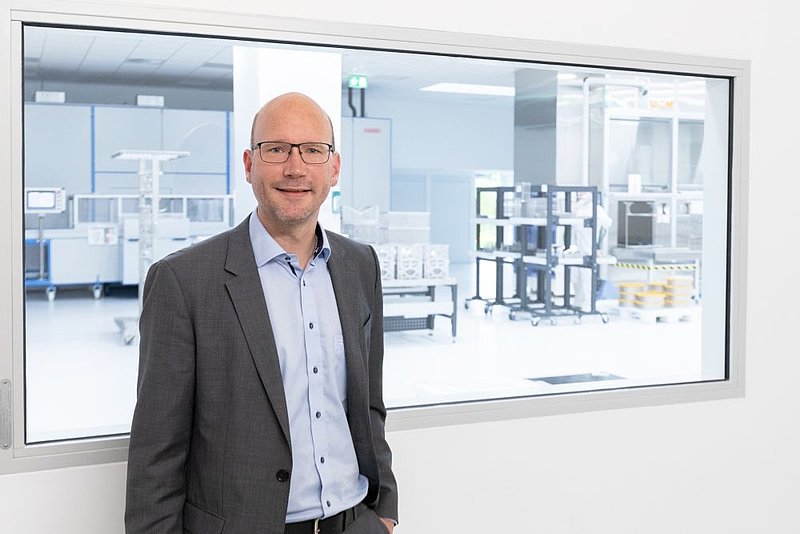
"Due to the complexity of the subject and the ever-increasing demands from the various industries, we have been working for many years to anchor parts cleaning in the higher education landscape in Germany as well," explains Dr. Michael Flämmich, Chairman of the Board of FiT. A step in this direction has now been taken in cooperation with the Berlin University of Applied Sciences (BHT). With eight faculties and over 13,000 students, the BHT is one of the largest universities of applied sciences in Germany. Its range of courses includes over 70 accredited bachelor's and master's degree programs in engineering, natural sciences and economics. "In our discussions with the FiT, we recognized the cross-industry importance of industrial parts cleaning. It is surprising that there has been no lecture series on this topic in bachelor's or master's degree programs at German universities to date. That's why we decided to get started together with the FiT," reports Prof. Dr. Jochen Pfeifer, who teaches organic chemistry at the BHT. The new nationwide lecture series was implemented for the first time in the winter semester 2022/23 as an elective subject in the fifth semester of the bachelor's degree program in pharmaceutical and chemical engineering. "We plan to integrate these lectures into other degree programs such as mechanical engineering, green engineering (formerly process engineering) and biotechnology. In these areas, the cleanliness of components also plays an important role," describes Jochen Pfeifer. The FiT has prepared a total of 15 lectures for the lecture series. First of all, fundamental questions about industrial parts cleaning are clarified: the broad spectrum of workpieces to be cleaned and their contamination are examined, and the parts cleaning process chain is scrutinized. The content on cleaning processes, plant technology, chemistry and the areas of measuring and testing (quality control) are covered in greater depth. Other lectures include how the cleanliness achieved in the cleaning process can be maintained and transported to the next production step or customer. The influences of component design on the cleanability of workpieces and on the costs of cleaning are also part of the lectures. "Since the lecture series comprises a total of 15 units of 90 minutes each, students get a very good overview of the challenges, applications and solutions in industrial parts cleaning," says Michael Flämmich. "This is also helped by the fact that the lectures are given by experienced, practice-oriented lecturers from FiT members in industry," adds Jochen Pfeifer. The lecturers of the FiT lectures "Industrial Parts Cleaning" at the BHT are Kerstin Zübert (Bantleon), Gerhard Koblenzer (LPW), Rainer Straub (Ecoclean) and Dr. Michael Flämmich (VACOM). After successfully passing the exam in the new elective, students will receive a certificate in addition to their report card. "With this, the students can later prove their additional qualification," says Jochen Pfeifer, looking at the students' future opportunities on the job market.

For the first time certified degree in component cleaning.
In addition to higher education, a great deal of attention must also be paid to professional training. "Despite the immense efforts that have to be made for cleaning processes in industrial manufacturing processes, to date there is no vocational training in this field. Thus, the qualification of lateral entrants currently offers the only possibility to bring professional security to these value-adding processes." Frank-Holm Rögner, head of the Fraunhofer Cleaning Business Unit office, is certain. "Since 2009, we have already been conducting an annual basic seminar for industrial parts cleaning with our member institutes. However, these three to four days can only provide an initial basic understanding of cleaning processes. Of course, this does not provide a basic qualification," agrees Daniel Weile, who is involved with cleaning processes and the associated educational projects at Fraunhofer FEP. After many years of efforts to provide a more comprehensive opportunity for professional qualification, a funding project was successfully applied for as part of the InnoVET competition together with Fraunhofer FEP's long-standing education partner, the Sächsische Bildungsgesellschaft für Umwelt- und Chemieberufe mbH (SBG) in Dresden. Within the framework of this CLOU project, funded by the Federal Ministry of Education and Research and the Federal Institute for Vocational Education and Training as project sponsor, a comprehensive concept was developed for an advanced training program for in-service qualification as a "Certified Vocational Specialist (m/f/d) for Industrial Parts Cleaning" at level 5 of the German Qualification Framework (DQR 5). This now makes it possible for the first time to obtain a certified qualification with examination at the Dresden Chamber of Industry and Commerce in the field of component cleaning.

First group of participants completes qualification
Since September 2022, a first group of participants has been undergoing this qualification, designed with approximately 420 learning hours, as part of the project's evaluation phase. In a hybrid blended learning concept, the learning content is imparted both in concentrated classroom blocks and in synchronous online seminars and self-learning phases, and is supplemented by practical training in cleaning and analytical laboratories at various Fraunhofer institutes. A particular challenge in this concept is the fact that the participants start the training with very different prerequisites, as there is no vocational training as a basis in the field of cleaning technology. Both a leveling phase at the beginning of the training and regular monitoring instruments for learning progress are therefore part of the concept in order to do justice to all participants in achieving the learning objectives. The content of the training is divided into two parts. In the basic module, the theoretical fundamentals and facts of industrial cleaning processes are taught. The in-depth module, on the other hand, aims at the practical application of the acquired knowledge and therefore also considers all surrounding processes and interfaces with which cleaning processes are integrated into production chains. In this way, the skills for planning, optimizing and operating cleaning processes are trained, which are also necessary for avoiding errors and identifying the causes of errors in cleaning processes. From September 2023, this training program will then be open to all interested participants and will significantly improve the technical basis for this important manufacturing process.

Two new starting points for qualified junior staff
This means that there are now at least two promising approaches to broadening the subject of qualification, certification and training for future processes in the field of industrial parts cleaning and technical cleanliness. However, in view of structural change and processes that are becoming ever more demanding in many respects, those responsible - from universities to chambers of industry and commerce - are called upon to give the subject greater priority. After all, high technology now increasingly means the highest standards of cleanliness, and qualified young people for these processes must be secured for the future.
Authors: Dr. Michael Flämmich, Frank-Holm Rögner Rainer Straub, CB