


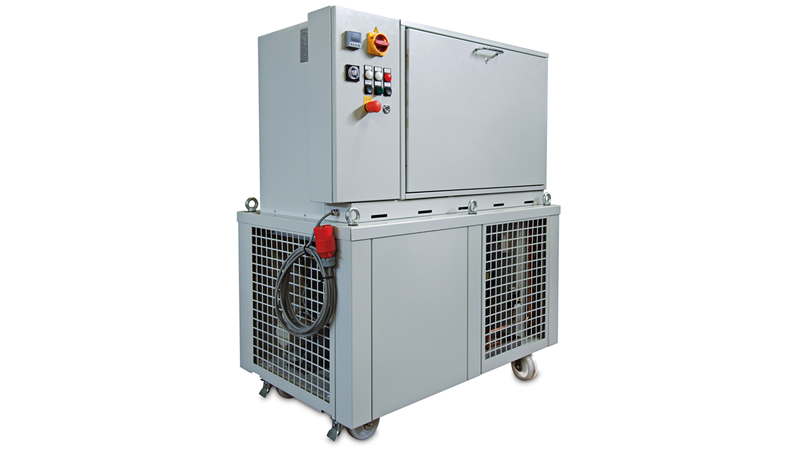
Controlled cooling in production lines
Kühltunnel ermöglichen eine raschere Weiterbearbeitung im Produktionsprozess der Werkstücke
(Oct. 2019/OM) - Workpiece coolers are used where rapid and defined cooling of process-related heating of workpieces is required for inspection or further processing.
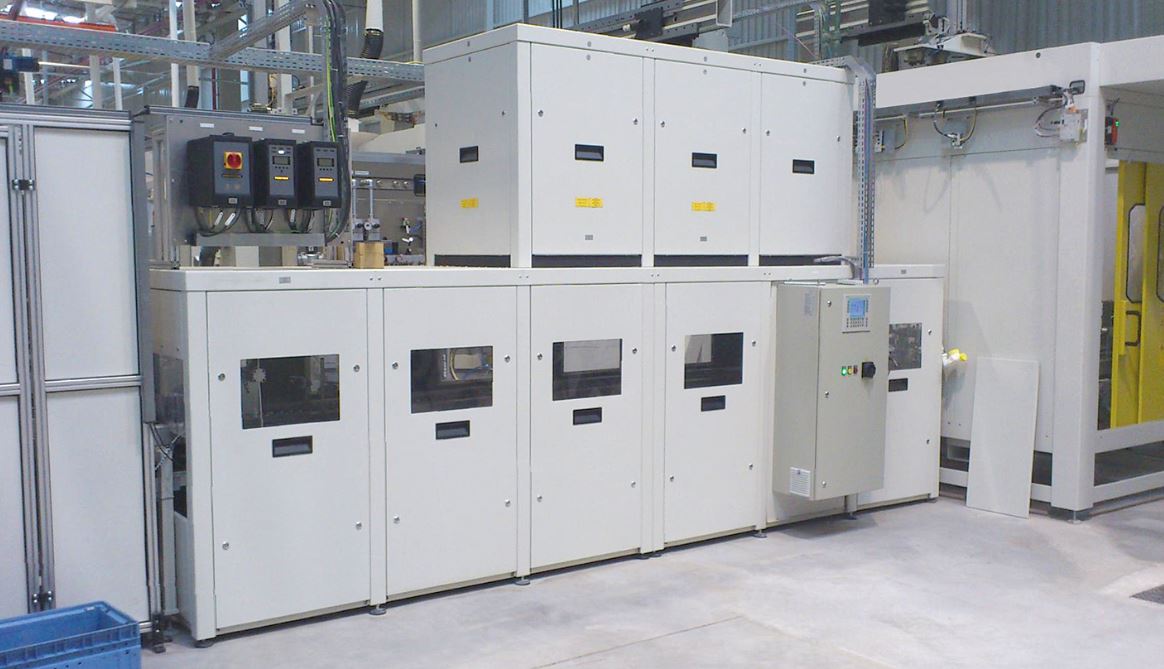
Workpieces are cleaned after the milling or turning process to remove chips and cooling lubricant residues. During this process, the parts heat up to about 60°C. Since subsequent machining often requires room temperature, cooling tunnels have become established as a fast and practical solution compared to cooling areas that served as buffer zones. The parts can be measured or further processed immediately after the washing process.
Two model variants
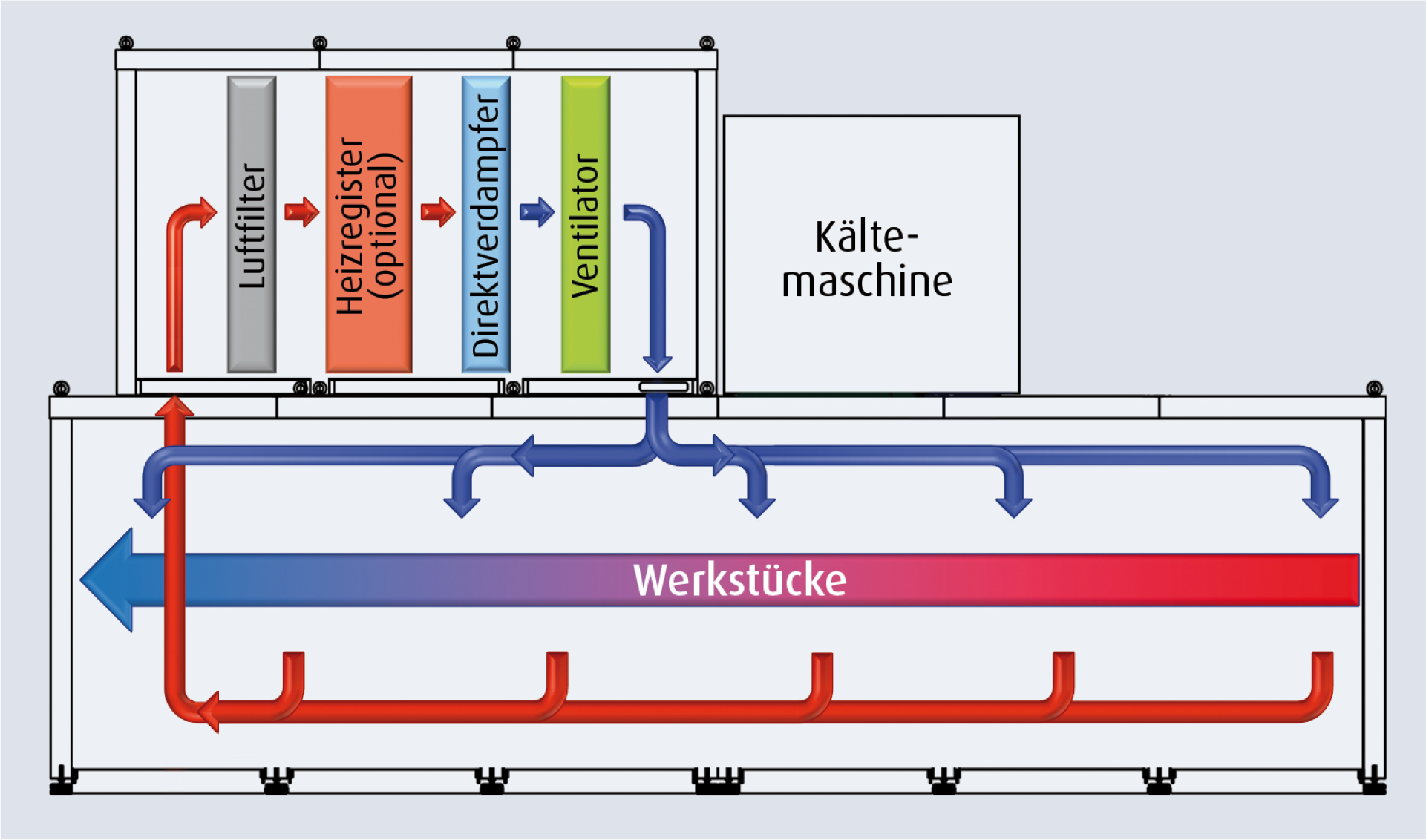
Depending on the availability of the cooling media, Duotemp Kältetechnik GmbH, as the manufacturer of such systems, decides between the WKT or DVT series. Duotemp has been active in the field of industrial refrigeration for 45 years and is a wholly owned subsidiary of Lahntechnik GmbH, which in turn has been developing and manufacturing refrigeration units and small series since 1958. In the WKT model, the cold air generated is circulated within the cooling tunnel and cools the workpieces to the desired temperature level. The waste heat from the cooling process is transferred directly to the customer's cold water via a cold water heat exchanger. For this purpose, the cold water temperature must be below the required workpiece temperature.
In the DVT model, an integrated cooling circuit provides the necessary heat dissipation, so no chilled water network is required. The waste heat recovered from the process can be discharged to a cooling water network or to the hall air. The advantage of this variant is that almost any cooling temperature can be generated and a process that is largely independent of the ambient temperature becomes possible. Basically, the cooling capacity is calculated according to the customer's specifications. These include cycle time, workpiece weight and workpiece throughput per hour, workpiece material, and workpiece inlet and outlet temperature.
Realistic tests
The cooling time is determined empirically, since it depends on the shape, material, surface and thickness of the workpieces. A more precise specification is possible in advance if the cooling rate of a similar workpiece is known. As a rule, the cooling curves and thus the lengths of the cooling sections are determined in test facilities. In the test setup, the test specimen is first heated to the expected entry temperature. This is followed by the simulation of a cooling zone. Nozzles blow cooling air onto the workpiece and sensors on the surface record the cooling curve. If possible, a core measurement is also performed. These tests simulate different nozzle arrangements, air velocity and cooling air temperature. This is the only way to obtain optimum information on the cooling zone design.
► Duotemp Refrigeration GmbH
► www.lahntechnik.de