


VdL: Paint industry under pressure
Rising raw material and consumer prices as well as REACH and CLP regulation burden the industry
The German coatings and printing inks industry is facing difficult times: High raw material costs, skyrocketing energy prices and bureaucracy are weighing on companies. On the other hand, consumers are cutting back on purchases, which is also impacting demand for coatings and inks.
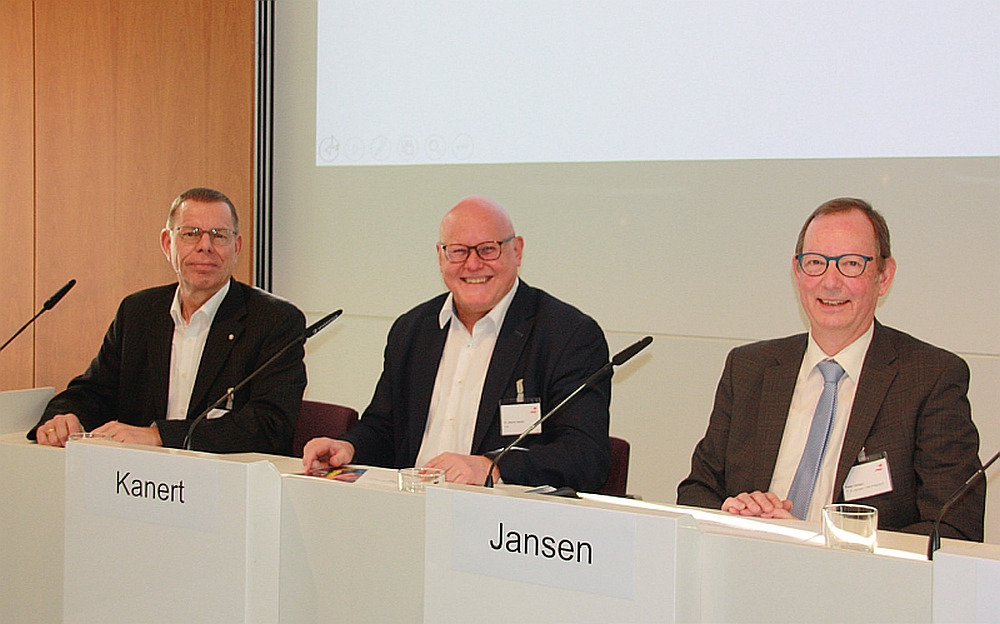
In Germany, 1.53 million metric tons of coatings, paints and printing inks were sold in 2022 - down 4.5 percent on the previous year. "In the current year, a further decline of two to three percent to 1.5 million tons is to be expected," said association president Peter Jansen at the business press conference of the German Coatings and Printing Inks Industry Association (VdL), held in Frankfurt am Main on February 7. Sales development also only looks good at first glance: It was inflation that caused sales to rise by eight percent to 6.1 billion euros last year. For the current year, the VdL expects an increase of a good two percent to 6.2 billion euros. But companies will not be able to benefit from this. "Raw material prices remain at a high level, and relief is not to be expected due to inflation either. The energy crisis will lead to higher costs for gas and electricity in the long term. And rising bureaucracy costs are hitting small and medium-sized businesses in particular," explains Jansen.
Industrial coatings in greater demand, bucking the trend
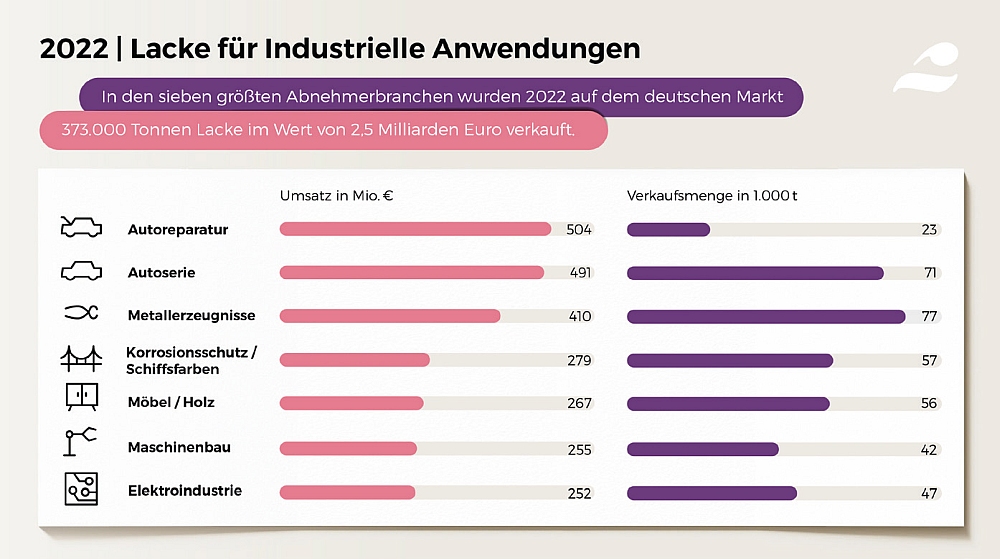
Contrary to the industry trend, industrial coatings developed positively. The volume consumed increased by one percent in 2022, while the value rose by eleven percent due to inflation. In 2023, industrial coatings are expected to see a decline of around one percent, as the VdL anticipates a significant temporary drop in demand, particularly in the wood and furniture industries, but also in mechanical engineering. Overall sales are expected to rise again this year by four percent to 3.4 billion due to inflation. By contrast, the weak construction industry has caused a seven percent decline in volumes for architectural coatings in 2022. For 2023, the VdL forecasts a further decline in volume of four percent to 770,000 tons. Sales are expected to stagnate at 1.8 billion euros. Sales of printing inks also continued to decline in 2022 - 211,000 tons were consumed in Germany, eight percent less than in the previous year. For the first time, packaging printing accounted for more than 50 percent of this. In total, printing inks for publications and packaging were worth 925 million euros. According to Jansen, the outlook for the current year remains negative - the volume of printing inks used is expected to fall by four percent, while sales will increase slightly due to inflation.
Overall, the VdL expects production by German ink manufacturers to decline by around two percent in 2023 - provided there are no significant further disruptions due to inflation and global politics. Domestic demand is expected to decline in a similar way. In value terms, the association still expects a slight increase in domestic demand of two percent.
ECJ ruling on titanium dioxide sends an important signal
The paint industry, on the other hand, was successful on the issue of titanium dioxide (TiO2). Following a ruling by the European Court of Justice in 2022, the white pigment can continue to be used safely and without restriction in coatings and paints. Previously, VdL member companies, with the support of the association, had sued against the classification as "probably carcinogenic by inhalation". However, the Luxembourg judges certified that the EU Commission had committed decisive legal violations. "It is important for us that it was substantive and not formal legal reasons that led the judges to this ruling," explains VdL CEO Dr. Martin Kanert. The judges found massive errors in the assessment of the study on which the classification was based. In addition, according to the ruling, particle effects are not an intrinsic property of TiO2. As such, they are not subject to the EU Regulation on Classification, Labeling and Packaging of Substances and Mixtures (CLP Regulation). Now that the ruling has been served on VdL's lawyers after the deadline for appeals expired at the beginning of February and has thus become legally binding, the labeling requirement no longer applies on the spot. "This is an important precedent for other particulate, powdery substances" Kanert is further pleased.
Green Deal poses new challenges for the industry
On the other hand, the European Green Deal continues to keep the association on its toes. "Half of the eight relevant policy areas of the Green Deal have a direct impact on the coatings and printing inks industry, the other half at least indirectly," says Kanert. It is true that Brussels has given the industry a little breathing space in terms of time with the REACH revision. On the other hand, however, the VdL criticizes the plans to revise the CLP regulation. "With the new hazard classes, the EU would deviate from the globally applicable GHS labels. And the more substances would be introduced for risk management. Then chemicals could be banned based on inherent properties without risk assessment. "That then means a reduction in the raw material portfolio and a massive change in formulations," says the VdL CEO. Since such a change would take an average of two to three years, but in sectors such as the aviation industry sometimes ten years, the reformulation effort would not be manageable in the time currently envisaged. Although the full effects cannot yet be calculated because many questions are still open, according to Kanert, an initial estimate by the European chemical association CEPE indicates that twelve percent of the substances would be eliminated.
Kanert also fears trouble from the REACH restriction on intentionally added microplastics. After paints and varnishes are exempt from the ban on use because the microplastic particles are firmly embedded in the hardened paint film. Nevertheless, the plans would impose extensive labeling and reporting requirements on companies in the value chain - from manufacturers to importers, downstream users, distributors and industrial users. Kanert expects the restrictions to come into force in the second half of 2023, which would mean a great deal of bureaucracy, especially for SMEs. "If the EU Commission doesn't know exactly what to do, it overburdens industry with reporting obligations," complains the VdL CEO. He therefore calls for clearer definitions of the scope of the regulation on microplastics and no additional bureaucratic burdens for companies.
SI
Verband der Lack- und Druckfarbenindustrie e.V.
www.wirsindfarbe.de