Problem solution turning station
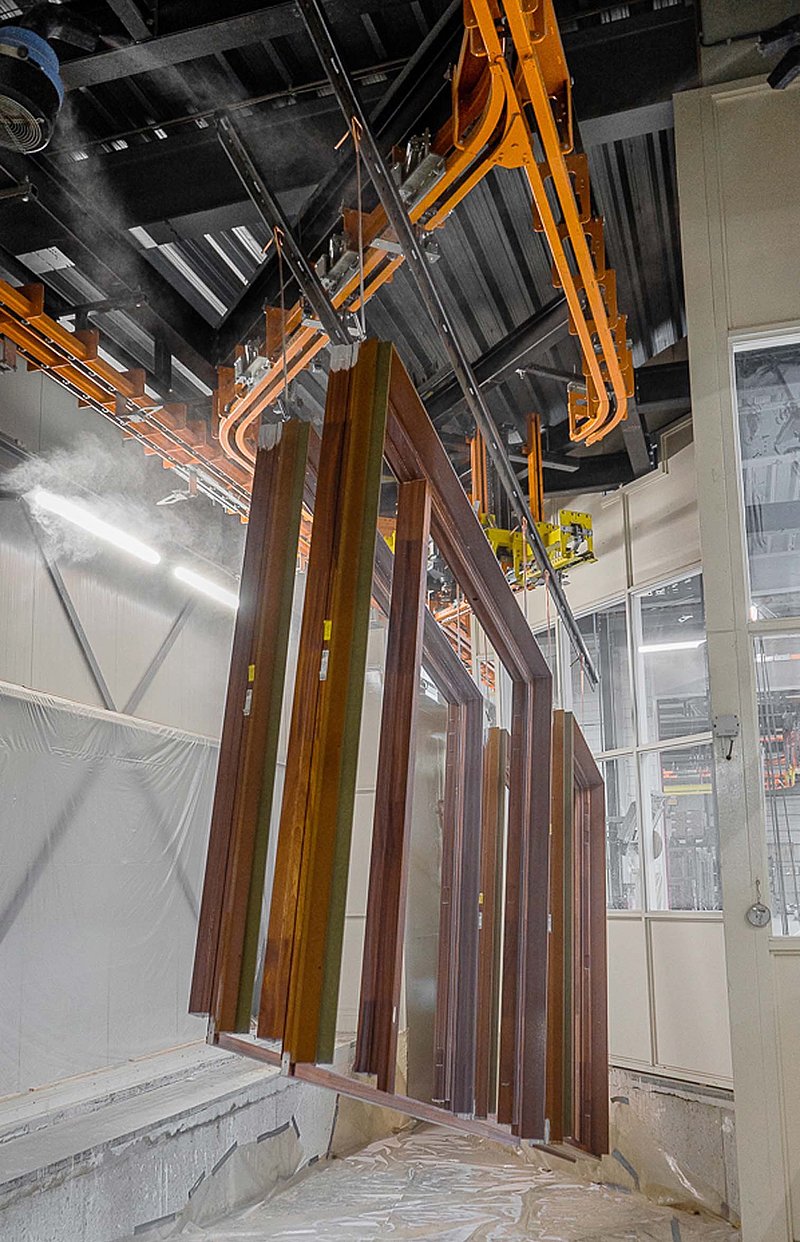
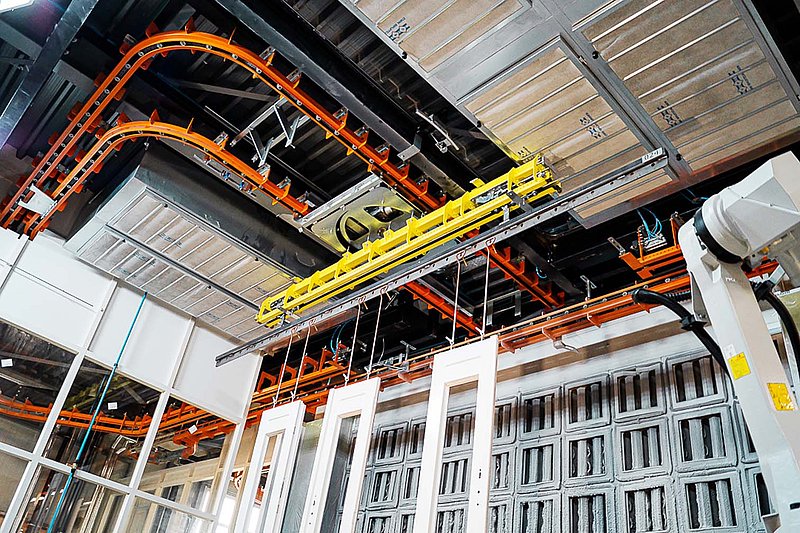
To find a solution, Reuvers presented the problem to the experts at MBR-Maschines, who specialize in application solutions for the wood and furniture industry, and asked for suggestions. MBR then brought van Hervijnen, who had already installed the existing T1 Power & Free system, onto the project team. It was decided relatively quickly that an iGiotto painting robot from Cefla with a linear axis and two pneumatic automatic guns would form the basis of the new application technology. The guns are arranged in such a way that two vertically abutting surfaces can be coated simultaneously in a single pass. The paint mist is collected by a spray wall with turbulence dry separators made of cardboard from CWN.
Via a QR code on the components, the system control recognizes the component and can thus automatically select the correct program. The color and further processing steps are also linked to the QR code, so there is no need for manual intervention by the workers here. The color change is now automated compared to before. Since Reuvers is an in-house coater with a maximum of 20 to 30 different products to be coated in the production phase, the decision was made in favor of classic teaching of the product-specific programs.
The central challenge initially remained a time-saving turning maneuver for the components. For this, van Hervijnen had an extremely functional solution in its portfolio: a turning station. A piece of running rail, on which the traverse with the components to be coated is suspended, first moves parallel to the direction of travel far enough away from the spray wall so that the traverse can be turned by a rotation device. The traversing unit then brings the crosshead with the components back into alignment with the main rail - and the coating process can continue without any further waiting time. "Even though the actual turning process seems relatively slow when you watch it, we still save around half the time compared to the old method," explains Peter Wittenberg from Reuvers, delighted.
Three weeks for the conversion
Once a viable concept had been found, the concrete planning work began and it became clear that the rebuild would take three weeks. In terms of timing, it was possible to move this phase to the turn of the year, so that, minus the company vacation, there was effectively only one week of production downtime to compensate for. Reuvers met this challenge with particularly tight and precise job planning in the run-up to the rebuild, including intensive preparatory work so as not to keep customers waiting unnecessarily. By the beginning of 2021, all work had been completed and the rebuilt plant was ready to start up.
"The plant has been running for not quite half a year yet, but the results so far make us extremely positive; based on our consumption figures to date, we expect to get by with only about 16,000 liters of coating thanks to the new application technology, which means we have actually been able to halve our coating consumption," Wittenberg is pleased to report. "This reduction has nothing to do with the effects of the virus pandemic. Overall, based on current experience, we expect an ROI on the investment within about three to four years at most."