
Absolutely precise selectivity
Eine vollautomatische Applikationslösung ermöglicht die erste oversprayfreie Zweiton-Lackierung
The trend toward individualization is also gaining ground in the field of automotive color. For the automotive industry, the increasingly desired two-tone paint means considerable additional expense. Thanks to an innovation from Dürr, this is now changing.
When only one color is painted, modern automotive paint shops are unbeatably efficient. Over 300,000 car bodies are coated each year in consistently high quality. But if a decorative and contrasting color is added, for example on roofs or as a design stripe, the effort required increases significantly: after the complete body has been painted in the base color, dried and cooled, it has to be masked by hand with adhesive film. Then it goes back to the paint line, where the second color is applied. After drying and cooling again, the film has to be removed manually. This not only involves high labor costs, but also increases the energy required for baking the paint by at least 25 percent compared with single-color painting. In addition, six to 15 square meters of adhesive film have to be disposed of per car body. And valuable time is lost because the second paint application occupies the paint line.
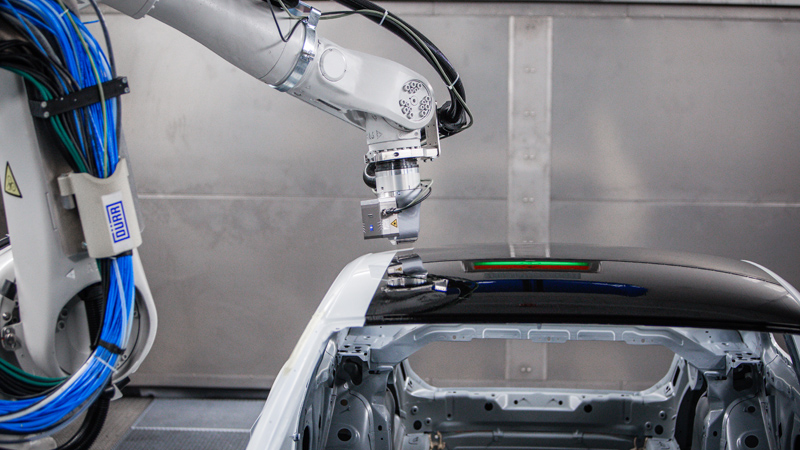
A new process developed by Dürr called EcoPaintJet is much more efficient because it completely eliminates the need to mask the car body. This is ensured by a completely new type of applicator.
(Kopie 3)
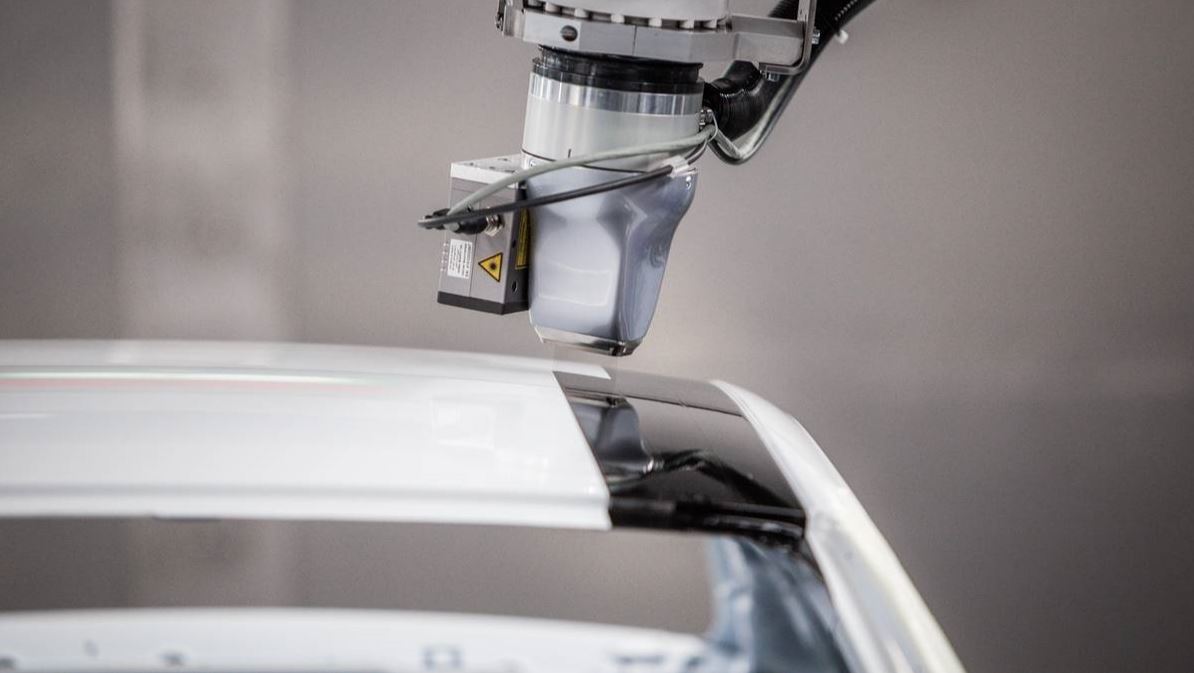
No masking with adhesive foil necessary
Dr. Jochen Weyrauch, CEO of Dürr Systems AG: "The EcoPaintJet is a quantum leap on the way to efficient two-color painting of cars. For the first time, it enables the functional combination of customized product design and automated production."
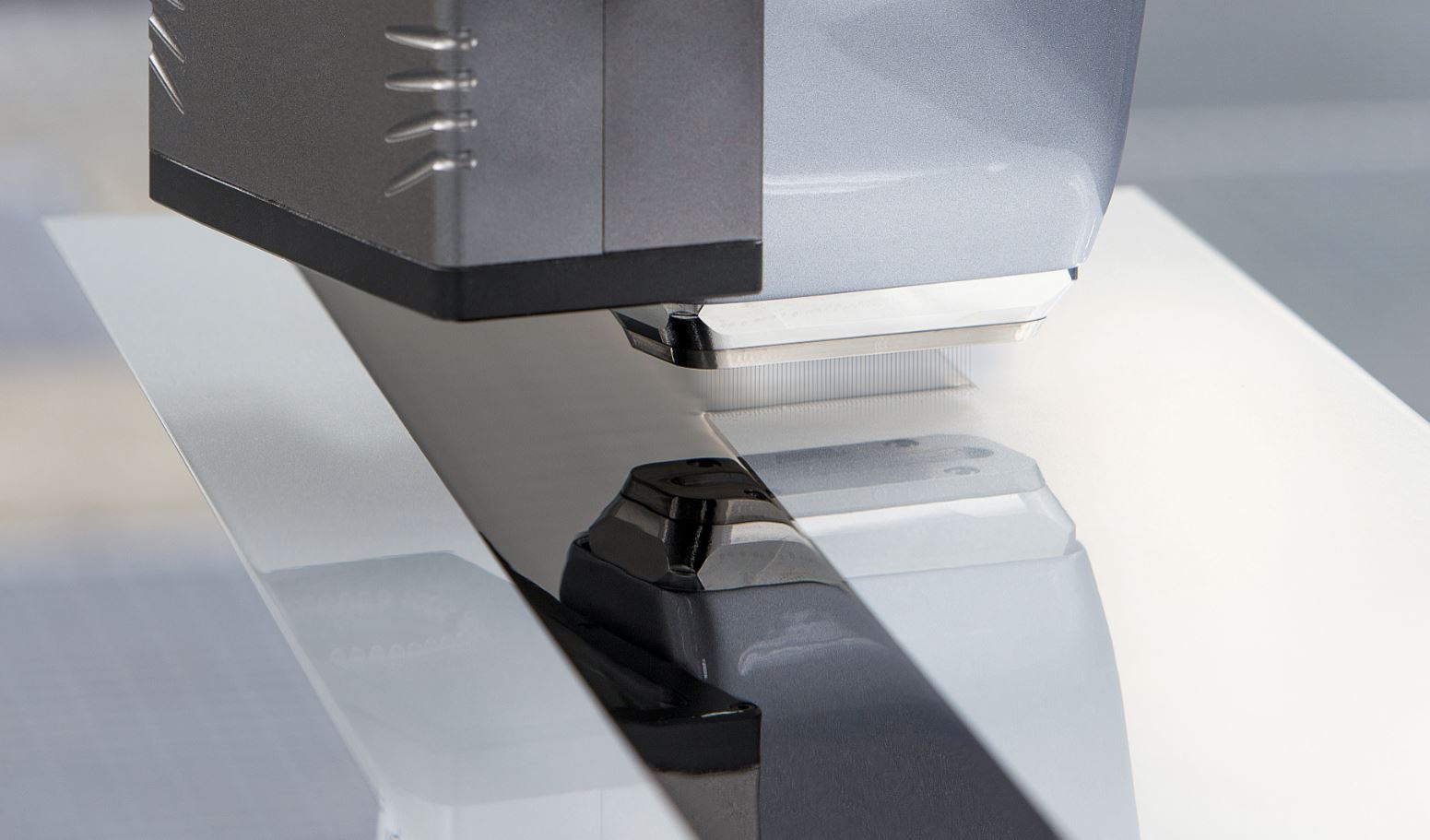
On a robotic arm, the applicator moves over the target surface and applies the paint with absolute separation precision. This means that the paint lands precisely on the intended surfaces, but not next to them - not even in very small quantities. The rest of the body therefore no longer needs to be masked off. A car body roof is thus painted with the contrasting color in just 120 seconds. By comparison, masking alone takes around 50 minutes to apply and remove the adhesive film. The precise application of paint is particularly advantageous when painting electric cars: some electric cars are slightly higher than conventional models because the battery is installed in the floor assembly under the passenger cell. However, many buyers want sporty, flat-looking vehicles. For this reason, stripes in a dark contrasting color are applied at the transition from the roof to the side panel and on the sill. This makes the car look flatter.
No more paint mist
High precision is achieved because the applicator works completely without overspray. This is the term used for the paint mist consisting of tiny droplets that is produced during atomization and lands outside the target area. In the EcoPaintJet, a filigree nozzle plate measuring just a few square centimeters prevents overspray from occurring. The nozzle plate forms the underside of the rectangular applicator and has around 50 barely visible holes with a diameter of around one tenth of a millimeter. Through them, the paint is applied to the body panel in parallel jets from a distance of 30 millimeters. The applicator is the heart of the overall EcoPaintJet system. It also includes the EcoRPL 133i painting robot, which moves the applicator without vibration. A measuring system equipped with sensors ensures maximum accuracy. It measures the surface to be painted in three dimensions and sends the data to the control software. This automatic path generation system constantly calculates the path in which the applicator must be moved over the surface to achieve the optimum coating result. It also determines the rotation of the applicator and the speed it needs to apply exactly the right amount of coating.
Dr. Lars Friedrich, member of the Board of Management of Dürr Systems AG responsible for application technology, says: "This high-tech process enables the automotive industry to fulfill customers' individualization wishes faster and in top quality. There is great interest in the market because we offer real added value with this new technology." The EcoPaintJet is currently being tested at several automobile manufacturers. Meanwhile, Dürr is already working on a further development of the technology that can also paint more complex geometries. In this version, called EcoPaintJet Pro, each hole in the nozzle plate can be opened and closed individually, opening up further possibilities for product individualization. In the future, it will also be possible to apply lettering and logos automatically.
Dürr Systems AG
www.durr.com