

Efficiency all along the line
State-of-the-art: Agricultural trailer coating with KTL and powder coating system
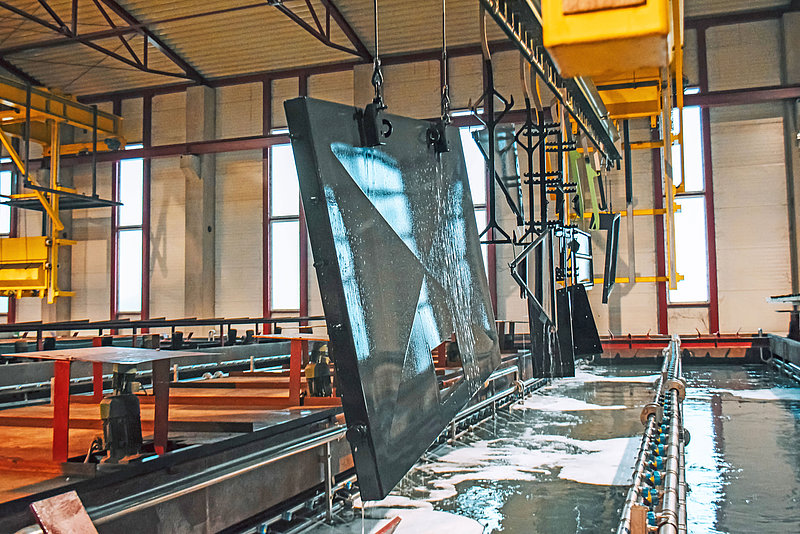
Agricultural equipment that is permanently exposed to extreme conditions requires a particularly high level of corrosion protection. The Austrian company Brantner now relies on KTL coating and powder coating and also offers contract coating.
Brantner, based in Laa an der Thaya in Austria, has fundamentally revised and modernized the surface technology for its agricultural trailers and equipment. The company has relied on local manufacturing and high quality awareness for more than 75 years - its many years of experience and success prove the market leader right: to date, the company has produced more than 128,000 trailers, including dump trucks, pushers and manure spreaders. "Only if you manufacture a product yourself can you ensure correspondingly high quality requirements," says Hans Brantner, Brantner's managing director. "Following this motto, we produce 100 percent of our products in-house." From cutting, pressing and welding the individual parts and assemblies with modern laser and robot technology, to coating and assembling the vehicles, to quality control, the entire manufacturing process takes place in-house.
Brantner from Laa an der Thaya in Austria has fundamentally revised and modernized the surface technology for its agricultural trailers and equipment. The company has relied on local manufacturing and high quality awareness for more than 75 years - its many years of experience and success prove the market leader right: To date, the company has produced more than 128,000 trailers, including tippers, pushers and manure spreaders. "Only if you manufacture a product yourself can you ensure correspondingly high quality requirements," says Hans Brantner, Brantner's managing director. "Following this motto, we produce 100 percent of our products in-house." From cutting, pressing and welding the individual parts and assemblies with modern laser and robot technology, to coating and assembling the vehicles, to quality control, the entire manufacturing process takes place in-house.
Quality through vertical integration
"Since our vehicles are exposed to the highest stresses during operation, such as abrasion, weathering and UV radiation, optimum and long-lasting corrosion protection is a key aspect for customer satisfaction," Brantner elaborates. In a word, the optimization of surface technology in terms of long-term corrosion protection even under harsh operating conditions plays an important role. About ten years ago, Brantner had taken a first big step towards more automation and efficiency in surface technology - among other things, they had introduced autophoretic, i.e. outside-current-free, dip coating. "Ultimately, however, quite a few advantageous properties of autophoretic coating could not be realized in day-to-day production to the extent that would have been necessary to continue to rely on the process in the future," explains Thomas Kober, head of surface technology at Brantner. One reason was the lack of utilization of the system. The autophoretic system, which is not very common, requires a certain amount of time from the customer before the process can be released for a particular job. Expending this extra effort is out of the question for many customers, which meant that the twelve-year-old system was only operating at 40 percent capacity. In addition, there was the high efficiency of a powder coating solution compared to the manual wet painting that had been practiced until then. "From there, the decision was made at the beginning of 2020 to pursue a fundamentally new approach with cathodic dip coating and powder coating." The fact that the system operated until then could not be converted to powder coating, where at least 150° to 160° Celsius is required, due to the temperature restriction to 130° Celsius, also spoke in favor of tackling in-depth system adaptations.
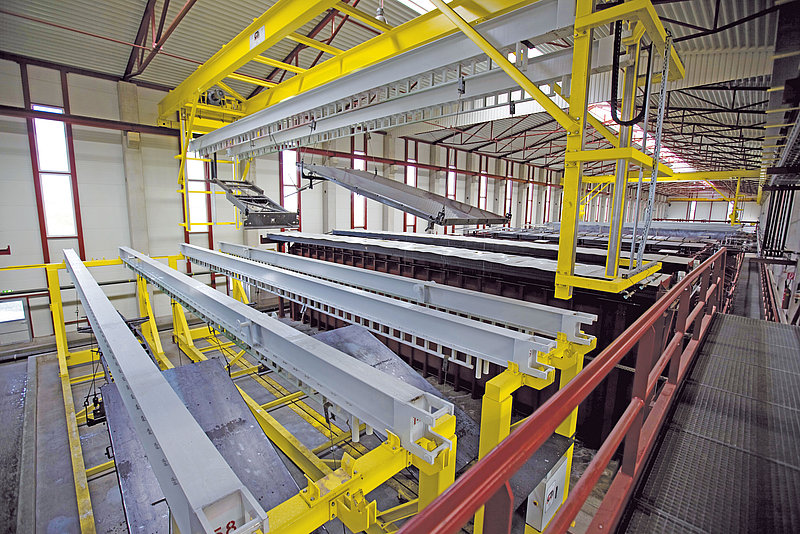
Although it was clear from the outset that this would be a huge and very time-consuming project, it was also clear that a longer-term interruption to production was out of the question. As a result, many rebuild measures were carried out in parallel with production, with great commitment from the employees and companies involved. Because one of two dryers, originally necessary for the autophoretic coating, had become dispensable, even one of the largest measures, the construction of the huge KTL basin, could be implemented by CTI-Systems in a production-compatible manner. Another challenge was the connection of the conveyor technology to the two new cathodic dip coating ovens, which were added outside the hall and now had to be fed horizontally instead of vertically.
Corrosion protection starts with pretreatment
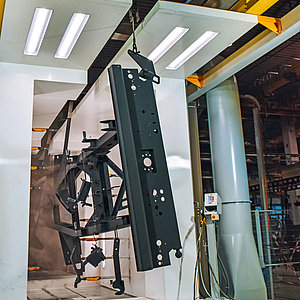
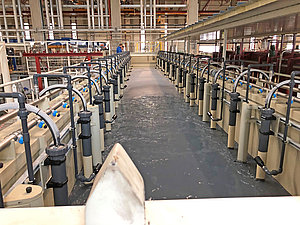
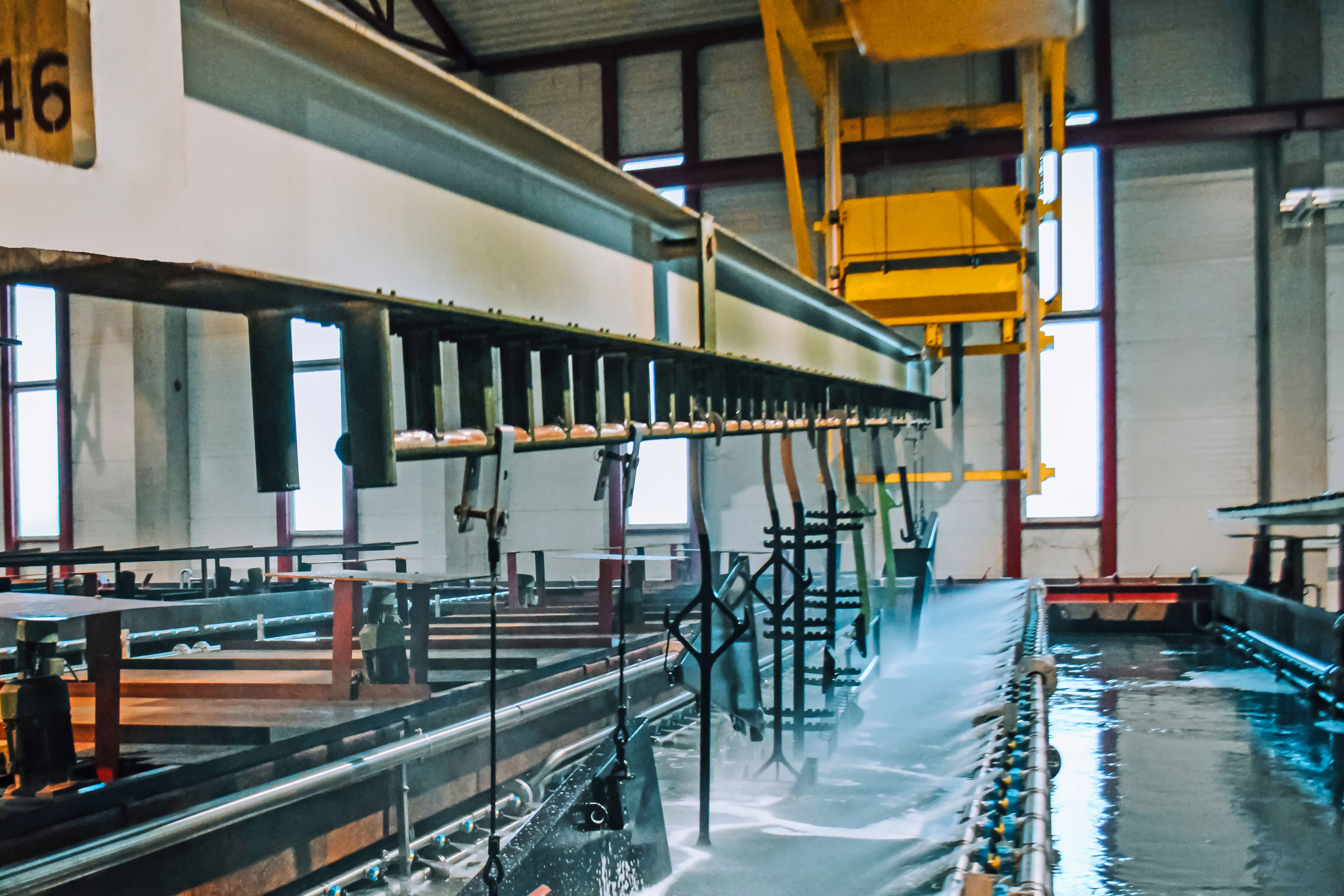
"The changeover to the new plant was a major project. We worked intensively here with long-standing partners and specialists - both for the technical equipment and for the coatings. Without this close coordination, support and the know-how of the experts, this successful implementation would not have been possible," Hans Brantner is convinced. The entire plant technology was also designed to provide sufficient capacity for contract coating services as well. The pretreatment repertoire used at Brantner, which has not changed as a result of the switch to KTL and powder coating, has a lot to offer: In addition to the enormous basin for spray and dip degreasing, blasting processes or pickling processes are also available to create optimal conditions for tricationic zinc phosphatization, which was also newly introduced. This is then followed by cathodic electrocoating as the first organic layer. Helios' Elecron cathodic dip coating has a solvent content of only 1.5 percent. The curing temperature is 180 degrees Celsius, and the design of the side-feed ovens minimizes heat loss and thus energy consumption. The cathodic dip coating ensures very good corrosion protection, uniform surface coverage and high color stability - especially in combination with powder coatings, which can be very well matched by a system supplier in terms of color shade, gloss level and service life. After the curing of the cathodic dip coating, the next step is powder coating. As a paint supplier, Brantner has relied for many decades on Rembrandtin, which is part of the Helios group of companies. The coating systems have been specially aligned and coordinated with the industrial paint specialists for the cathodic dip coating and powder coating used - both the wet paint and the powder coating, as well as the cathodic dip coating, come from a single source, which means that very sensitive optimization is possible here. "Our experience has shown that there can be considerable advantages if powder and cathodic dip coatings can be matched to each other by the coating manufacturer," reports Kober.
Drastic increase in efficiency
"We are very satisfied. The combination of cathodic dip painting and powder coating does involve a certain amount of technical effort, but it is extraordinarily robust and durable," says Kober, taking stock after more than half a year. "The contract service concept is also already working, because in the meantime the inquiries are increasing, also from other manufacturers of agricultural machinery - without us having done much advertising. However, as far as I know, there is also no supplier in Austria who can coat parts up to 16 meters long and weighing four tons." Today, the plant's capacity utilization is close to 100 percent - and capacity can still be increased significantly if necessary.
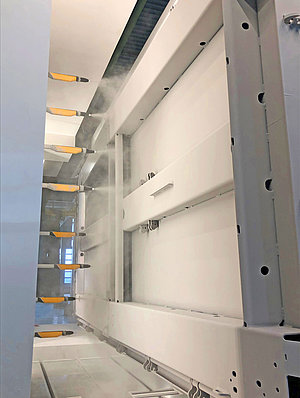
Since the installation and commissioning in powder coating, a remarkable 90 percent of the components at Brantner are powder coated. This is handled by a Gema booth with injector technology and eight guns per side. In addition, there is a pre- and post-coating station. Automatic contour recognition including adaptive horizontal positioning of the guns optimizes the coating results and increases flexibility. Wet paint is only used where the burning-in of the NT powder is a problem. Incidentally, the two powder ovens available were connected to the hall from outside, similar to the KTL dryer. Here, the components remain at 160 degrees Celsius for up to 40 minutes.
Kansai Helios Coatings GmbH
www.helios-group.eu
Brantner & Sohn Fahrzeug- baugesellschaft mbH
www.hb-brantner.at