


Dr. Herrmann GmbH: Systematically determining the influence of layer densities
The influence of applied film thicknesses on the surface of textured coatings - analyzed with a 3D profilometer
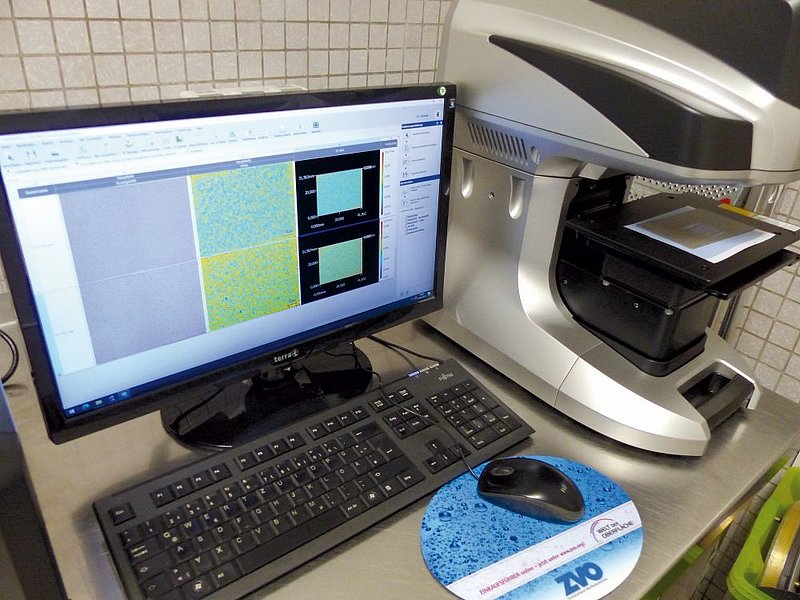
A new measuring device led to the idea of a systematic analysis of the influence of film thickness on the formation of the surface of textured coatings - interesting findings emerged.
Up to now, there has been no systematic analysis of the structure formation of textured powder coatings - that is, how coarse a coarse-textured coating is or how fine a fine-textured coating is is left to the discretion and description of the coating manufacturers. There is no standardization of any kind. Furthermore, little is known so far about the influence of the coating thickness with regard to the structure formation, except that many coating manufacturers recommend coating thicknesses of about 70 to 80 μm. But what exactly happens if the film thickness is too high or too low?
Since January, Dr. Hermann GmbH & Co. KG has been using a new analysis device, a so-called 3D profilometer. It has two optical lasers and can thus record the structure of a surface in the Z-direction with an extremely fine resolution of 100 nm. The sample is moved under the lasers via an automatically moving XY table and thus systematically scanned. In the end, not only can the greatest heights and depths be output, but the actual surface can be calculated and displayed.
One of the reasons for purchasing this device, which costs around 60,000 euros, was to be able to analyze the surface of blasted components in terms of their structure and, above all, the surface gain. This is because conventional roughness measurements and the resulting Ra or Rz values are only of limited value with regard to the surface actually generated and its structure, since only a few measuring points are taken into account. In order to try out the new device, the idea therefore arose to determine the influence of layer thickness on the surfaces of textured powder coatings. Just like smooth powder coatings, these have been an integral part of the everyday life of coaters for many years. Fine-textured coatings in particular are enjoying ever-increasing popularity.
However, not all coaters are aware of the influence that the applied coating thickness has on the texture and properties of the subsequent coating films. Deviations from the values specified in the product data sheet are, however, quite common in practice, especially with complexly shaped or large components. In order to obtain systematic results here, sample sheets were coated with commercially available coarse-textured or fine-textured powder. For the reference samples, coating thicknesses of 70 to 80 μm were realized, as usually specified as standard values in the data sheets of the coating manufacturers. In addition, sample sheets with a coating film thickness of 40 μm and 140 μm were also tested. These samples represent examples of film thicknesses that are too low and too high.
Coarse and fine textured coatings behave in opposite ways
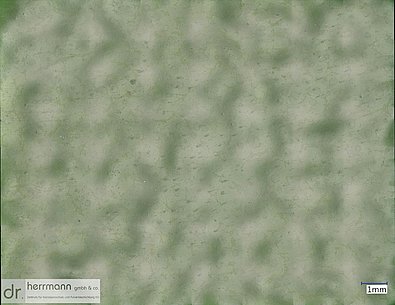
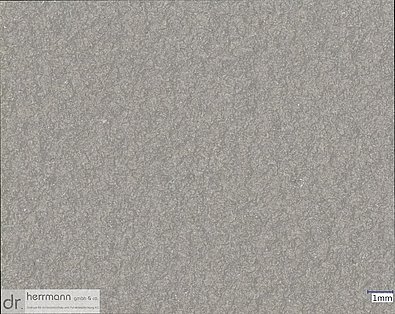
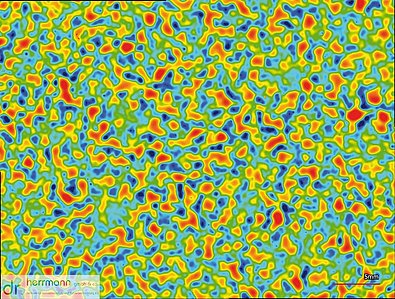
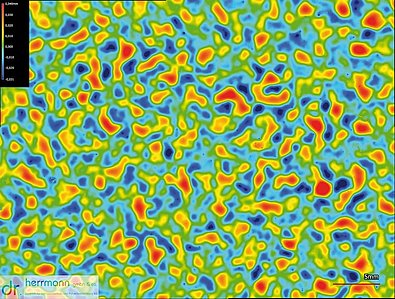
A comparison of the two types of textured coatings reveals interesting differences in their behavior with regard to the film thicknesses realized in the tests. Whereas a coarse-textured coating at film thicknesses of around 80 μm exhibits complete coating coverage of the substrate and a clearly pronounced structure of recognizably delineated elevations and depressions, the coating at film thicknesses of around 40 μm shows a completely different appearance. These significantly lower film thicknesses do not allow complete formation of the coarse structure. A surface with an increased number of mountains and valleys is created.
Particularly critical is the fact that there is insufficient coating coverage in the valley areas and even the bare, i.e. uncoated, metal substrate surface can be seen. Conversely, the structural impression of the coating becomes increasingly blurred at higher coating thicknesses, so that at a coating thickness of about 140 μm, a significantly flatter structured surface with smaller deviations between mountain and valley areas is created.
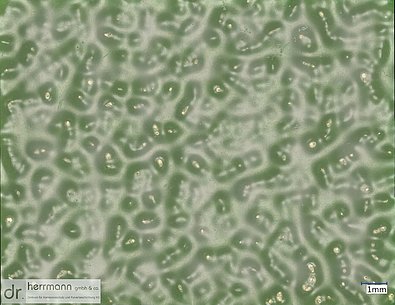
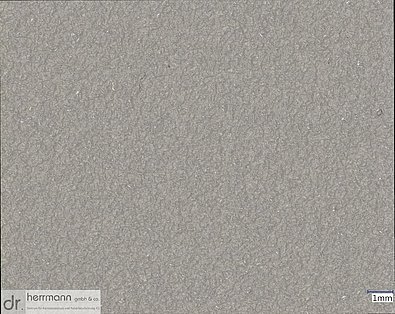

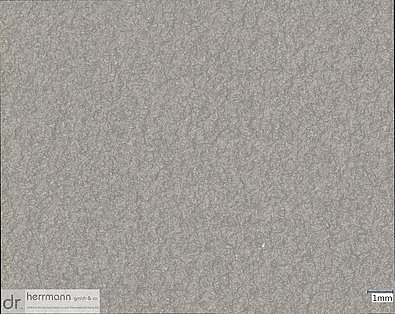
Fine structure: barrier effect decreases with film thickness
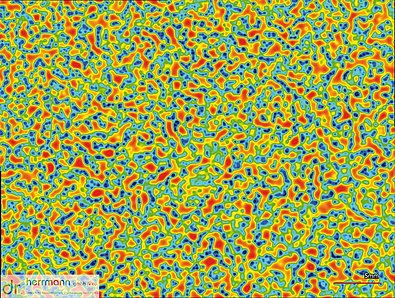
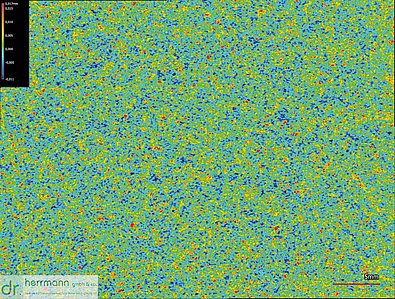
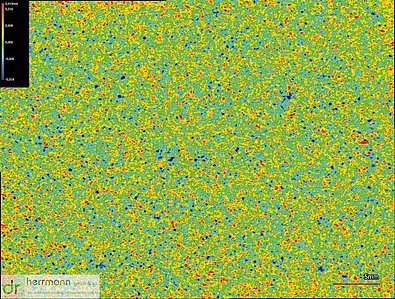
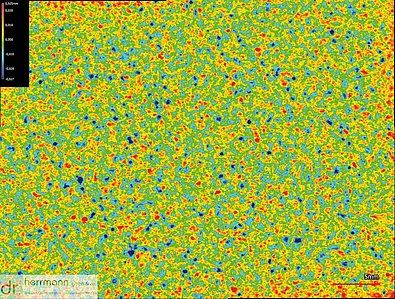
Compared with the coarse-textured powder, the fine-textured powder investigated shows a visually hardly perceptible influence of the applied film thickness on the optical properties of the coating film surface. This is particularly evident in the direct comparison of the microscopic images of the individual surfaces in Figures 2 to 7. However, a closer look at the coating film surfaces by means of a 3D profilometer also reveals a clear layer thickness influence on the surface structure of the fine structure powder (see Figures 8 to 13). In complete contrast to the coarse-textured coating, the most uniform or even finest coating structure is formed at low film thickness. With increasing film thickness, the paint structure becomes coarser - although still very fine compared to the coarse-textured powder - and the differences between valley and mountain areas increase.
Coarse-textured coatings show a much more pronounced influence on the applied film thicknesses than is the case with fine-textured coatings. In addition to the lower sensitivity to varying film thicknesses, however, fine-textured powder exhibits an inverse behavior with regard to increasing film thicknesses to pore density, i.e. barrier effect.
Coarse structure: structures blur with thickness
Investigations showed that coarse-textured coatings have a very clearly defined surface structure at low film thicknesses, which in the valleys is only covered by a small amount of coating. With increasing film thickness, the surface structure of coarse-textured coatings becomes more and more blurred, and the lack of coating coverage in the valleys is then naturally no longer a problem.
Fine-textured powders behave in the opposite way here. On thinly coated components, "soft", almost smooth coating film surfaces form with complete coverage of the substrate, but with increasing coating thicknesses, the surface structure increases. This causes an increase in the gradient between min and max areas of the resist film and then, surprisingly, has a negative effect on the resist coverage in the valleys.
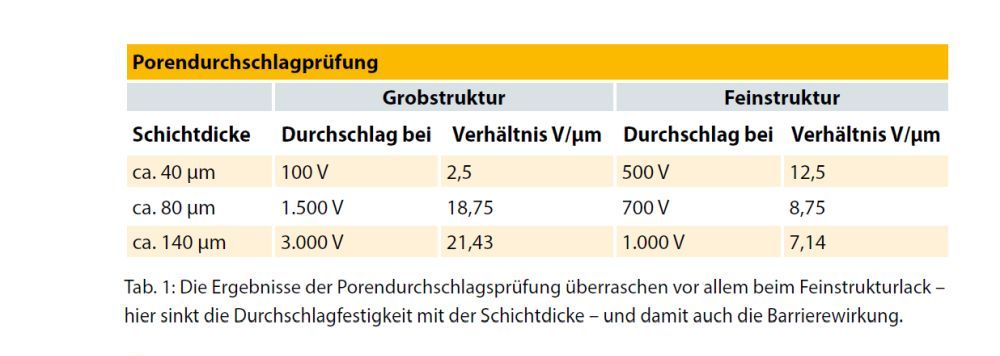
Too low film thicknesses in valleys of structural coatings lead to an insufficient barrier effect of the coating film in these areas. In use, this sometimes leads to premature failure of the corrosion protection and thus to the formation of corrosion products. In order to demonstrate the different barrier effects of the individual paint film samples investigated, these were subjected to an electrical pore penetration test based on DIN 55670.
As can be seen in Table 1, the previously visually determined trends of the respective behavior of coarse and fine structure coatings at different applied film thicknesses are also reflected in the results of the breakdown test. Thus, the ratio of applied stress versus film thickness (V/μm) increases with increasing film thickness for the coarse-textured paint, and decreases for the fine-textured powder. This can possibly be explained by the structure additives, which are present in a much larger number in a fine-structure coating than in a coarse-structure coating. If the film thickness of a fine-textured coating increases, the concentration of these additives increases to such an extent that a relatively large amount of coating is displaced, which can result in poorer pore-tightness properties. It is important to note that this reduced barrier effect cannot be determined visually, but only by a breakdown test.
First 3D profilometer in the surface industry
3D profilometers are commonly used in the electronics industry to analyze and troubleshoot microscopic components such as chips.
"As far as I know, we are the only ones using such a device in this context." Andreas Dittrich, who was in charge of the experiments, smiles. "Just as we gained surprising insights in the analysis of structural coatings, I am convinced that the new device will help us in many areas to physically understand the characteristics of coating defects and thus gain leverage to eliminate them."
Dr. Thomas Herrmann, Andreas Dittrich
Dr. Herrmann GmbH & Co. KG
www.dr-herrmann-gmbh.de