


On the way to shot peening 4.0
Advanced process and quality management for digitization in automated pressure blasting systems
Shot peening is a special process with free-flying tools. The work of the blasting balls on the surface can therefore not be controlled as easily as in a machine tool. Accordingly, the digitization of process and quality parameters for the requirements of Industry 4.0 is proving difficult.
Generations of engineers have been working for over 150 years to get to grips with flying shot peening balls and their effect on the surface. The goals in shot peening are, in particular, safe and reproducible processes to achieve reliable hardening and introduction of residual compressive stresses that significantly increase component life under dynamic loading. For the future, the simulation of shot peening processes is an interesting approach to reduce development time, optimize processes and save energy. In order to clarify the fundamental development steps of shot peening technology against the background of the three phases of industrialization up to the present day, it is first worth taking a look at historical records.
From water and steam power to electrification
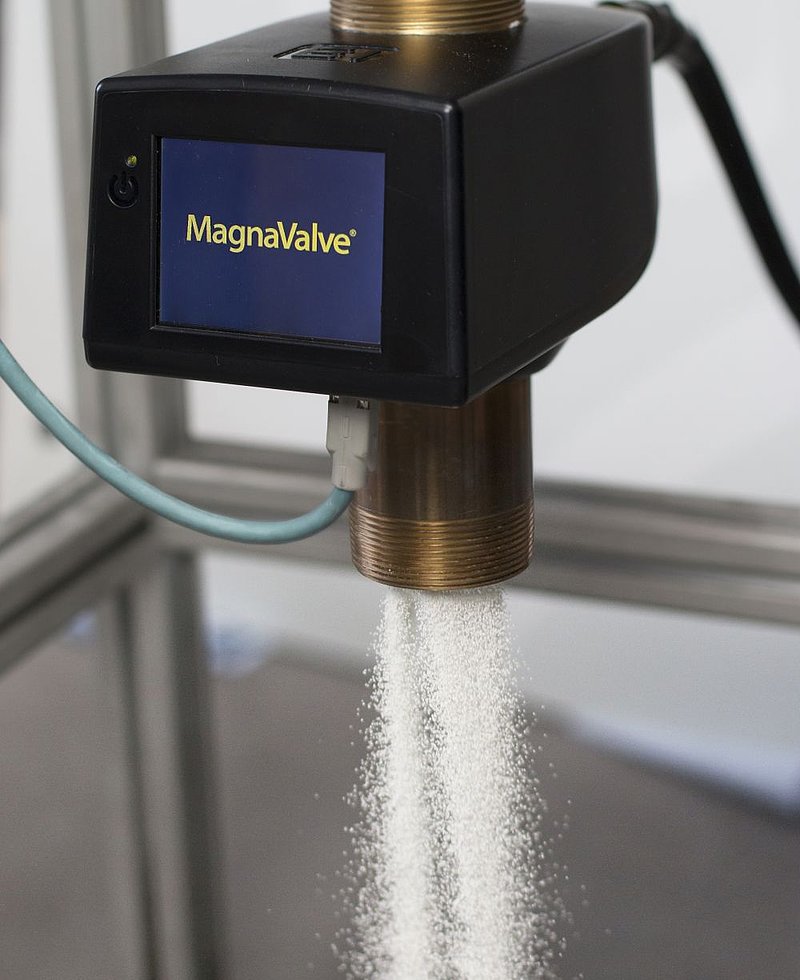
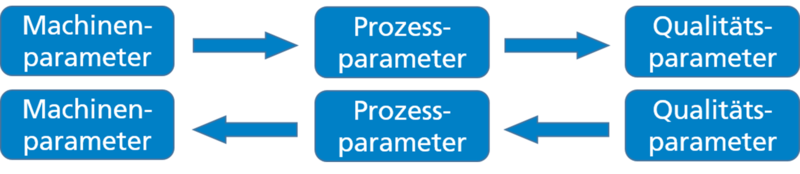
The first industrial revolution, starting around 1800, was characterized by the introduction of water and steam power as energy sources for processes and drives. It was not until 1870, however, that Benjamin Tilghman demonstrated with his first sandblasting blower how steam could be used in an injector nozzle to accelerate abrasive blasting in order to mechanically process surfaces. At that time, however, these blasting applications could by no means be represented in a stable manner in terms of process technology. In the second industrial revolution, the advancing electrification around the year 1900 for the first time allowed the realization of decentralized drives, which were used to generate compressed air in compressors. This enabled the development of much more powerful blasting systems, which allowed stable processes in the first place. Subsequently, it was possible to develop closed pressure blasting systems, to which today's design still closely resembles. However, continuous monitoring of the processes was hardly possible. With the third industrial revolution, starting around 1970, electronics and control technology also found their way into blasting technology. The electronic sensory acquisition of data in cooperation with programmable logic controllers (PLC) allowed the targeted control and also regulation of manipulated variables in the shot peening process. With the advent of computer technology and increasingly smaller and more powerful processors, the control possibilities were further improved. For example, the introduction of the MagnaValve for electromagnetic throughput adjustment and control of steel shot peening media was a milestone in this development. However, work is still underway to develop a coherent technical concept for the complete recording of the actual process and quality parameters. With the fourth industrial revolution now underway, far-reaching challenges are coming to the fore with the complete digitization of process management and the parallel quality management in shot peening machines. This results in a multitude of tasks to be solved, such as the development of extended sensor technologies on the one hand and the digitalized mapping of the relationships between control variables, machine parameters and beam parameters, process parameters and test parameters, i.e. quality parameters, on the other.
From the machine level to the process level
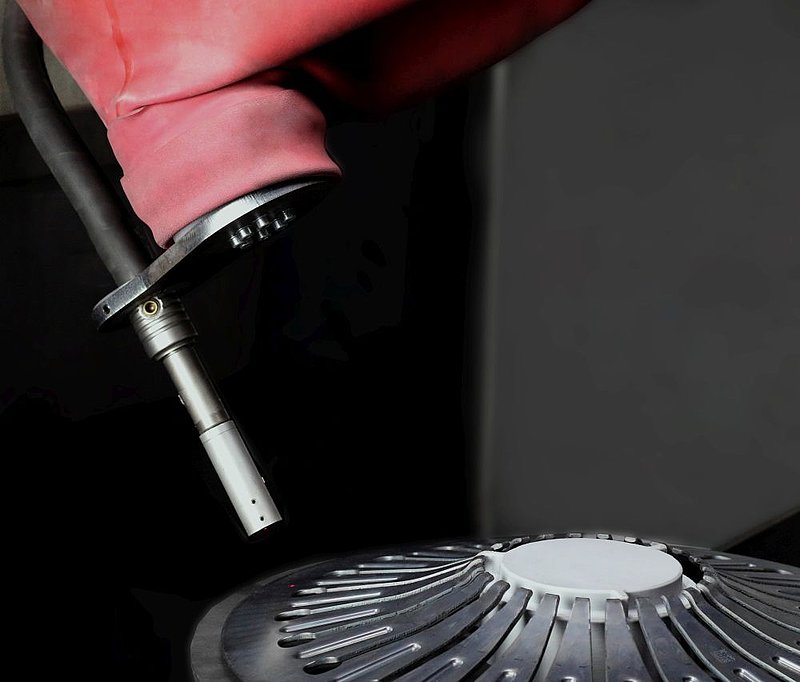
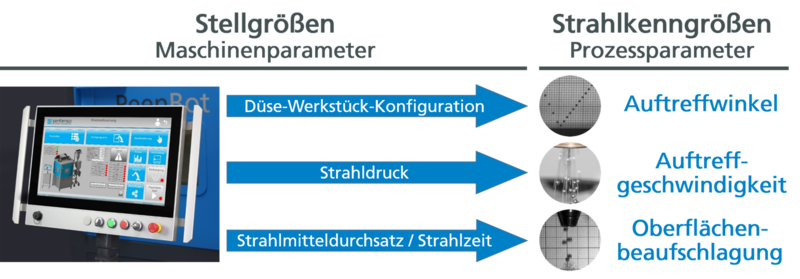
The control variables at the machine level are decisive for the actual blasting parameters at the process level (Fig. 2). Since these process parameters cannot be set directly, the momentum and kinetic energy of the abrasive accelerated by the compressed air must be set via the machine parameters. Thus, the control of the machine parameters has a decisive importance for a stable shot peening process. The blast configuration as spatial arrangement, i.e. distance and direction, as well as temporal allocation, the movement from blast nozzle to workpiece essentially influences the process parameter impact angle, indirectly also the impact velocity. For complex workpieces, robots are therefore frequently used for path-guided movement of the jet nozzle (Figure 1). The machine parameter blasting pressure influences the grain velocity and thus the impact velocity and thus a central process parameter. Protection is provided by means of pressure control, if necessary also individually for several blast nozzles. Volume flow monitoring is used to detect possible fault and wear conditions of the blasting system, which can unintentionally influence the grain acceleration. The abrasive flow rate through the blast nozzle must be precisely controlled, because it essentially determines the impingement and thus the amount of abrasive per unit area. Depending on the type of abrasive, different actuators and sensors that have to be adjusted to the abrasive type and throughput are used to adjust and measure the throughput. The MagnaValve combines an actuator and a flow sensor in one unit (Figure 3). As a rule, the blasting time must be selected so that the surfaces to be processed are fully covered.
Direct monitoring of process parameters
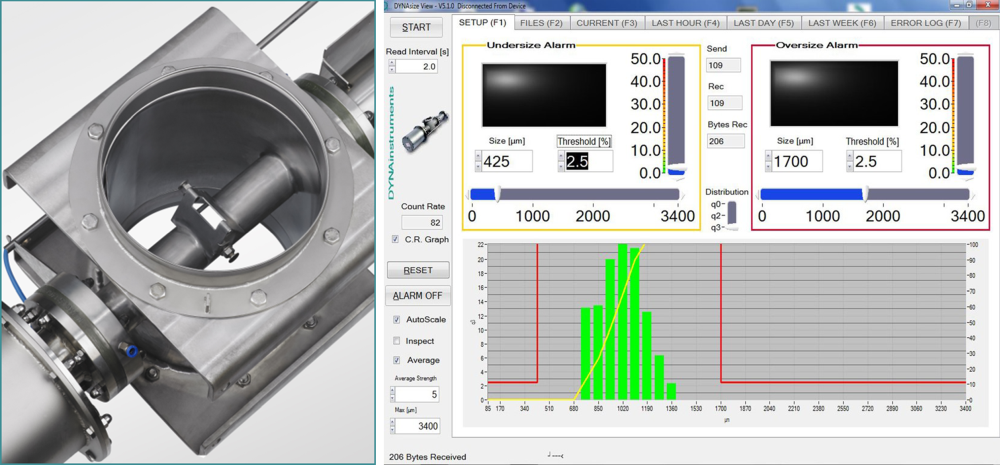
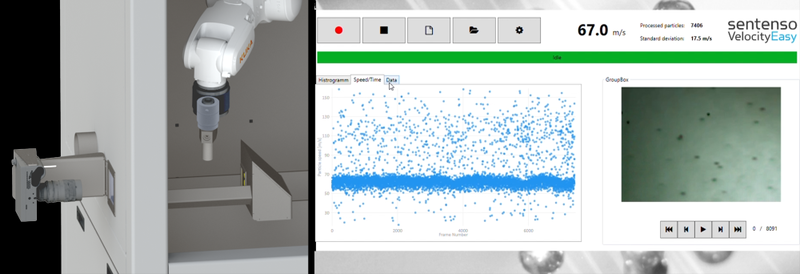
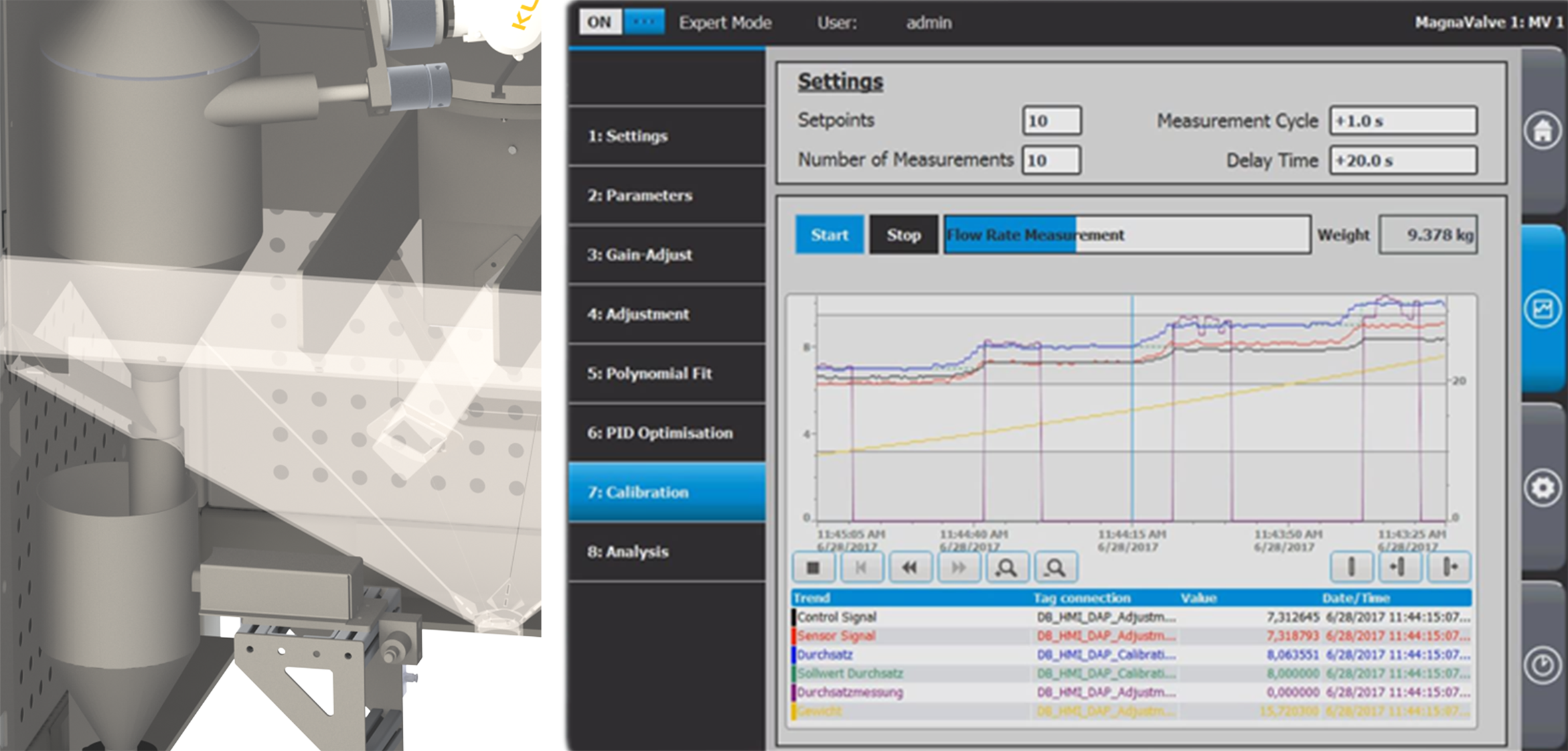
The maintenance and control of machine parameters corresponds to the general state of the art in process technology and does not pose any fundamental technical difficulty in digitization, since all the manipulated variables mentioned are physically measurable variables that can be mapped digitally. However, it would also be very helpful if the process variables could also be directly monitored and digitally mapped. With such a direct mapping, the digital twin of the process would no longer be just an image of the machine settings, but already an image of the shot peening process itself. The technologies required for this are already available, although they are still being fine-tuned for series production use. The essential process parameters to be mentioned here are first of all the abrasive properties grain material, grain hardness, grain size, grain shape. While the first two can only be meaningfully checked before the blast machine is filled, measuring systems with cameras and software that dynamically check the size and shape of grains in free fall have been available for years. Such systems become even more interesting if they constantly monitor the medium circulating in the blast machine. The first solutions for permanent grain size monitoring are already on the market (Fig. 4). The angle of impact of the blasting medium can be monitored with a high degree of process reliability by permanently digitally logging the movement paths of a robot for blasting nozzle guidance as well as the movement of the workpiece via the corresponding drives. Several systems based on the evaluation of laser signals are already on the market for the direct determination of the impact velocity or the grain velocity at a specific nozzle distance. An unprotected installation in blasting systems is only possible to a limited extent. sentenso offers a completely different approach with the evaluation of vivid video images from a high-speed camera. With the help of the evaluation software VelocityEasy, the abrasive movement is visualized and evaluated in detail (Figure 5). With the associated vector:on Media Speed Management, a blasting system can adjust and calibrate itself completely independently to the desired value via the relationship between blasting pressure and grain velocity. Blasting media throughput control works at machine level with adjusted and calibrated sensors and control systems. The problem here is the dynamic change of the abrasive properties due to use as well as refilling, which in turn can significantly influence the sensor values and thus falsify them. In addition to the blasting time, which is easy to monitor, ongoing recalibration of the flow rate control system is useful for the actual impact on the surface. For this purpose, Sentenso offers flux:on Media Flow Management, a fully integrated and automated measurement and control system based on a blast cyclone positioned in the blast cabinet and an external weighing container. This allows the true abrasive flow rate through the nozzle to be recorded and evaluated at any time and as often as required for calibration by automated insertion of the blast nozzle into the cyclone. The system is also able to readjust itself as the deviation between target and actual values increases (Figure 6). The adjustment and control of machine parameters, on the other hand, is still indispensable for stable shot peening processes, since the permanent checking of process parameters during the process cycle can be very time-consuming. Furthermore, regular and conscientious maintenance of the shot peening machine plays another important role for process stability, which can be supported by tools such as predictive maintenance through the machine control system.
Determination of quality parameters at workpiece level
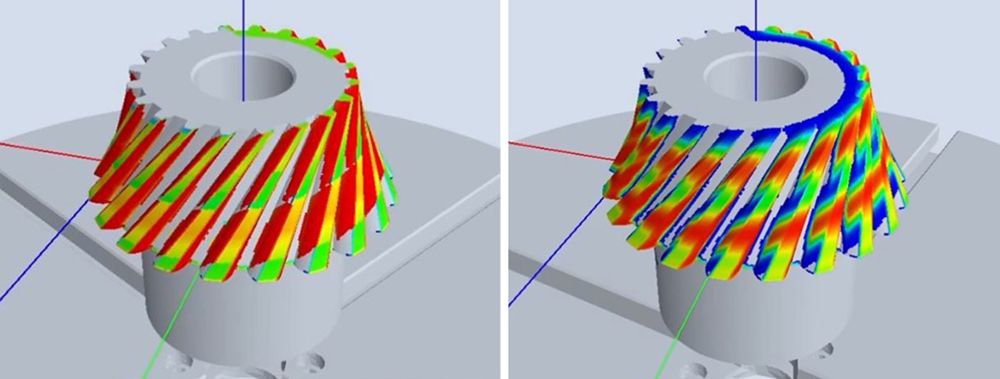
The quality and surface parameters to be set with the shot peening process at workpiece level, such as beam intensity, degree of coverage and residual stress, are also very special and require different measuring techniques ranging from simple subjective-visual evaluation using a magnifying glass to complex residual stress analysis using X-ray diffractometers. Digitalized measuring systems are also increasingly entering the market in this area. The aim is to achieve the most automated, objective and quantifiable measurement possible of the effect of the beam on the surface.
sentenso GmbH www.sentenso.de