
More corrosion resistance and less gripe tendency

A special process for surface hardening of stainless steel makes it possible to improve the seizure and corrosion resistance of stainless steel. This is shown by the results of long-term corrosion tests on fittings, for example.
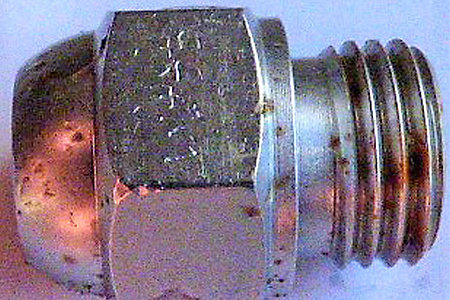
It is undoubtedly a thorn in the side of every fitter: seizure of stainless steel fittings. It is true that a drop of oil on the thread can usually provide a remedy; but what if, for example, no lubricant is permitted for hygienic reasons, or the drop of oil was simply forgotten during installation? Stainless steel is very corrosion-resistant, but it tends to seize up when screwed together. In order to counteract this effect, classic diffusion hardening processes such as colsterizing or plasma nitriding have proven their worth, in addition to hardfacing coatings such as DLC. However, these processes are very costly and sometimes very time-consuming and usually also have a negative effect on corrosion resistance.
Improved corrosion resistance
With its patented process specifically for stainless steel, Expanite has managed to improve the corrosion resistance of components through the hardening process compared to alternative processes, while making them resistant to wear and seizure. In this regard, TCW Anlagenbau recently conducted extensive long-term corrosion tests on various grades of stainless steel.
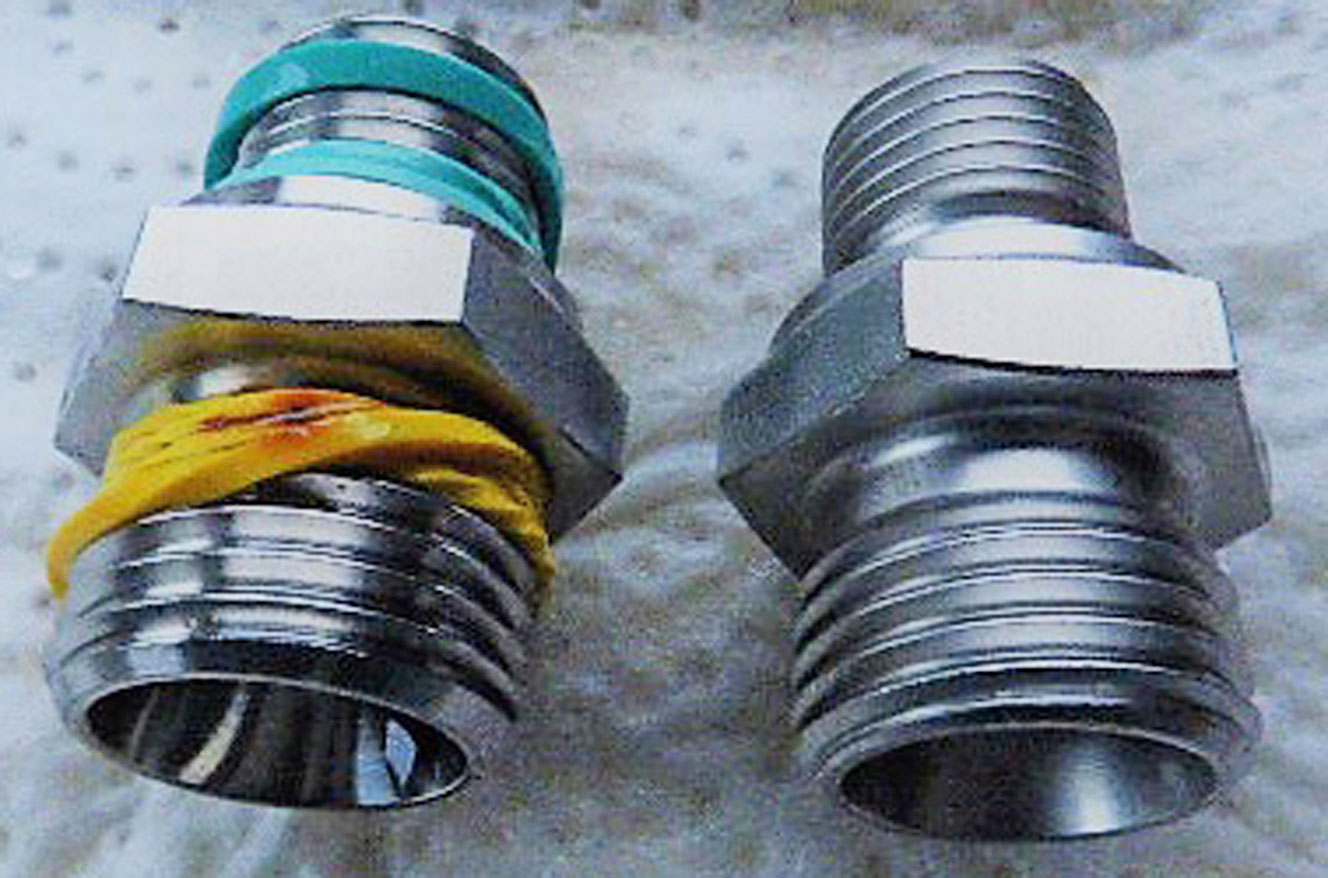
While traditionally hardened components made of 316Ti (1.4571) show a comparatively strong corrosion attack in the salt bath after only a short time, the 316Ti (1.4571) fittings and 316Ti (1.4571; 1.4462) cutting rings treated with SuperExpanite show no traces of corrosion after two months in a ten percent salt bath solution. In the case of the basically less resistant 303 (1.4305), a tendency toward improvement in corrosion resistance was demonstrated: In the picture above (left), the unhardened nozzle shows a significantly stronger corrosion attack than the component treated with the Expanite process (right).
"Cold welding of stainless steel components is a well-known problem and we regularly hear from our customers that complete plant components have to be replaced at great expense due to the seizure of a classic screw connection," explains Dr. Holger Selg, Expanite Sales Director DACH, adding, "Ideally, both friction partners are treated with the SuperExpanite process, but even hardening just one component already brings a significant improvement in seizure resistance."
Sustainable against wear and seizure
The relatively low hardness of stainless steel also makes corresponding components susceptible to abrasive wear. Here, too, surface hardening provides a remedy and significantly extends service life. Compared with other comparable wear protection processes, the Expanite process works with a significantly more energy-efficient and environmentally friendly gas-based diffusion process, which does not require time-consuming cleaning of the parts with aggressive chemicals after hardening.
Wide range of materials
Expanite technology, specially developed for corrosion-resistant materials, offers a solution for austenitic, martensitic, ferritic and duplex stainless steels as well as for expensive nickel-base alloys such as Inconel and Hastelloy. For titanium materials, the new special process ExpaniteHard-Ti is used, which the Expanite team of experts in Denmark has developed to market maturity in recent years. The company has treatment centers in the USA, Germany, Korea and China.
Expanite GmbH
www.expanite.com