

Interpretation involves risks
ISO 12944 Teil 7 – darauf ist bei der Auslegung und Verwendung der Norm zu achten
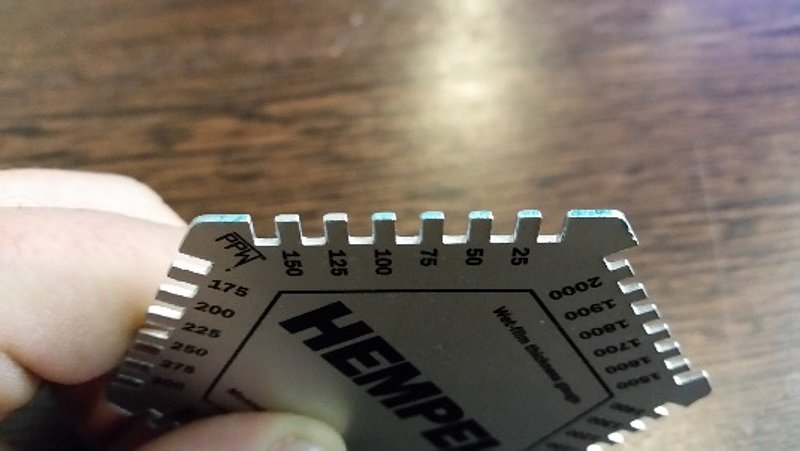
Standards sometimes offer some room for interpretation. If the client and contractor do not recognize and clear up these ambiguities, there is a lot of potential for problems.
Many are familiar with ISO 12944 from daily practice. "Coating materials - Corrosion protection of steel structures by coating systems" is the title of this series of standards, which now consists of nine parts. Today we look at Part 7 in a little more detail. "Execution and monitoring of coating work" is the title. But first, let's get a little further out and review past projects in our minds. How often was ISO 12944 required in specifications? How often was the statement, "Yeah, sure, it's the 12944, we can do that." It must not be forgotten that as soon as ISO 12944 is named in the specification, the execution according to Part 7 is automatically included. This aspect is of great importance.
Seven concentrated pages of standard, which have it in them
The DIN-EN version of ISO 12944-7 is 19 pages long. Without the introduction, table of contents, definitions of terms and appendices, however, only seven pages of concentrated standard remain at the end. Is it only possible to conclude from this that nothing can or will be included in these few pages that could cause problems for a coater? "That would be reckless and could lead to considerable problems when it comes to complaints," knows Martin Czysch, an expert in the field of corrosion protection. "What is interesting and relevant about Part 7 of this standard is not only what it says literally, but also what can be read between the lines. In other words, if there are different ways of interpreting it, that provides room for definition not only for the contractor, but also for the customers or buyers. For example, a seemingly innocuous sentence in Part 7 reads, "Contractors engaged in the application of coating systems to steel structures and their employees shall be capable of performing the work in a workmanlike and safe manner. Work that requires special care with regard to its execution may only be performed by appropriately qualified personnel." All coaters work in a professional and safe manner - at least from their own point of view. But it gets interesting when someone demands proof. How can professional work be proven? "We've always done it that way" or "it's been tried and tested" is a statement that probably neither a customer, let alone a court, would accept. From an objective point of view, professional and reliable work has a lot to do with training and qualification. In principle, of course, there is little to be said against on-the-job training. However, it must be remembered that the person who trains another employee also has a certain level of above-average skills, and the corresponding training measures should be documented in a timely manner. The qualification gain is particularly clear and verifiable if proof of the skills is provided at the end of such a measure - i.e., by means of some kind of examination.
Qualified process instructions
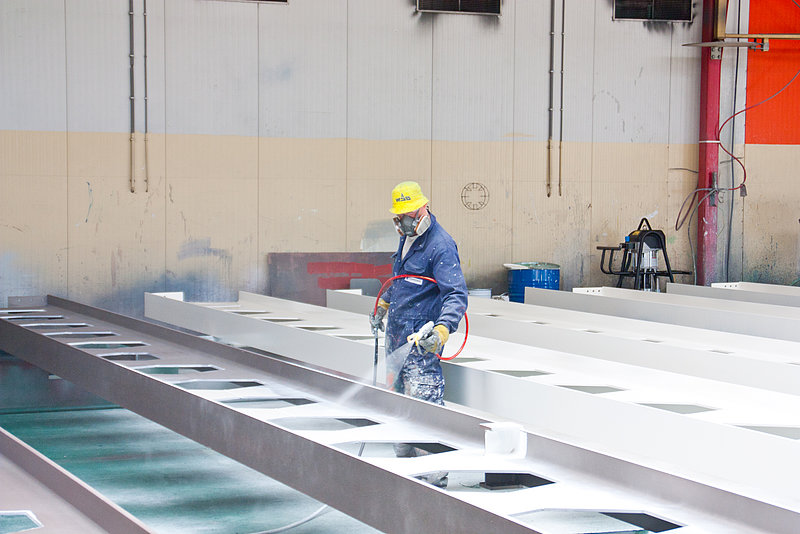
In order to approach the question, it makes sense to look at how, for example, blasters, grinders, degreasers or coaters are qualified and how reliable work is demonstrated in this area. Reliable work is very much related to consistent quality and the fact that exactly the properties specified in the job definitions are achieved - and therefore correspond to what the customer requires. At first glance, this sounds quite trivial, but especially in the case of a coating, the long-term properties that go beyond appearance are not accessible through quick tests before delivery. Common practice is to test the product properties before series production and to find criteria during ongoing production to check whether the result meets expectations. But are these criteria ultimately valid and do they really ensure that customer expectations are met? Last but not least, both customer and contractor tend to interpret agreements to their advantage. Only if detailed procedural instructions are written and the result is documented accordingly does the contractor have qualified procedural instructions on which he can also rely vis-à-vis the customer. Such a qualified process instruction is basically also part of a quality management system. Part 7 of ISO 12944 requires such process descriptions for every coating process. At this point, a quality-conscious coater might ask himself how many process instructions his company has established and uses. The result is likely to disillusion many of those responsible. In this respect, it is important to read and interpret such standards from this point of view. Another important aspect is the evaluation of the surface. Part 7 of ISO 12944 requires testing of the optical purity, the surface profile and the chemical purity.