


Use all options
Our interlocutor
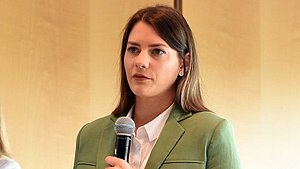
Anke Herzel is now the managing director of bwh Energy. She began her professional career in 2010 with a commercial apprenticeship at bwh, continued her education consistently until she became an energy manager and business economist (IHK) and is now an experienced specialist in energy issues.
bwh Energy has been an energy service provider for over 18 years and helps to leverage savings and reimbursement potential for energy-intensive manufacturing companies. To this end, the company also draws on an extensive partner network.
Saving helps against high energy prices - but also the consistent use of government subsidies
High energy prices, gas shortages - how do you act as an entrepreneur in these turbulent waters ?
High energy prices are hitting energy-intensive industry harder than they have in a long time. Many companies are overburdened with the situation. We spoke to an energy service provider who is familiar with subsidy options and energy savings.
mo: What options do companies have to save energy costs?Herzel: Germany has long been one of the countries where energy is expensive. That is why the legislator has created opportunities for relief. Depending on the industry, considerable rebates are possible. However, the underlying rules and regulations are extremely diverse and complex.
mo: How do you start an energy cost optimization process?Herzel: First, we carry out an energy check, on site or online if required, in which we work out the problems. The starting point is the commercial considerations, because savings can be achieved very quickly in this area. We then look at the potential in terms of process technology. We then implement concrete measures with our partner network.
mo: Where do you see the greatest potential for energy savings?Herzel: Customers themselves often know their large consumers and what could be done to reduce peak loads. The cost differences between base load and peak load are considerable - and grid charges are also based on peak power. The potential is great, but implementation is difficult because the machines are started in a production-oriented manner. It is not easy to find alternative modes of operation without compromising productivity. In the meantime, however, there are control systems that provide for peak load optimization with a certain intelligence. There have long been much better solutions here than many people realize.
mo: How complex is the issue of energy cost reimbursement?Herzel: The challenge is not only to be aware of the many different positions and framework conditions, the applications also have to be submitted to the right place. There are both taxes and charges, such as network fees. Depending on the case, other institutions and companies are responsible, from the network operator to the Federal Network Agency. It's a regulatory jungle.
mo: What happens if you receive refunds to which you are not entitled?Herzel: Even if you unknowingly apply for something you're not entitled to, make false statements or misclassify consumption, you could face severe penalties. If the main customs office discovers irregularities or errors during an audit, there are considerable criminal consequences. That's why we have a tax lawyer in the office community who takes a closer look at critical issues. It becomes particularly unpleasant when unlawful refunds have to be paid back over several years.
mo: How intensively are these legal relief options used? Herzel: We observe that many companies try something here, but usually only use the best-known pots and don't get the maximum out of them - often because mistakes happen in the applications.
mo: How much can be saved in concrete terms?Herzel: In the surface industry, the possible rebate is often higher than in other industries, for example when it comes to thermal or galvanic processes. If the energy consumption for the respective process is verified by meter, a refund of the complete energy taxes is made. In the case of electricity, for example, this is 2.05 cents per kilowatt hour, and in the case of 1,000,000 kWh, this adds up to 20,500 euros per year. Similar amounts are possible over many other items.
mo: How much does your service cost the customer in return?Herzel: We work on a success basis, so we get a percentage of the customer's savings. Basically, we wait until the money has actually been reimbursed to the customer. But there are also services that have to be billed conventionally because there are no concrete savings behind them.
mo: Have there been any changes in the inquiry behavior of companies in the course of this year? Herzel: In the area of electricity and gas supply contracts, customers have become almost desperate because they were frequently confronted with price offers or information from their suppliers that literally upset them. In such cases, companies should first seek advice from independent experts. After all, utilities always pursue their own interests as well. We see our task as being to support the customer as an independent authority in finding the solution that is actually most suitable or viable for him.
mo: How useful is structured procurement, which is supposed to help reduce price and supply risks?Herzel: Which alternatives to energy purchasing are possible always depends on the customer's willingness to take risks. In structured procurement, energy tranches are purchased on a regular basis in order to dampen market fluctuations in a similar way to an equity font. In most cases, this results in more favorable prices compared with the forward market or a fixed utility tariff. However, it also involves risks, requires a good buyer and is costly. Of course, it is always possible to procure partial quantities on the daily market. In this case, however, the purchase directly follows the wave movements of the price development and the customer must be prepared for this. The futures market offers fewer surprises - but the price level for 2023 is enormous. To find the most suitable approach, we explain to the customer how the markets work, so that we can then develop a well-fitting strategy together. It is important to us that the customer decides for himself in the end.
mo: How do you see the energy markets developing in the future?Herzel: It's interesting that on the forward market, 2023 is much more expensive than the following years. Normally, the year immediately following has always been much cheaper - because it is easier to calculate - than years further in the future. At the moment, the markets are obviously assuming a normalization for the future, but see considerable problems and uncertainties for 2023. This is also the view currently held by many renowned experts.
mo: Have you seen companies not receiving any offers from their suppliers for next year?Herzel: It is currently the case that suppliers have a sales stop because they themselves cannot estimate whether and how much energy they will have available. In the gas sector, we had several customers whose contracts expired and where we really had difficulties in getting acceptable offers.
mo: What happens if a company doesn't get a supply contract?Herzel: Unlike residential customers, industrial companies are not covered by the basic supply, and can therefore receive a replacement supply for a maximum of three months. If they do not succeed in obtaining a supply commitment during this time, the energy tap could be turned off. It will depend very much on what mechanisms and assistance are put in place to ensure that such problems do not become rampant at the beginning of next year.
mo: What happens in the event of a gas shortage ?Herzel: In principle, it must be remembered that energy supply contracts are always on-balance-sheet and only what is available can be supplied. If there is an actual energy shortage, it becomes difficult for everyone, and no supply contract can help. It should be noted, however, that there are industries and consumers that are system-relevant and particularly worthy of protection. In the event of a gas shortage, these will of course be given preferential treatment.
mo: What impact do the enormous prices generally have on energy trading?Herzel: Default insurance is a major issue; the sums to be secured have reached astronomical heights at a price level of between 20 and 50 cents per kWh for electricity - the price used to be four to six cents. In addition, security deposits must be held against the transmission system operators at these levels. The latter is often a reason why new customers are no longer accepted. Particularly since the default risks on the part of the customers are growing.
mo: How much psychology is involved in the current price development?Herzel: It's interesting that the price of gas skyrocketed before the announcement of the latest Nordstream 1 maintenance work. After the maintenance work, the announcement came that no more gas would be delivered. Although no more gas flowed through Nordstream 1, everything functioned normally - the air escaped from the panic bubble and the price fell as quickly as it had risen. So energy prices are strongly driven by emotions.
mo: How do you assess instruments like the cost containment program?Herzel: The program is very opaque and the hurdles are high. The condition for submission is an audited annual financial statement, which costs up to 12,000 euros. For a medium-sized company that is not subject to auditing, it is usually questionable whether this is worthwhile. It is things like this that show how far removed from the reality of much of industry our politicians are acting.
mo: What do you say to the planned electricity price cap?Herzel: The German government's package of measures currently provides for a price cap of 13 cents per kilowatt hour for a basic quota of 70 percent of annual consumption. The content will be interesting. So far, every package of measures has surprised us with high bureaucratic hurdles. It therefore remains to be seen how the content is implemented.
mo: What do you want from policymakers?Herzel: There are currently so many different small and well-hidden pots to pick from. Even for us as professionals, it is becoming increasingly difficult to keep track of them all. Simplification and standardization must be implemented here as quickly as possible. In neighboring countries, certain things are done much faster. I talk to many business managers every day who are desperate because they can't pay the next electricity bill. If something doesn't change here as quickly as possible, many companies will have to close down over time.