

Our interlocutors
Schirmer Galvanik is a company with 100 employees, which mainly offers coatings with zinc and zinc alloy processes as well as zinc flake coatings for increased and very high corrosion technical applications. Customers come from all industrial sectors, it goes very much in automotive, but also medical technology, civil engineering or electrical engineering.
More efficiency as a way out
High energy prices, gas shortages - how do you act as an entrepreneur in these turbulent waters ?
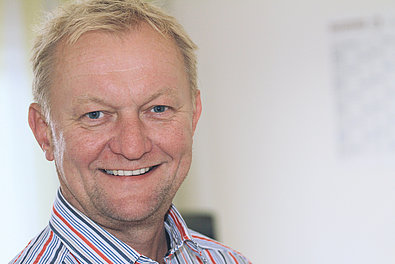
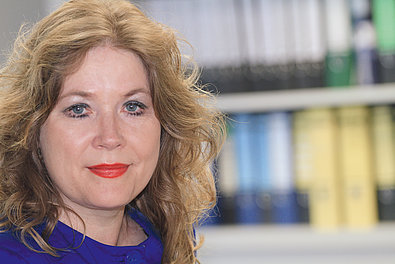
Klaus Marthold is Managing Director of Schirmer Galvanotechnik GmbH, Dagmar Richert is Commercial Director. In addition to the tense situation with regard to energy and supply chains, both see the indecision and lack of strategy on the part of politicians as a considerable risk for the future of Germany as an industrial location.
mo: What is the biggest challenge for you at the moment?Richert: We are in a balancing act between customer satisfaction and profitability. The many, previously unimaginable events from the Corona pandemic to the Ukraine war and the energy crisis are creating completely new challenges. Add to that the supply chain issues. There are now shortages of products that would never have been imagined in the past - hydrochloric acid, for example. That's a big issue for us.
mo: How are you counteracting this?Richert: We intensify our customer contacts and, despite everything, try to offer an optimal service and satisfy the customer. We also work specifically with surcharges so that the customer is informed transparently at all times via our website about how commodity prices are developing. This link to listed values significantly reduces the need for discussion. Marthold: We currently have very high volatility in commodities, and these surcharges are the only way we can quickly pass on both rising and falling prices. That's why this strategy is well received by customers. mo: How do you handle this with regard to energy prices?Richert: When it comes to energy supply, we have to involve the customer in such a way that he also participates in increases, but can also benefit quickly from price reductions. It must be transparent at all times what is happening.
mo: What other measures are being taken to deal with the current situation?Marthold: The focus is on cost-cutting measures in all areas of the company. We are particularly concerned about the situation with gas and electricity - we can hardly get any offers from suppliers. mo: How much electricity, gas and heat does your company consume?Marthold: In electroplating, everything works with electricity, and our electrolytic processes in particular require a lot of electrical energy. In addition, all our salts, metals and basic chemistry are energy-intensive to produce. This makes it incredibly difficult to trade the situation. However, it helps that we have an energy management.system at all levels of the plant, so we have access to all consumption data. We can even diagnose a leak in a compressor - based on the increased power consumption.
mo: What optimization measures are you pursuing with regard to plant technology?Marthold: For example, we had a large number of rectifiers checked for their efficiency - the result was a value of about 60 percent. We then invested in more modern electronic rectifiers, which have proven to have an efficiency of almost 100 percent. This is how we try to reduce energy consumption and break the power peaks. This is because our energy management system allows us to know exactly where a power peak occurred on which day at what time, and we use appropriate programs to smooth out these power peaks. In this respect, I definitely see us as a pioneer in the industry. In wastewater technology, too, we have always had a strong motivation to be better than the state of the art. We are continuing this in the energy crisis. Especially now, when resources and energy are so expensive, every step already taken in this direction is an advantage.
mo: What do you think about renewable energies?Marthold: We are planning a solar plant with 200 kW peak output and also a conversion of our vehicle fleet to electric mobility. The solar plant alone will save up to 100 tons of CO2 per year. mo: How do you supply yourself with energy? Marthold: We are in the process of changing our purchasing strategy because, as already mentioned, we hardly receive any offers anymore. And a supply via the spot market is not conceivable at the current prices, which are unaffordable. There is a lack of clear signals from policymakers to enable electricity suppliers to make offers at all. They also lack any planning basis at the moment, because they have to secure their energy volumes on the market.
mo: How do you assess energy supply security in the coming months?Richert: From my point of view, no one can reliably predict whether the power supply is basically secure at the moment. And that can be frightening. But all we can do is reduce consumption through energy-saving measures.
mo: Is cogeneration an issue for you?Richert: It doesn't make sense on our scale. Among other things, the entire heat supply system at our site would have to be rebuilt in order to use cogeneration. That would be a huge investment. We've looked into it, of course, but it doesn't make economic sense from any point of view.
mo: How do you safeguard your supply security for an energy shortage?Richert: We have definitely thought about liquid gas tanks, but if you look at our place in the supply chain, we would no longer be able to get components from our suppliers in the event of a gas shortage because, for example, the hardening shops upstream from us would no longer be able to produce. And then we would have nothing left to coat. So our production would also be affected even if we could coat.
mo: How high is the energy share in the production costs?Richert: Electroplating is very energy-intensive and we easily exceed the limit of three percent set by the Energy Cost Reduction Act. That's why the energy price is crucial for us. We had received very good conditions for 2022, which has allowed us to sleep a little easier so far. But our concern at the moment is 2023. Nevertheless, with our flexibility and adjustments to ongoing developments on the energy market, we still hope to get by quite well. We also hope, of course, that energy prices will go down again.
mo: What would happen if the current development were to continue?Richert: We hope that the politicians will finally finalize this package with the energy price cap so that the companies can finally plan. The current energy prices, as they prevail on the market now, threaten the livelihood of many energy-intensive companies. Marthold: If the current situation continues, it threatens to destroy large sections of Germany's SME sector. Richert: That's how I see it, too. If there's no significant change in the situation, the major insolvencies will continue apace in 2023. We've already had Hakle, the shoe manufacturer Görtz, the automotive supplier Schneider. More and more bad news is coming from this direction. In this context, the current merit-order principle, which is known to contradict all commercial principles, contributes significantly to an excessive and inappropriate energy price. In view of the current developments, it should be urgently revised.
mo: What specifically would you like to see from policymakers? Richert: I assume that we have nothing more to expect from the Russian pipelines, even if the Ukrainian war ends one day. That's why we are assuming a complete decoupling of energy resources from Russia. Pressure must be exerted on politicians to make necessary decisions that will help our economy in this process. The previously planned relief package more or less targeted end consumers - medium-sized industry was not even on board. Does it really help if gas is there for heating but the jobs disappear?
mo: What are your expectations for next year?Marthold: From today's perspective, it is difficult to plan ahead in any meaningful way at all. We cannot plan without a certain degree of price certainty for energy, because energy accounts for a large part of our costs. The current situation, characterized by great uncertainties, is a perfect nightmare for many entrepreneurs, not only from our industry.