

Cathodic dip painting (German: KTL): Reliable and resource-saving coating of aluminum parts
In pretreatment a 2-step process with decapping
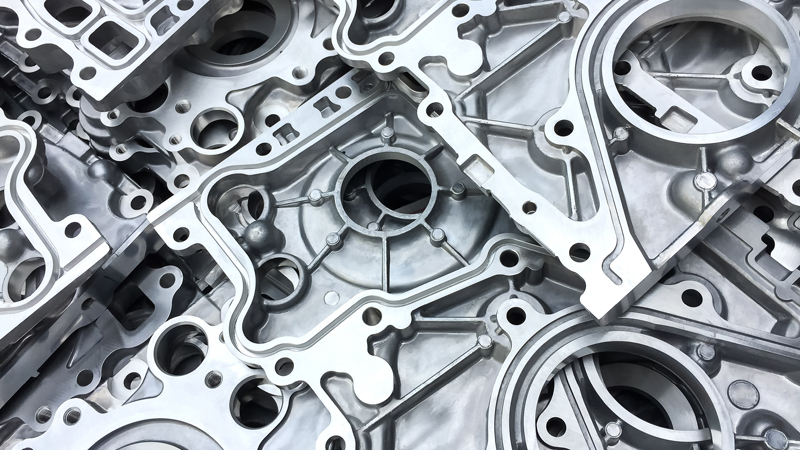
(Sept. 2020/OM) - The proportion of components made of aluminum, for example in the areas of vehicle, rail, ship and aircraft technology or in construction, has been rising steadily for several years. Lightweight construction with aluminum can achieve significant weight savings and thus lower fuel consumption in the field of mobility, for example.
In the building industry, too, from windows and doors to load-bearing structures and interior design, aluminum can be used in a wide variety of individual ways while at the same time offering high utility value. In order to meet these developments and continue to meet the requirements and needs of its customers, Ebbinghaus Syria Coating in Graz, Austria, a company in the Ebbinghaus Verbund, has expanded the pretreatments of the existing KTL process.
2-step process
For the cathodic dip coating of aluminum parts, a 2-step process with decapping was introduced in the pretreatment. This enables the surface treatment of components with an aluminum content of up to 100%. The process commonly used to date, zinc phosphating, also leads to an increasing quantity of waste products as the proportion of aluminum increases. However, these can only be removed from the pretreatment bath and from the surfaces treated in it with great effort. In the past, therefore, it was only possible to coat components up to a certain aluminum content. In the 2-step process now introduced, steel and aluminum parts are pretreated in two steps due to their different surface properties. This allows more aluminum to be processed and avoids the disadvantages of the previous process. In addition, the new process is more environmentally friendly in terms of the energy used, the chemicals required and the waste materials. There is also no longer any risk of structural problems on the surface of large-area aluminum parts due to non-closed zinc phosphate layers.
In addition, higher process stability is achieved and optimized plant management is achieved by separating steel and aluminum in the coating process. The aim is to be able to apply the most effective and at the same time most gentle pretreatment to the numerous aluminum alloys. Typical overpickling that can occur in the process as a result of pretreatment is prevented. Furthermore, the decapping helps to improve the mechanism of action and the control of the Sinner's circle in the entire process chain.
All systems updated
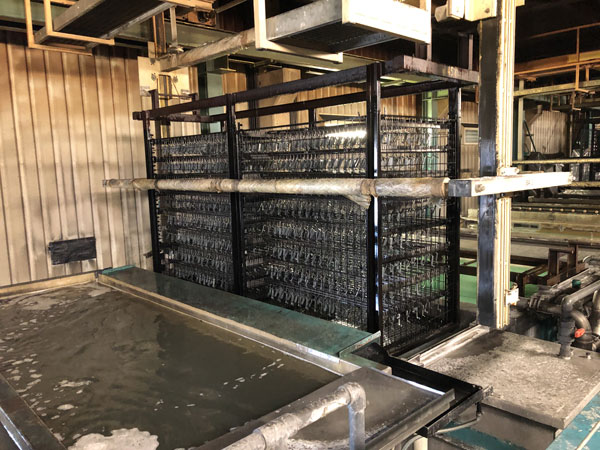
The planning and implementation of this project was a real challenge due to the existing plant structure. 18 months after the starting signal, the time had come. With the existing highly qualified personnel at Ebbinghaus Styria Coating and selected specialized companies, an additional basin made of corrosion and acid resistant V4A stainless steel was added to the current plant structure. The Überhebetakt plant and its PLC-controlled processes were adapted and at the same time all process-monitoring systems were updated. The dosing and pumping technology of the decapping process is now controlled and monitored fully automatically via a specially planned control loop.
Taking into account the existing certifications (ISO 9001/IATF16949; ISO14001), it is planned to include this process in the next external certification. External process monitoring of the bath parameters and coating quality via an independent accredited testing laboratory is also taking place.
Sustainable and resource-saving
The new 2-step process at Ebbinghaus Styria Coating is a very sustainable and resource-saving surface treatment process that can be used to coat aluminum components and parts made of other materials. In the course of integrating the decapping process, all other systems were also brought up to the latest state of the art. This now both simplifies plant management and also improves cost-effectiveness, through less use of chemicals and a reduction in waste products. The elimination of a large part of the conventionally used heavy metals and the now lower fluoride content in the bath management, results in a great advantage in terms of the environment.
The first step is to demonstrate and offer this process to new customers. The further development of the existing process is intended to open up new markets and improve customer satisfaction and quality in the overall process. The tests of the process suitability and feasibility of the KTL coating have been thoroughly positive in cooperation with our suppliers, who were involved in the realization of the project. In the second step, an adaptation of the service is also possible at any time for existing customers and is planned after commissioning of the process towards the end of 2020. The initial sample tests required in the automotive industry to prove that the required quality requirements are met are guaranteed via an independent accredited testing laboratory.
Ebbinghaus Verbund Management- und Dienstleistungs GmbH
www.ebbinghaus-verbund.de
Ebbinghaus Styria Coating GmbH
www.ebbinghaus.at