


Development impulses through industry change
Prototypenanlage zur Reinigung von Batteriehülsen
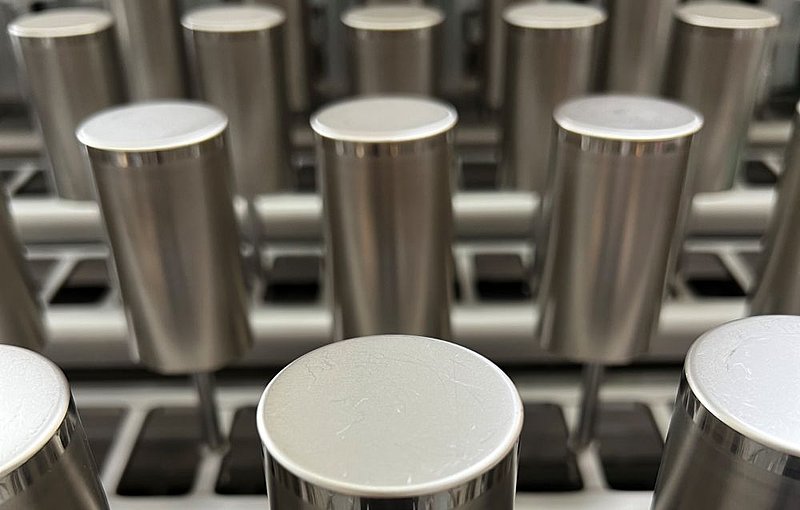
The transformation of the automotive industry is in full swing. Now that the internal combustion engine is no longer considered a mainstay drive concept, industrial component cleaning is facing new tasks. The effects of the change are clearly illustrated by the example of the implementation of a prototype plant for a battery sleeve manufacturer.
The combustion engine is currently losing its status as the dominant drive technology and will have to make way for new technologies. In some cases, this will result in completely new fields of activity - for example, in battery production or in components for cooling systems, power transmission, structure and frame, and of course in the area of electric motors with their fixed gearboxes. In addition, there are numerous sensors and displays as well as connectivity components, especially since digital vehicle development is also being driven forward strongly.
While past experience is far from obsolete, many new areas of activity involve different processes and require a higher degree of flexibility and adaptability - both on the part of the equipment manufacturers and the planners of the new production lines. One clear shift is in the importance of filmic contamination, which has become much more significant in connection with e-mobility. This has an impact on the design of cleaning processes and the associated media preparation systems.
While housings of e-motors or fixed gearboxes that have become smaller, the machined structural components or the few turned parts can continue to be cleaned according to classic specifications using familiar methods, the situation is somewhat different for batteries and the components of the cooling system as well as power and control current transmission.
New tasks, different processes
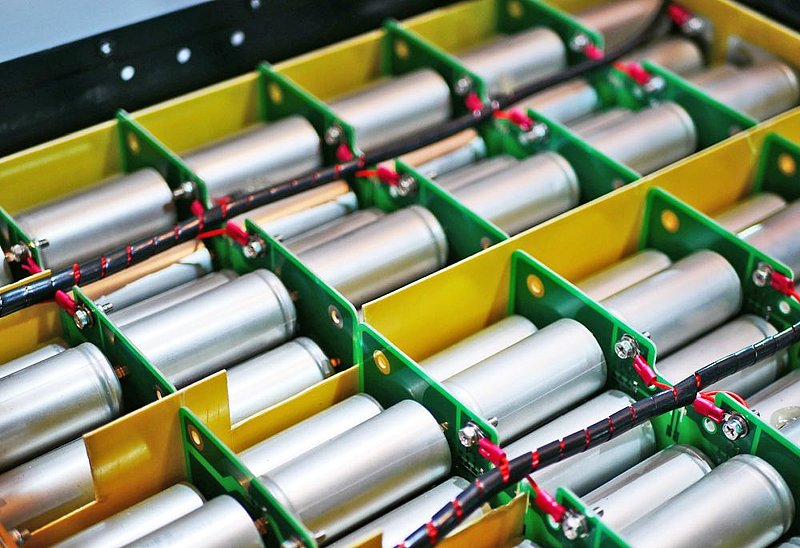
The cooling systems for battery cells are diverse and have to be adapted to the installation conditions in the vehicle. They are often integrated into the structural components. The cleanliness requirements correspond to the familiar criteria for fluid circulation systems. In the case of air-cooling elements, on the other hand, the focus is more on their mountability. This is because they are often bonded to surfaces and therefore have requirements for particulate and film contamination. In the battery sector, the batteries themselves are assumed to have a sufficiently clean manufacturing process, with requirements for process and assembly cleanliness to ensure the required level of technical cleanliness.
The battery sleeve has developed into a real mass product in the past year. Demand is currently rising most strongly for lithium-ion batteries. One of its key components is the metal sleeve or metal cup, which plays an important role in service life, safety and weight. These are manufactured by deep-drawing nickel-coated steel or aluminum sheet, forming geometrically precise, round or prism-shaped, extremely thin-walled cups with a wall thickness of 0.2 to 0.8 millimeters. The thinner the wall, the more energy capacity the battery manufacturer can later accommodate in the cup. A cutting process is often also integrated into the production process. Both filmic and particulate cleanliness requirements have to be met, which are accordingly achieved by means of aqueous and solvent-based cleaning processes.
From prototype to series
In 2020, LPW Reinigungssysteme GmbH was approached by a global manufacturer of battery components, having been in contact several years earlier in connection with the search for a suitable battery housing cleaning process for the US market. Due to the estimated quantity scenarios, the solvent-based system of a competitor had been evaluated as more cost-efficient at that time and was awarded the contract. Now, however, with the worldwide demand for processes suitable for e-mobility rising sharply, the situation was different. At the U.S. manufacturer, they remembered LPW and the successful preliminary tests - so the process began anew, under new conditions.
Conception and construction of the plant
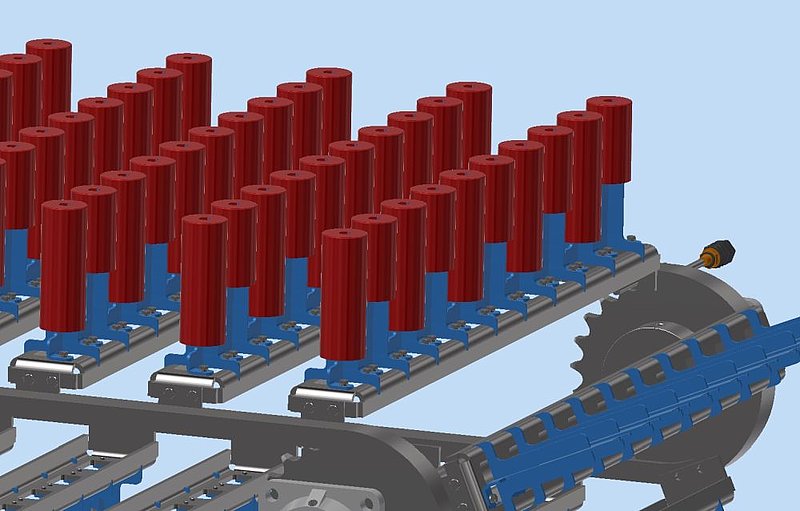
The task was not completely new for the LPW team, then as now. Formed parts made of aluminum and stainless steel with high cleanliness requirements at high throughput were already known from several realized medical technology projects. The battery case manufacturer specified a throughput of 3.3 to 3.5 cases per second, which corresponds to about 12,000 parts per hour. Furthermore, visible damage as well as visible spots or drops had to be excluded. The requirement for particulate cleanliness was specified as < 200 µm, as well as a defined surface tension, especially on the inside.
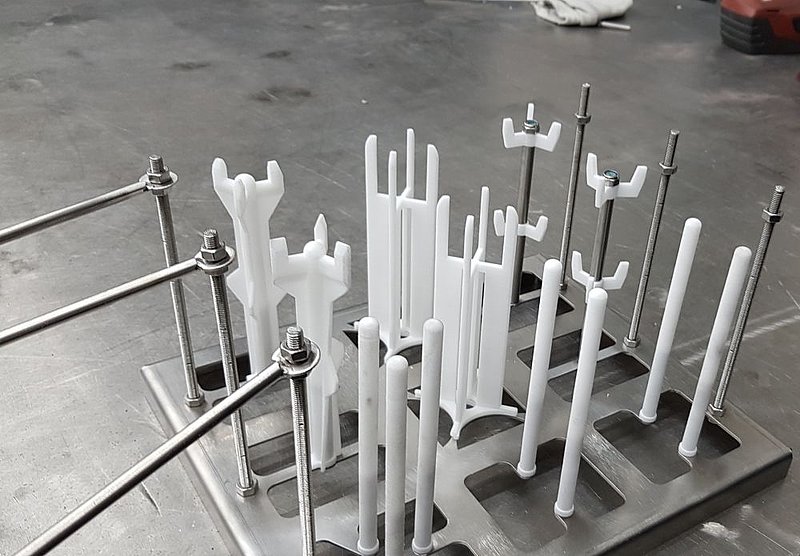
The entire project phase was characterized by intensive co-engineering during process definition. The implementation itself consisted of two pillars. On the one hand, feasibility studies were carried out on part handling and positioning, design of test shots and sample goods carriers with 3D printing prototypes and trials on comparative equipment, as well as drying tests, since the thin-walled components carry little intrinsic heat. The definition of the process engineering processes also took a central position in this phase. Secondly, the design implementation and construction of the first prototype plant, named PowerLine 800 T3, for series operation was the focus. Its technical parameters include a three-stage continuous line with a total length of around 13 meters, which can be divided for insertion - loading and unloading takes place fully automatically via multiple grippers during the running process and without interrupting the transport of the goods -, infrared or hot-air drying, an integrated distillation system for water treatment, and an OPC-UA interface for data transfer to the customer's host computer.
Huge demand on the market
After delivery to the battery sleeve manufacturer, the line was immediately integrated into full production - another circumstance that illustrates the enormous pressure of demand on the market. In the case of the PowerLine 800 T3, this is the first time that LPW will be using the experience gained with a series system in other joint projects. There is no question that the combustion engine will continue to occupy the cleaning industry. However, the shift towards new types of drive can also be seen in this sector, not least on the basis of declining investment in this area. Unit sales are difficult to plan and tend to decline. Competitive pressure is increasing and margins are falling, while new drive concepts such as e-mobility and autonomous driving are coming to the fore and require adapted production processes on the part of the customer and a new understanding of the process on the part of the manufacturer of the cleaning systems.
Utilize experience, accept challenges
It is necessary to reconcile known, experience-based knowledge with the higher requirements for process and handling cleanliness. Added to this are the new tasks in process management and monitoring. Furthermore, the issues of efficiency and flexibility make it essential to anticipate changes in the entire process chain as well as in the individual processes of the respective production steps. Developments such as additive manufacturing must be actively incorporated - even if it is only in the prototype production of product carriers and holders, as in the project described.