

The function, reactivity, and stability of bio-based hybrid materials can depend heavily on the chemical environments at their surfaces and interfaces. However, many conventional analytical methods provide only limited insight into these processes. In studies led by Prof. Andreas Taubert’s Materials Chemistry research group at the University of Potsdam, bio-based carbon and hybrid materials were investigated. The Fraunhofer IAP contributed XPS characterizations that focused on surface composition, chemical states, and interactions at interfaces.
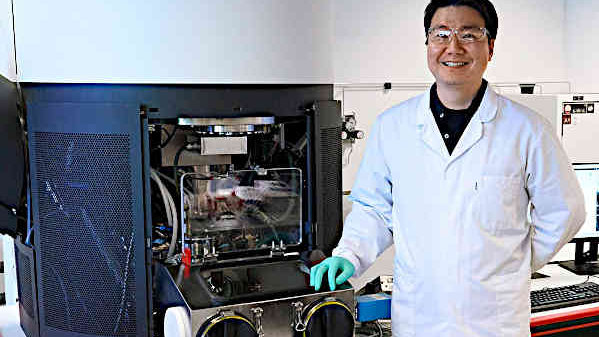
The XPS analyses centered on the question of how the production of bio-based hybrid materials and their combination with inorganic components alter the surfaces and interfaces. To this end, Dr. Jiyong Kim, an expert in surface analytics at the IAP, investigated how thermal treatment and hybrid formation influence the surface and interfacial chemistry of the organic-inorganic hybrid materials. In this process, the material surface is irradiated with X-rays, and the energy of the emitted photoelectrons is measured.