
To develop a new generation of vacuum soldering systems, iew induktive Erwärmungsanlagen GmbH, based in Gumpoldskirchen, Austria, required a high-vacuum system that was both robust and efficient. Together with Pfeiffer Vacuum+Fab Solutions, the company developed a system concept combining a turbomolecular vacuum pump with a backing pump. This ensures an ultimate vacuum of up to 8×10⁻⁶ hPa (mbar). It enables reproducible solder joints because these nearly gas-free conditions prevent oxidation, allow precise heat transfer control, and ensure particularly uniform bonding between components and the solder alloy. At the same time, the oil-free vacuum pumps reduce maintenance requirements and prevent contamination within the process chamber.
A Supplier of Vacuum Soldering and Induction Heating Systems
The company originated from a diploma thesis on induction heating and was founded in 1996 by Dipl.-Ing. Martin Schweikhart as Ingenieurbüro Schweikhart. Just one year later, it was renamed iew induktive Erwärmungsanlagen GmbH. With around 20 employees, iew now supplies customers worldwide. In addition to individually configurable induction heating systems, vacuum soldering systems account for a steadily growing share of revenue. According to Pfeiffer Vacuum, the company is the only supplier worldwide to offer both technologies from a single source.
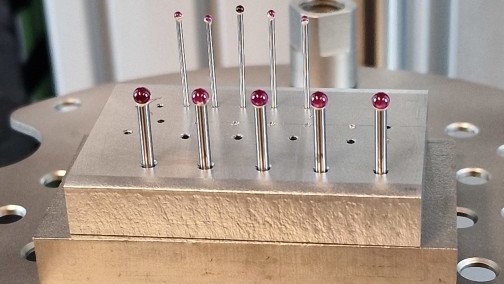
The systems are used for applications including the soldering of high-performance diamond tools, shrink fitting, annealing, and hardening of metals, as well as in testing technology and research. In the vacuum soldering business segment, around 80% of applications are in tool technology. Manufacturers of measuring probes and companies in the medical technology sector are also showing strong interest in the soldering technology.
Vacuum Soldering Under Optimal Conditions
The vacuum soldering process begins with preparing the components, which may consist of carbide materials, polycrystalline diamond, or ceramics depending on the application. After the solder paste is applied, the workpieces are positioned inside a quartz glass vacuum chamber. The chamber is then evacuated until a pressure of approximately 5×10⁻⁴ hPa (mbar) is reached. This removes oxygen, nitrogen, and moisture from the process chamber—critical for preventing oxidation and contamination at the solder joints.
During the soldering process, infrared emitters heat the components. The parts are first preheated uniformly to prevent stresses within the material. Once the soldering temperature is reached, the vacuum pumps further reduce the pressure to around 5×10⁻⁵ hPa (mbar). This high-vacuum level minimizes heat conduction through residual gases and ensures uniform melting of the solder alloy, typically at temperatures of around 700 to 900 °C.
After the soldering process is completed, the vacuum level is increased further—to approximately 8 to 9×10⁻⁶ hPa (mbar). In this environment, the workpieces can cool in a controlled manner without oxygen or nitrogen reacting with the surface. Ambient air is only slowly reintroduced once the temperature has dropped to around 150 °C in order to achieve gentle pressure equalization.
The interaction of temperature control and high-vacuum conditions enables reproducible results, dense solder joints, and high product quality. The systems are designed for continuous industrial operation and offer a long service life with low maintenance requirements.
Tailored Vacuum Technology Instead of Off-the-Shelf Systems
In 2016, iew began developing the first prototypes for vacuum soldering systems that would later be available in two versions—a compact model for smaller batch sizes and a larger system for industrial series production. The goal was to create a reliable and resource-efficient alternative to conventional systems, which often operated with oil diffusion pumps. During startup, the oil first had to be brought to operating temperature, and there was always a risk during the process that oil vapors could enter the vacuum chamber and contaminate surfaces. In addition, maintenance and cleaning were labor-intensive.
In response to these issues, a compact high-vacuum system was developed with support from Pfeiffer Vacuum+Fab Solutions that eliminates the need for diffusion pumps and operates more efficiently. The system architecture combines turbomolecular vacuum pumps with either dry or oil-lubricated backing pumps, depending on process requirements. This combination ensures stable pressure conditions down to 8×10⁻⁶ hPa (mbar), enabling reproducible soldering with low energy consumption and minimal maintenance effort.
The smaller system version uses a Hipace turbopump and an oil-free Hiscroll scroll vacuum pump, supplemented by vacuum gauges, dust separators, and valves. For higher throughput, the larger system uses a Hipace turbopump combined with an oil-lubricated Duovane rotary vane vacuum pump. All components are designed for operation under fluctuating thermal loads with occasional contamination exposure.
Simon Riefling, responsible for international sales at iew, says the company chose systems from Pfeiffer Vacuum+Fab Solutions in 2018 because the company stands for quality and service. “We repeatedly see products from Pfeiffer at universities, technical colleges, and renowned companies,” he says. For iew, Pfeiffer represents reliability, which is why the company uses the German vacuum pumps in its vacuum soldering systems to ensure quality. The installed vacuum systems offer simple maintenance and long service life. The turbopumps, for example, are designed for maintenance-free operation of up to five years.