

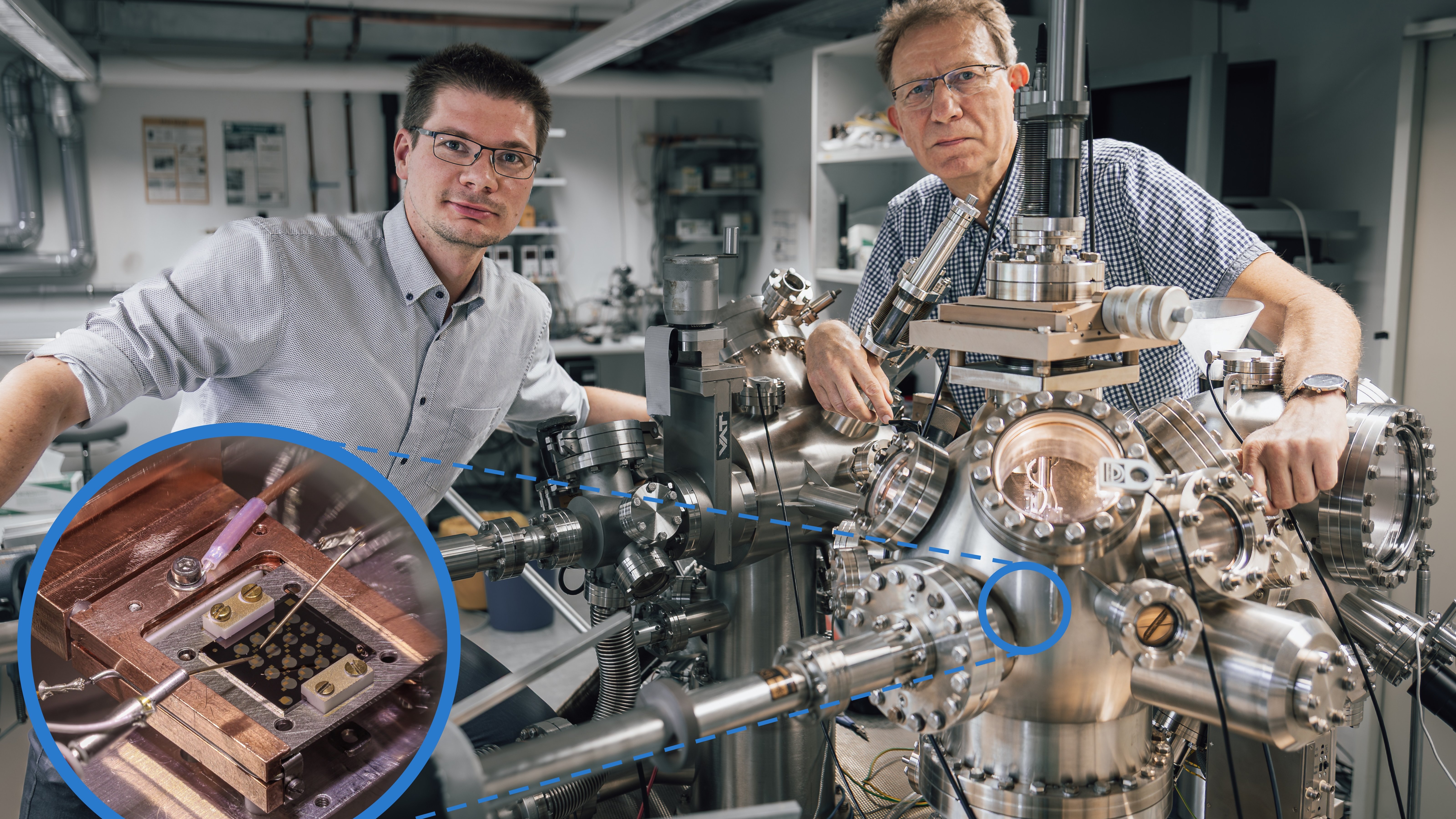
By producing and measuring organic transistors in a high vacuum at different temperatures, the researchers were able to show for the first time exactly how these trap states affect performance - a previously unnoticed but crucial factor for the functionality of organic electronics. The focus here is on a special treatment of the interface between the insulator and the organic semiconductor, as the University of Marburg reports.
Until now, it has been difficult to understand why some transistors made of organic semiconductors work well and others do not. "One reason is that many measurements were made under normal conditions, where humidity or oxygen affect the sensitive materials," says laboratory head Prof. Dr. Gregor Witte. The new study shows that it is not only the chemical composition of the semiconductors that is decisive, but above all the cleanliness and passivation of the interfaces between the different layers.
By combining modern physical methods for structural analysis such as X-ray diffraction or atomic force microscopy and measuring electrical transistor characteristics in a high vacuum, it will be possible in future to investigate more specifically how materials and interfaces can be improved.